Alcoa’s 16kg aluminium wheel could change fleet efficiency equation
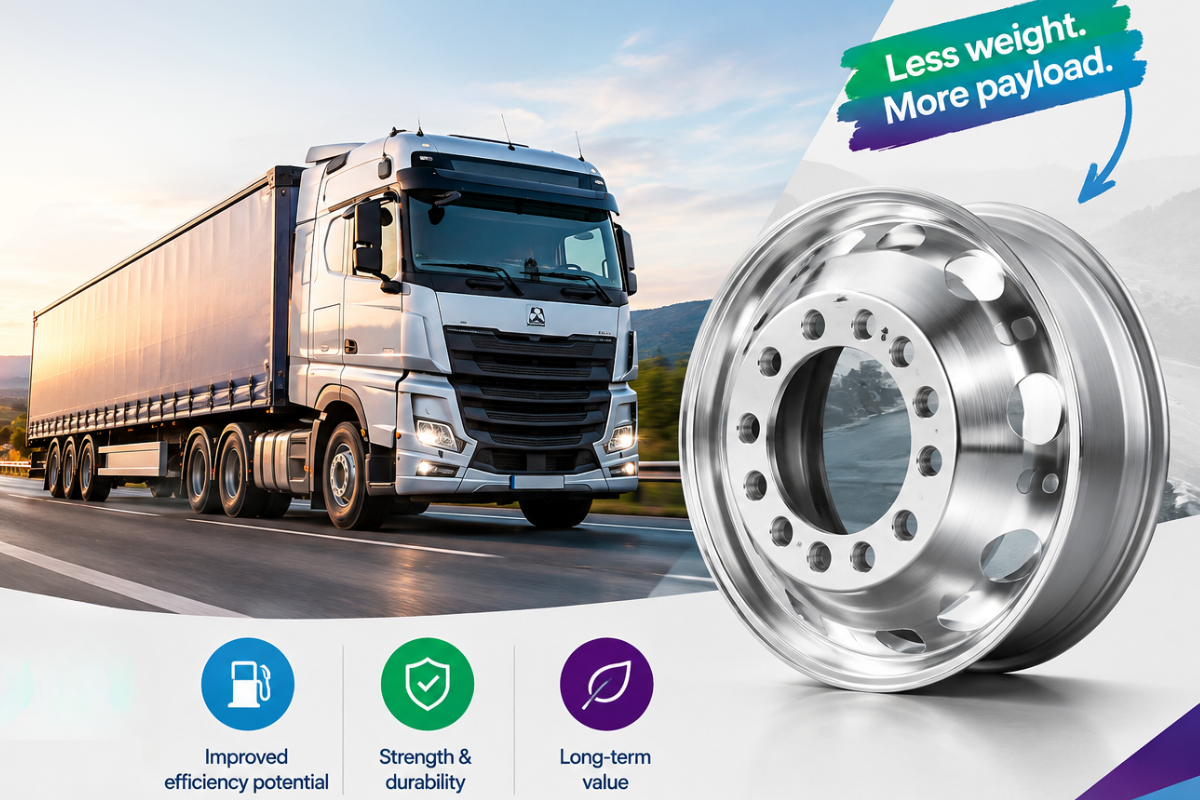
The image used in this article is generated with an AI tool and does not depict any real-time moment
A truck’s overall weight comes from dozens of components, including the engine, chassis, tyres, etc. Wheels are one area where fleets can explore lightweighting. Traditional steel wheels, widely used across the transport industry, are known for their robustness. Forged Alcoa aluminium wheels offer another option, combining reduced weight with the strength needed for demanding commercial applications.
Alcoa aluminium wheels come into focus when fleets looking to improve truck efficiency, payload and operating productivity, consider fuel, tyres, aerodynamics and driver behaviour as well as an essential factor of the vehicle weight.
For fleet operators, the question is becoming less about simply asking “How much does it cost?” and more about “How much weight are we carrying, and what is that weight costing us?”
Lower tare weight can create an opportunity for additional payload, subject to the vehicle configuration and applicable mass limits. This is where the Alcoa aluminium wheels step in.
To know the aluminium casting demand forecast in the transportation sector, explore our report “Global Aluminium Casting Market 2026-2032: Plant Economics, Alloy Segmentation, Pricing Intelligence, Supply Chain Analysis & Strategic Recommendations”
Alcoa’s case for lightweight wheels
Alcoa Wheels has focused on lightweighting for decades, developing forged aluminium wheels designed to combine strength, durability and lower weight.
The Alcoa Wheel ULT36x is one such example.
At approximately 16kg per wheel, it is among the lightest heavy-duty truck wheels available on the market.
Depending on the application, reducing weight at each wheel position can lower overall tare weight and potentially create an additional payload capacity or simply reduce the amount of weight the truck has to carry.
For operators transporting high-value or weight-sensitive freight, that can be an important factor when choosing vehicle equipment.
Explore downstream aluminium suppliers, product listings and trade opportunities on AL Biz
It is about more than the weighbridge
Benefits of lightweighting are not limited to the weighbridge. Reducing vehicle weight can help a fleet achieve a number of operational goals, such as:
• Greater payload capacity within relevant mass restrictions
• Enhanced vehicle performance for a comprehensive lightweighting plan
• More adaptability and flexibility during truck usage customisations
• Potential increases in production if weight is a constraint
• The vehicle’s long-term operating worth
The actual benefits will depend on the vehicle, application and operating environment.
For a regional operator, there would be varied requirements for a long-haul fleet and heavy-duty mining operation. That makes the overall vehicle specification more important than simply comparing the weight of individual components.
When every kilogramme contributes
As the Australian transport industry remains focused on productivity and operating efficiency, lightweighting is likely to reappear in conversations.
The next efficiency gain does not always have to involve a major change. Sometimes, it can come from taking a closer look at the components already fitted to the truck.
Saving a few kilogrammes on one component may not seem particularly exciting. But as we multiply that saving across a complete vehicle, an entire fleet and thousands of kilometres, the figures tell a different story.
At approximately 16kg per aluminium wheel, the Alcoa Wheels ULT36x highlights how wheel technology can contribute to efforts to reduce tare weight while maintaining the strength and durability expected from a heavy-duty aluminium wheel.
AL Circle is coming up with a new Magazine “ALuminium’s Frontline: OEM Edition 2026.” Feature your brand and opinion in the edition.
Indian electronics makers turn to aluminium as copper costs squeeze margins
Next articleCFMoto’s 2027 Ibex 800 E combines aluminium components with radar safety technology
Grow with
AL Circle