Amazon Kindle made of aluminium features recycled metal, premium design and replaceable battery
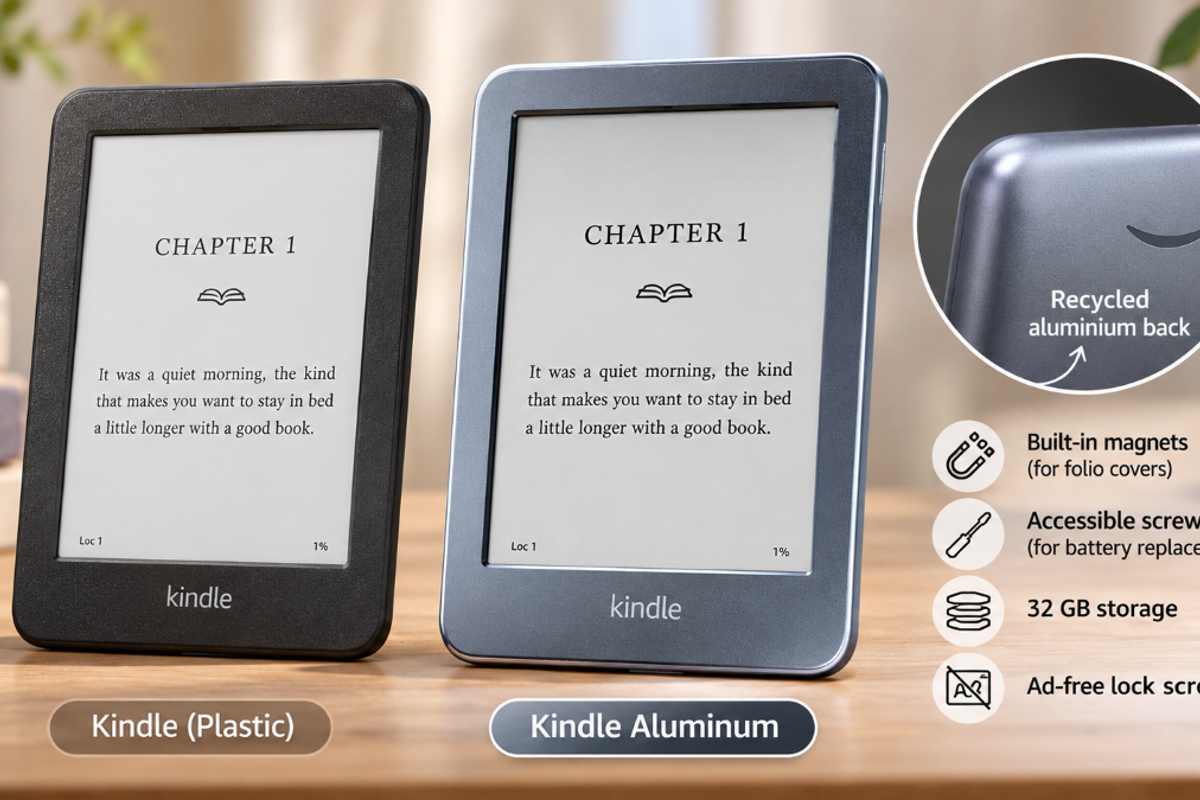
The image used in this article is generated with an AI tool and does not depict any real-time moment
Amazon's Kindle made of aluminium introduces recycled aluminium into its entry-level e-reader range, highlighting the metal's growing application in consumer electronics. The aluminium-backed model combines a rigid metallic construction with a matte finish, built-in magnets for folio covers and a design that allows users to replace the battery. Compared with the standard plastic Kindle (2026), the aluminium version also offers additional storage and an ad-free lock screen.
The Kindle made of aluminium features a rigid, matte-finished metal chassis that provides a premium appearance while eliminating body flex and naturally resisting oily fingerprint marks. Its construction incorporates built-in magnets on the back for attaching snap-on folio covers, while accessible external Torx screws make future battery replacement possible. The model comes with 32 GB of storage and an ad-free lock screen as standard.
Despite the difference in housing materials, both models share a 6-inch, 300 PPI flush-front display, the same software and battery life. They also deliver identical display resolution and software performance, keeping the reading experience consistent across the two versions. While aluminium provides a rigid metallic enclosure and matte finish, the plastic version prioritises lower weight and a textured surface.
To know the aluminium casting demand forecast in the transportation sector, explore our report "Global Aluminium Casting Market 2026-2032: Plant Economics, Alloy Segmentation, Pricing Intelligence, Supply Chain Analysis & Strategic Recommendations"
Aluminium and plastic Kindle models offer different battery replacement mechanisms
Beyond material selection, Amazon's latest Kindle range incorporates user-replaceable batteries in both versions. The development comes amid upcoming European Union regulations governing battery replaceability in electronic devices. Amazon has introduced removable, user-replaceable back panels, moving away from the tightly glued-shut designs used in previous generations.
However, the battery access mechanism differs between the aluminium and plastic models. On the standard plastic Kindle, the back panel can be removed without screws using a fingernail, guitar pick or a similar tool. Once the panel is open, users can access the battery by removing the four Phillips-head screws securing it to the frame.
The aluminium Kindle follows a different process. Its backplate is secured by two small hex screws positioned along the bottom edge of the device. After removing these screws, users can open the panel using a fingernail, guitar pick or a similar tool to access the battery.
The comparison highlights how aluminium is being incorporated into consumer electronics beyond its conventional applications in laptops, smartphones and other electronic equipment. In Amazon's Kindle range, the metal forms part of the device's external construction while accommodating features such as magnetic cover attachments and battery accessibility.
By offering aluminium alongside recycled plastic, Amazon's latest e-reader range demonstrates how manufacturers can use different materials to address product design, weight, functionality and repairability requirements within the same product category.
Looking for aluminium flat rolled products? Browse through a comprehensive list here at AL Biz
Grow with
AL Circle












_md.webp)