Can aluminum keep AI cool in space? Elon Musk says 1,300 W per square meter of aluminum makes it possible
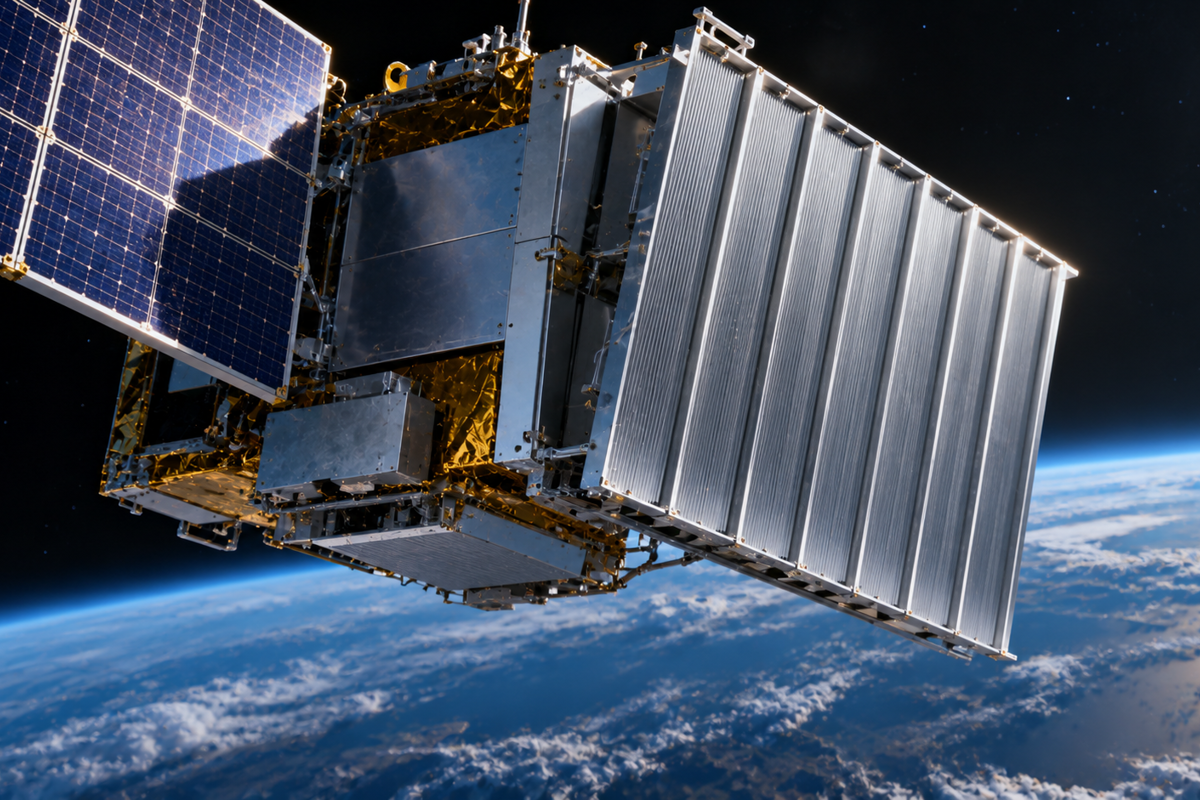
The image used in this article is generated with an AI tool and does not depict any real-time moment
SpaceX CEO Elon Musk has defended the feasibility of cooling artificial intelligence (AI) data centers in space, claiming that aluminum radiators facing away from the Sun can dissipate approximately 1,300 watts of heat per square meter. His comments have brought Aluminum's thermal management capabilities into focus as SpaceX explores the development of orbital computing satellites powered by its existing Starlink technology.
In a post on social platform X on November 2, Musk argued that cooling high-performance computing equipment in space could be "much easier than on Earth," challenging concerns that the vacuum environment would make heat dissipation particularly difficult.
Aluminum radiators form the basis of Musk's cooling argument
The discussion began after Jan Broersen, a professor at Utrecht University in the Netherlands, questioned the feasibility of space-based data centres. He argued that the vacuum of space acts as an effective insulator, meaning equipment cannot rely on conventional air or water-based cooling and must instead release heat through thermal radiation.
Sequoia Capital partner Shaun Maguire subsequently joined the discussion, suggesting that lower launch costs could make orbital computing more practical. He outlined a potential system in which aluminum structures conduct heat away from computer chips to a circulating fluid, such as ammonia, before radiators release the heat into space.
Responding to Maguire, Musk said an aluminum radiator facing away from the Sun could dissipate approximately 1,300 watts per square meter. He argued that the radiator would face cosmic background radiation at a temperature only around 3 degrees above absolute zero, making the required thermal radiation performance achievable.
Musk also compared radiator requirements with solar power generation. According to his estimate, solar panels can generate approximately 250 watts per square meter, meaning an orbital computing satellite would require roughly five times as much solar panel area as radiator area. He added that solar panels would account for most of the satellite's mass.
To know the aluminium casting demand forecast in the transportation sector, explore our report "Global Aluminium Casting Market 2026-2032: Plant Economics, Alloy Segmentation, Pricing Intelligence, Supply Chain Analysis & Strategic Recommendations"
SpaceX plans to extend Starlink technology to orbital AI computing
According to previous Reuters reporting, the first-generation satellites are expected to deliver 120 kilowatts of continuous computing power, roughly equivalent to a rack of Nvidia GB300 servers. SpaceX has also outlined plans to deploy as many as one million data centre satellites, with regulatory filings estimating a potential total addressable market of up to $28 trillion.
The proposed system would represent a different approach to data centre cooling compared with conventional facilities on Earth. Ground-based computer rooms generally use air or water to transfer heat away from equipment, whereas spacecraft operating in a vacuum must release heat through infrared radiation.
Aluminum structures could play a role in conducting heat from computing equipment towards radiators, while an ammonia-based circulation system could help transfer thermal energy before it is released into space.
Cooling claims face technical and economic challenges
Despite Musk's confidence, the estimated heat dissipation rate of 1,300 watts per square meter has yet to be supported by on-orbit testing. Actual cooling performance would depend on several factors, including radiator surface temperature, emissivity, orientation, and exposure to sunlight.
NASA already uses radiators on satellites and the International Space Station (ISS), which also employs an ammonia-based cooling system. However, its external cooling loop requires pumps, highlighting the engineering requirements involved in transferring and dissipating heat in space.
Launch costs and satellite maintenance also remain significant challenges for the proposed orbital data centre model. While lower launch costs could improve its commercial prospects, the technology's scalability will depend on both engineering performance and the economics of deploying and maintaining large satellite constellations.
The idea has also attracted skepticism from other technology leaders. OpenAI CEO Sam Altman described the prospect of sending data centers into space under current conditions as "absurd" during an interview with The Indian Express in February 2026. However, he acknowledged that orbital AI computing could become worthwhile over the longer term, suggesting that widespread adoption is unlikely before 2030.
For the aluminum industry, the discussion highlights a potential application for the metal in advanced thermal management systems and emerging space infrastructure. However, whether aluminum radiators can deliver the performance and commercial advantages outlined by Musk will depend on future testing, launch costs, and the successful development of orbital computing technology.
Explore AL Circle’s B2B Marketplace to discover aluminium industrial products, machinery components, industrial equipment parts, engineering applications and connect with suppliers across the industry.
Grow with
AL Circle