Reimagining the aluminium value chain through digitalisation
This image has been obtained via official Press Release
The global aluminium industry must balance surging demand from the energy transition with stringent decarbonisation mandates, requiring a shift beyond incremental operational improvements. This paper investigates how integrating Industry 4.0 technologies can transform traditional value chains into highly efficient, sustainable, and transparent ecosystems. We examine the deployment of advanced digital levers including the Industrial Internet of Things (IIoT), Digital Twins, Artificial Intelligence (AI), and Machine Learning (ML) across the entire aluminium value chain. In bauxite mining, machine learning enables real-time 3D ore-grade modelling to optimise blending and minimise downstream caustic consumption, alongside Autonomous Haulage Systems (AHS) and predictive maintenance. In alumina refineries, Advanced Process Control (APC) and digital twins stabilise Bayer process chemical loops via dynamic digestion optimisation, while AI-driven precipitation and neural-network calcination controls maximise liquor yield and curb thermal emissions. Within the smelter, a closed data loop linking the rodding shop to potline performance is established using computer vision, RFID tracking, and predictive digital twins that mitigate anode effects to reduce perfluorocarbon (PFC) emissions. Downstream, the casthouse leverages smart alloying and computer vision for automated surface inspection and scrap recovery optimisation. Across the broader supply chain, AI-driven control towers provide end-to-end material tracking, while block chain-enabled "Digital Product Passports" provide immutable traceability of Scope 1, 2, and 3 emissions to enable premium pricing for "Green Aluminium." Moving beyond isolated pilots, this paper discusses opportunities, relevant digital technologies and a scalable roadmap for aluminium enterprises to integrate the data silos and adopt digitalisation. Ultimately, such digital transformations would empower the aluminium sector to achieve operational excellence, accelerate its journey towards Net Zero while unlocking long-term value creation.
- INTRODUCTION
The global aluminium sector stands at a critical crossroads. As a foundational material for the green energy transition, its lightweight properties, high conductivity, and structural versatility make it indispensable for electric vehicles (EVs), electrical grids, and solar/wind components. Consequently, demand continues to scale rapidly. Conversely, conventional smelting relies heavily on energy-intensive processes, emitting approximately 1.1 billion tonnes of CO2 equivalent annually, roughly 2 per cent of all anthropogenic GHG emissions. Over 70 per cent of primary production energy originates from fossil fuels. Because linear, incremental process engineering has hit its thermodynamic limits and alternatives to the commercial Hall-Héroult process remain under long-term incubation, immediate decarbonisation requires an operational overhaul. Achieving a 1.5°C-aligned net-zero pathway by 2050 demands a structural shift from isolated industrial assets to data-driven cyber-physical networks. Operating on an Industry 4.0 platform, the convergence of IIoT, big data analytics, digital twins, advanced robotics, and AI provide the visibility and real-time control needed to minimise energy consumption, maximise productivity, and protect raw material security.
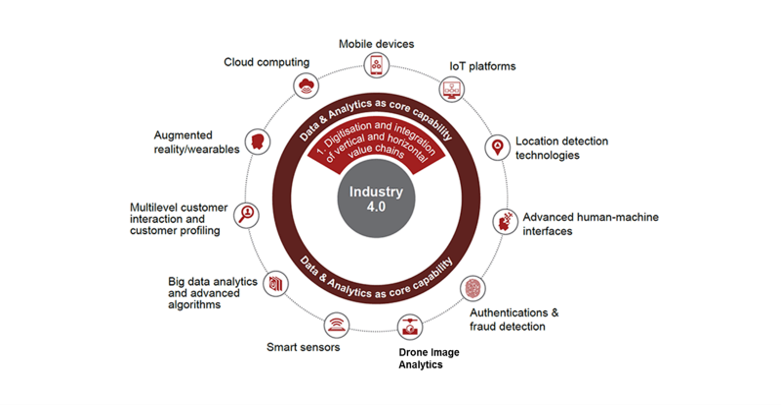
Fig 1: Hierarchy for Digitalisation of Aluminium Value Chain
- THE INTEGRATED DIGITAL LIFECYCLE: FROM BAUXITE MINE TO SMELTER
Achieving structural decarbonisation requires a fully synchronised production lifecycle. Rather than treating upstream extraction, midstream refining, and primary smelting as isolated operational silos, a smart ecosystem integrates these nodes into a continuous, data-driven value chain.
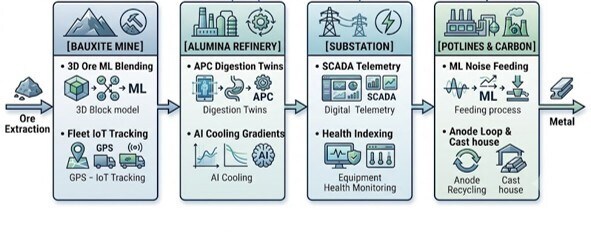
Fig 2: Integrated Process Flow of Aluminium Value Chain with Digitalisation (typical)
2.1 Digitalisation in bauxite mines and alumina refinery
Mine Face Telemetry: Integrating machine learning with live mine-face telemetry, geospatial drone scanning, and inline analysers enables dynamic, 3D ore-grade modelling. Algorithms recalculate the geological block model during extraction, executing precision blending directly at the site to stabilise the feed chemistry. This upfront stabilisation minimises downstream consumption of carbon-intensive caustic soda (NaOH).
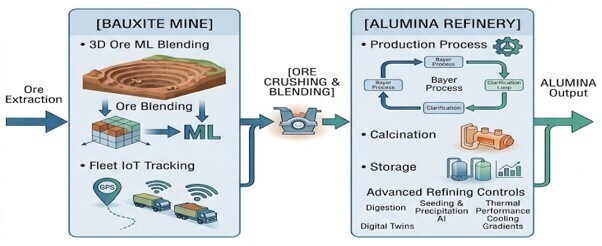
Fig 3: Bauxite Mine and Alumina Refinery Digitalised Process Flow
- Refinery Advanced Process Control (APC): Inside the chemical loops of the alumina refinery, thermodynamic digital twins optimise steam and caustic balances across the digestion circuit. Downstream, AI models manage temperature cooling gradients and seeding rates in precipitation tanks, maximising liquor yield per pass and ensuring uniform particle size distribution.
- Calcination optimisation: In the calcination stage, where aluminium hydroxide is baked at temperatures exceeding 1000°C, deep neural networks analyse combustion profiles to predict thermal trajectories. They modulate fuel and air valves to guarantee complete chemical conversion while lowering fuel consumption and curbing thermal emissions.
- 2 Smart Smelter
Aluminum smelters which optimise their operations, minimise resource consumption, and improve overall sustainability by employing digital technologies, such as IIoT, Artificial Intelligence (AI), Big data analytics, Machine Learning, Robotics and automation in inter-connected loops are termed as Smart Smelters.
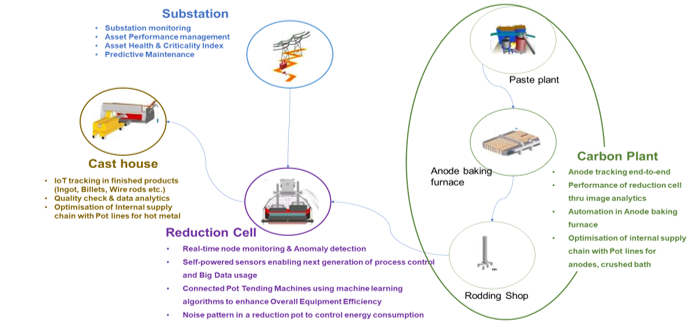
Fig 4: Nextgen Smelter-Powered by Digitalisation
- Substation: The substation channels the massive direct current (DC) power required for the electrolysing cells, making it the electrical heartbeat of the smelting operation. Modern facilities upgrade legacy Supervisory Control and Data Acquisition (SCADA) systems with Asset Performance Management (APM) software. By continuously calculating a real-time asset health index and criticality metrics on transformers, rectifiers, and switchgear, the system flags insulation degradation or thermal anomalies early. This transforms maintenance from reactive schedules into predictive intervention, preventing catastrophic power disruptions.
- Connected pot lines and process control: From the substation, regulated DC electrical energy enters the pot lines, which house the reduction cells where alumina is dissolved in a molten cryolite bath and reduced electrolytically into elemental aluminium. Smart pot lines utilise specialised sensors to capture real-time current, voltage, and temperature telemetry.
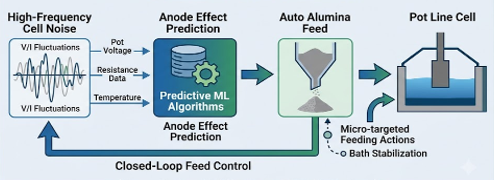
Fig 5: Pot line Control Intervention Mitigating Anode Effects and Reducing PFC Emissions
The core intervention involves integrating AI models directly with existing pot regulation systems to mitigate "anode effects"-critical operational upsets that occur when alumina concentrations fall too low. These effects cause sudden spikes in cell voltage and generate highly potent perfluorocarbon (PFC) greenhouse gas emissions. Predictive machine learning algorithms analyse high-frequency cell noise and electrical resistance anomalies to identify localised alumina starvation minutes before a voltage spike occurs. The system triggers automated, micro-targeted alumina feeding actions, stabilising the bath's thermal equilibrium, increasing current efficiency, and mitigating PFC releases. Advanced operations complement these loops with self-powered sensors, automated robotic metal tapping, bath sampling, and optimised scheduling to maximise the Overall Equipment Effectiveness (OEE) of Pot Tending Machines (PTMs).
Explore- Most comprehensive and forward-looking industry-focused report — Global Bauxite & Alumina Market Forecast to 2036: Supply–Demand, Trade Flows & Price Outlook
Smart carbon plant: Operating parallel to the pot lines is the carbon plant, spanning three structurally distinct but process-interconnected areas. Because anode quality defined by the baked anode density and electrical resistivity directly correlates with the electrical energy consumption of the smelting cells, digitalisation establishes a closed-loop manufacturing cycle:
Green anode production: Machine learning algorithms track and optimise the green anode recipe, coke-to-pitch mixing, paste temperature, and vibro-compaction parameters in real-time. By forecasting apparent density variations, the system eliminates structural defects before baking.
Anode bake ovens: IoT devices and real-time gas analyser networks feed thermodynamic digital twins of the baking furnace. The system dynamically alters fuel-firing profiles across the baking pits to ensure uniform structural baking while minimising fuel gas consumption.
Anode rodding shop: Automated digital image analysis and computer vision systems inspect returned anode butts, stems, and finished rodded assemblies. RFID tags track each individual anode as it transfers through the shop, matching its physical manufacturing profile against its subsequent real-time electrical performance inside the pot line cells.
Integrated cast house: The final node of this integrated lifecycle occurs in the cast house, where molten metal is cast into saleable products like ingots, billets, strips, and wire rods. A major operational bottleneck involves managing the on-time availability of hot metal ladles from the pot lines, minimising heat loss during transport, and optimising furnace holding times. Digitalised supply chain loops link the cast house directly with pot line tapping schedules via Just-In-Time (JIT) management algorithms, minimising heat loss and fuel burn in holding furnaces. Smart alloying software ingests the precise chemistry of the primary molten metal, master alloy additives, and varying scrap inputs to calculate the most cost-effective charge recipe, preventing the over-consumption of expensive elements like magnesium or silicon. Automated robotic systems handle hazardous operations such as dross skimming, while inline computer vision systems inspect finished products at line speed, utilising automated anomaly detection to flag surface cracks or inclusions before shipment.
- DIGITALISATION AS A SUSTAINABILITY ENABLER
In the aluminium value chain-from bauxite mining and alumina refining to smelting, power generation, and recycling, sustainability challenges are highly complex. The industry is inherently energy-intensive and faces strict environmental and safety scrutiny. Digitalisation acts as the execution mechanism for ESG (Environmental, Social and Governance) through digital components/technologies like IIoT sensors, digital twins, and AI which provide the data, transparency, and optimisation needed to actually achieve it.
- 1 Process, resource, and energy optimisation
By integrating cyber-physical systems, operations across the entire value chain can process historical and real-time sensor feeds through predictive analytics to streamline energy and material mass balances.
- Virtual modelling: Digital twins allow engineers to simulate process modifications in a virtual environment before execution, ensuring resource optimisation.
- Smart grid integration: Moving downstream, by connecting with external smart grids, machine learning algorithms allow smelters to modulate non-critical power loads or time tapping schedules. This enables them to take advantage of fluctuating renewable energy pricing without disrupting the critical thermal safety limits of the reduction pots.
- 2 Emissions monitoring and circularity facilitation
- Intelligent sensor networks positioned across stacks, roof vents, and tailing facilities provide continuous, real-time reporting of total fluoride, sulphur dioxide, particulate matter, and thermal emissions. This granular data points directly to localised cell or process issues, prompting immediate corrective actions.
- Real-time geospatial drone analytics and IoT telemetry minimise soil disturbance during mining and optimise the backfilling of exhausted pits. Within the refinery, advanced process controls maximise liquor yield per pass during precipitation, directly minimising the accumulation and environmental impact of bauxite residue (red mud).
- To drive circular economy initiatives, data loops link the distinct phases of the internal supply chain to maximise material recovery. In the carbon circuit of smelter, a closed data loop ensures that returned anode butts from the pot lines are tracked via RFID, crushed, and efficiently recycled back into the green anode paste formulation. Downstream in the cast house, operations deploy laser-induced breakdown spectroscopy (LIBS) and X-ray transmission (XRT) sorting systems. Machine learning models analyse these automated sensor feeds to rapidly segregate scrap by specific alloy families. This allows the cast house to increase recycled metal consumption by substituting secondary scrap into high-purity product lines without compromising metallurgical integrity.
- 3 Commercial differentiation
- As regulatory frameworks like Europe’s Carbon Border Adjustment Mechanism (CBAM) penalise carbon-intensive goods, the tracking of greenhouse gas data transitions from a compliance cost into a high-value product feature. Aluminium plants can leverage blockchain architecture to generate immutable Digital Product Passports (DPPs) for finished product batches. Because blockchain ledgers are decentralised and tamper-proof, they securely aggregate carbon footprint calculations across all production stages.
- Total Lifecycle Carbon Footprint =Scope 1 (Direct Process) +Scope 2 (Electricity Grid) + Scope 3 (Upstream Supply Chain)
- Every metric ton of shipped aluminium metal is assigned a unique cryptographic token or QR code containing audited data regarding its primary energy source (e.g., hydropower/renewable vs. coal), secondary scrap content, and total carbon equivalent metrics as mentioned above. This end-to-end traceability enables manufacturers to certify their low-carbon operations, allowing them to capture a commercial premium for "Green Aluminium" especially from sustainability-focused automotive and electronics OEMs.
- GLOBAL SUCCESS STORIES IN DIGITALISATION OF ALUMINIUM INDUSTRIES
EGA (Emirates Global Aluminium): EGA launched its digital transformation in 2021 to further increase its cost competitiveness, agility and flexibility, as well as to enhance safety and sustainability. They collaborated with Microsoft to develop their digital manufacturing platform. They are using 10 digital capabilities to digitise, digitalise and digitally transform its operation through 04 phases. As of January,2025, EGA’s Industry 4.0 programme has delivered some USD 100 million in financial impact through the implementation of more than 80 Industry 4.0 use cases, ranging from using artificial intelligence vision to quality check carbon anode production in real-time, to predictive tools for market movements in key commodities. The ROI earned in the first 03 years of transformation was a staggering 170 per cent with 12 per cent increase in product throughput and 18 per cent increase in labour productivity. More than 3,000 EGA employees have been upskilled in digital capabilities and ways of working. In January,2025 EGA was designated by the World Economic Forum as an Industry 4.0 Global Lighthouse 2025. (Source: 1. Digital Transformation: the EGA Way by Paul-Antoine Calandreau, Director Industry 4.0, EGA; 2.EGA website; 3. McKinsey & Co. Case study)
AOG (Aluminium of Greece): It has a 2017 agreement with GE Vernova to implement digital smelter solutions powered by GE’s Predix, which will enhance Aluminium of Greece’s (AOG’s) smelting process by lowering energy consumption, reducing the amount of aluminium fluoride used in aluminium production and predicting pot leakages. (Source: GE News February 13,2017)
Aluminium Bahrain B.S.C. (Alba): A strategic partnership agreement with ARRAY Innovation, a Bahrain-based leader in AI and cloud-native digital solutions, aims to accelerate Alba's Industry 4.0 digitalisation journey through advanced AI, data analytics, and automation solutions. (Source: Alba website)
Hydro’s: Several Industry 4.0 elements including digital twins are implemented in Hydro’s Karmoy Technology Pilot (Source: Smelter of the Future by Hans Erik Vatne, TMS 2019).
Unlock key insights from leading companies and experts across the aluminium ecosystem with our e-Magazine - Mine to Market: ALuminium Producers & Manufacturers 2026
- CONCLUSION
The Aluminium Industry can no longer treat operational productivity and environmental decarbonisation as conflicting objectives. As primary manufacturing centers face strict climate regulations and volatile global market conditions, the development of the smart aluminium ecosystem transitions from an innovative option into a baseline strategic requirement. The systematic adoption of Industry 4.0 technologies delivers clear improvements in net operating margins, asset availability, and process stability. Integrated mine-to-market transformation unlocks a 10 per cent to 15 per cent total increase in EBITDA by breaking down operational silos between the mine, logistics, and the refinery. Deploying specialised AI and advanced process control (APC) within a processing facility like the alumina refinery typically delivers a 4 per cent to 5 per cent EBITDA uplift strictly driven by yield and efficiency gains. According to industry benchmarks from global consulting groups and data from leading producers like Emirates Global Aluminium (EGA), a comprehensive digitalisation program typically delivers a 5 per cent to 8 per cent total EBITDA gain for an aluminium smelter. What transpires is that by committing to structured data integration, organisational change management, and scalable deployment methodologies, forward looking aluminium enterprises can successfully execute this digital metamorphosis, securing long term profitability and accelerating the global transition toward a sustainable, Net Zero future.
- REFERENCES
- Towards 4.0: The Smelter of the Future by Olivier Dufour, Patrick Richard, Claude Vanvoren and Coll, Aluminium International Today, May-June,2018
- Digital Transformation: the EGA Way by Paul-Antoine Calandreau, Director Industry 4.0, EGA
- Emirates Global Aluminium: Leading the industry with AI-driven transformation (McKinsey & Co. Case study)
- GE News February 13,2017
- Smelter of the Future by Hans Erik Vatne, TMS 2019
- EGA website
- Alba website
- McKinsey: embrace the value chain and boost EBITDA by 10-15 per cent, Digital Mining, October 12,2020
- International Bauxite, Alumina and Aluminium Conference and Exhibition (IBAAS-2026)
As the global aluminium industry navigates the challenges of energy transition, resource security, decarbonisation, and circular economy practices, industry leaders are increasingly seeking practical solutions, innovative technologies, and collaborative opportunities to remain competitive in a rapidly evolving market. Against this backdrop, the 14th International Bauxite, Alumina & Aluminium Conference & Exhibition (IBAAS 2026) will be held from 9–11 September 2026 at Mayfair Hotels & Resorts, Jharsuguda, Odisha, India.
Centered on the theme, “Global Aluminium Outlook 2030: Secure Resources, Efficient Energy and Value from Wastes,” the conference will bring together global experts, aluminium producers, technology providers, researchers, policymakers, and industry professionals to discuss the key trends and developments shaping the future of the aluminium sector.
The technical programme will address some of the industry's most pressing priorities, including sustainable bauxite mining, efficient alumina refining, low-carbon aluminium production, renewable energy integration, digital transformation, artificial intelligence, process optimisation, recycling technologies, waste valorisation, advanced materials, and environmental stewardship. More than 70 technical papers and case studies will be presented by experts from leading organisations around the world.
IBAAS 2026 is expected to attract over 300 delegates representing more than 100 companies from across the global aluminium value chain. Senior executives, technical specialists, researchers, and decision-makers from major industry organisations such as NALCO, Hindalco, Vedanta, BALCO, FIVES, ABB, ALTEK Europe, Almatis, AKW, Calderys, Elkem AS, Flash Metals USA, and many other leading companies are expected to participate.
The exhibition will feature innovative products, technologies, and services from leading organisfations, including PLA Process Analysers (Australia), Riedhammer GmbH (Germany), JASH Process Equipment Pvt. Ltd. (India), and Achint Chemicals (India). The conference is proudly supported by Pradhan Associates Pvt. Ltd. (PAPL), India, as Silver Sponsor and Vincent Electronics, Channel Partner of Rockwell Automation, as Lunch Sponsor.
A special highlight of the event will be the technical visit to Hindalco's Aditya Smelter, providing delegates with valuable exposure to modern aluminium production practices and operational excellence initiatives.
For conference participation, sponsorship, exhibition opportunities, or additional information, please contact info@ibaas.info or visit http://www.ibaas.info.
Note: This technical paper authored by Mr. Pradip Choudhury has been shared by IBAAS and has been published by AL Circle with its original information without any modifications or edits to the core subject/data.

Andhra Pradesh government denies any move on bauxite mining in the agency region
Next articleIllegal bauxite mining bust: Nine arrested, $923,000 in assets confiscated
Grow with
AL Circle