您想继续阅读英文文章还
是切换到中文?
是切换到中文?

THINK ALUMINIUM THINK AL CIRCLE

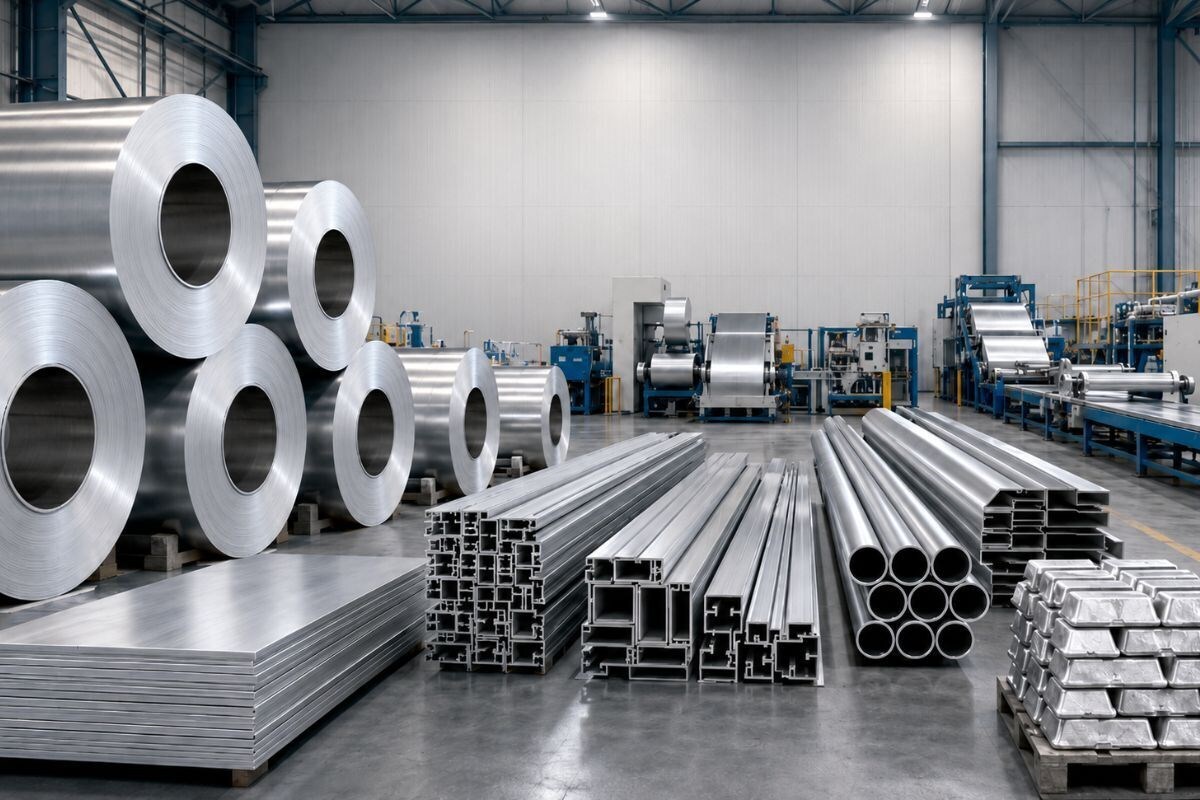
The image used in this article is generated with an AI tool and does not depict any real-time moment
India's manufacturing ambitions will remain unrealised unless its MSMEs are allowed to compete on a level playing field, said Mr Praveen Khandelwal, Member of Parliament and Secretary General, Confederation of All India Traders (CAIT), asserting that the downstream aluminium sector holds significant untapped potential for employment generation, export growth and domestic value addition.
{alcircleadd}Mr Khandelwal said that policy must enable MSMEs to access industrial inputs at globally competitive prices, adding that a fair and rationalised duty structure on primary aluminium is essential to strengthening the entire manufacturing ecosystem from raw material to finished product rather than protecting any single segment of the value chain.
Echoing this position, India's leading downstream aluminium associations came together to appeal to the Government of India to create a level playing field for the sector, in line with the roadmap laid out in the Aluminium Vision Document.
"The downstream aluminium industry is the backbone of India's MSME manufacturing base, yet it continues to operate under a duty structure that works against its competitiveness. We urge the government to implement the recommendations of the Aluminium Vision Document and rationalise the Basic Customs Duty on primary aluminium and aluminium scrap so that our members can compete on equal footing, both domestically and globally," said Mr Naveen Pant, Secretary, Aluminium Secondary Manufacturers Association (ASMA).
The global aluminium casting usage is expected to reach 24.2 million tonnes in 2026. To know about the future market trends, prebook our upcoming report “Global Aluminium Casting Market 2026-2032”
"Our industry supports lakhs of livelihoods across small and medium enterprises. However, high cost of primary aluminium has led to higher cost of manufacturing for Indian MSMEs, and the lower demand for Indian products will lead to lower investment in new and existing manufacturing capacity in the downstream sector. A level playing field on raw material costs, as envisioned in the Aluminium Vision Document, is critical, if India is to realise its full potential as a global hub for value-added aluminium manufacturing," said Mr Navendu K Bhardwaj, Member, Aluminium Secondary Manufacturers Association (ASMA).
A key concern raised was the 7.5 per cent Basic Customs Duty on primary aluminium, which industry stakeholders said has driven up input costs for downstream manufacturers through import price matching practices adopted by India's primary producers. With primary aluminium accounting for up to 80 per cent of production costs for downstream manufacturers, stakeholders called for a more balanced tariff structure that supports domestic value addition, improves export competitiveness and enables MSMEs to compete more effectively within India and in global markets.
Despite India being the world's second-largest producer of primary aluminium, the downstream industry continues to operate at only 50-55 per cent of its installed capacity, even as it supports nearly 10 lakh direct and indirect jobs. Stakeholders noted that improved access to competitively priced raw material would help unlock this idle capacity, encourage investment in value-added production, and strengthen India's standing as a global manufacturing hub.
Ms Nirupama Soundararajan, Founder, Policy Consensus Centre, said, "There are many issues that the MSME secondary aluminium manufacturing sector grapples with, but the most pressing of this is the impact of the high import duties on their total cost of manufacturing. Even though India produces aluminium locally, the price is benchmarked to London Metal Exchange, and the price charged to local secondary MSME manufacturers is an import parity price against the benchmark.
This is detailed in the Aluminium Vision Document by the Ministry of Mines, where it is noted that India's downstream aluminium sector has paid nearly USD 470 million in excess to domestic primary producers due to this pricing mechanism. If this amount could have been used otherwise towards investments in technology, innovation and scaling of the downstream, Indian MSMEs would have been significantly stronger against the various economic and geopolitical headwinds affecting the sector today."
Policy Consensus Centre, a think tank, on Thursday convened a high-level stakeholder consultation to discuss the imperatives for growth of India's downstream aluminium industry. The consultation brought together policymakers, industry leaders, trade bodies and experts to deliberate on the structural reforms including raw material affordability, tariff rationalisation and manufacturing competitiveness that are needed to strengthen the downstream aluminium ecosystem and position India as a globally competitive manufacturing hub.
Unlock key insights from leading companies and experts across the aluminium ecosystem with our e-Magazine - Mine to Market: ALuminium Producers & Manufacturers 2026
Note: This article has been issued by Aluminium Secondary Manufacturers Association and has been published by AL Circle with its original information without any modifications or edits to the core subject/data.
Responses