Geopolitical disruptions and structural demand: China's aluminium exports to rebound by 2026
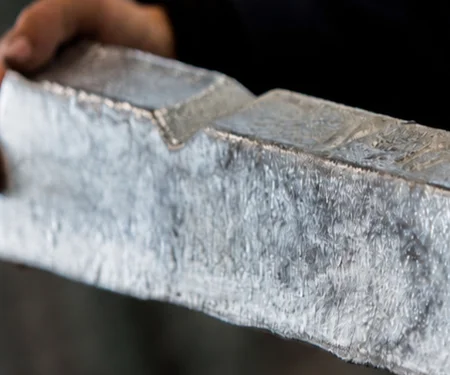
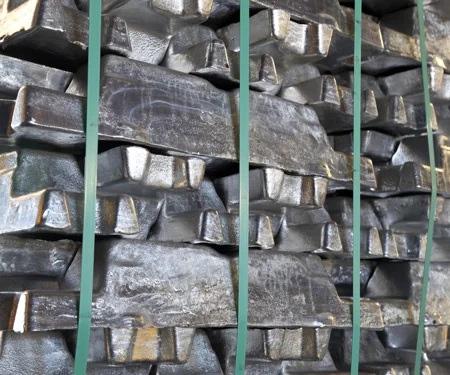
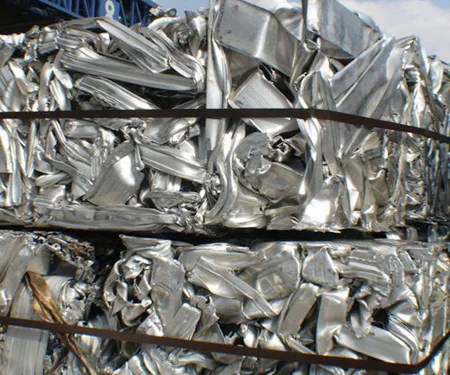
Stock image for referential purposes only
1. Aluminium semis exports overview
In April 2026, China's aluminium semis exports showed a strong rebound. According to customs data, April exports of aluminium semis (including aluminium extrusion, aluminium plate/sheet and strip, aluminium foil, etc.) reached 535,700 tonnes, up 20.9 per cent M-o-M and up 9.8 per cent Y-o-Y; exports of aluminium products (including aluminium wire, etc.) reached 318,000 tonnes, up 32.8 per cent M-o-M and up 7.8 per cent Y-o-Y. Cumulative aluminium semis exports from January to April totalled 1.1555 million tonnes, up 6.2 per cent Y-o-Y cumulatively. Against the backdrop of global aluminium supply contracting due to geopolitical conflicts and a continuously widening price spread between domestic and overseas markets, China's aluminium semis exports are entering a phase of cyclical recovery.
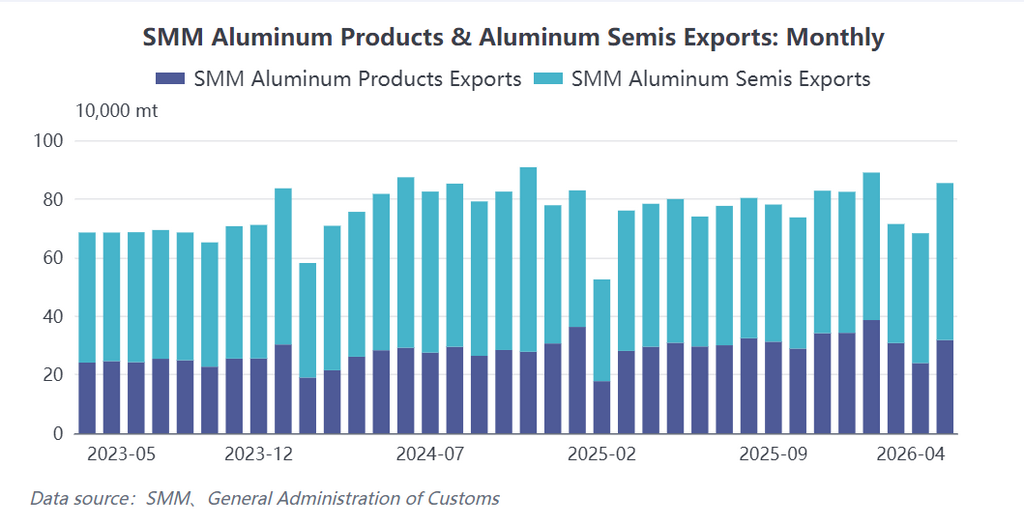
Image source: SMM
2. Segment-by-segment analysis
Aluminium wire: Pure aluminium stranded wire leading growth, may expected to set new record
In April, China's aluminium wire exports reached 27,580 tonnes, up 4.7 per cent M-o-M and up 28.95 per cent Y-o-Y. Notably, exports of pure aluminium stranded wire without steel core (tariff code 76149000) reached 15,500 tonnes, surging 94.5 per cent M-o-M, with its share of total exports jumping from the normal range of 30 per cent-40 per cent to 56.4 per cent. This directly reflected the surge in substitution demand for pure aluminium products following the widening of the price spread between domestic and overseas markets. In terms of destination, Southeast Asia (33.1 per cent) and Africa (30.6 per cent) were the main markets, with rigid demand from power grid construction supporting stable exports of aluminium conductor steel reinforced wire. Enterprise production schedules showed that pure aluminium stranded wire orders continued to increase in volume from May to July, and total aluminium wire exports in May are expected to surpass the single-month peak of the past five years.
Aluminium extrusion: Middle East orders hit bottom and recovered, demand released in Latin America and Australasia
In April, aluminium extrusion exports reached 76,000 tonnes, up 56.8 per cent M-o-M and returning to Y-o-Y growth of 6.9 per cent, reversing the 32.8 per cent Y-o-Y decline in March in one stroke. Guangdong Province, as the main production base (45 per cent share), saw exports surge 124.4 per cent M-o-M. In terms of export destinations, Southeast Asian countries such as Vietnam and Malaysia still dominated (22 per cent combined), but Latin American countries such as Colombia, the Dominican Republic, and Chile rose to the 8th-10th positions, with a combined share of 8.7 per cent, indicating steady release of construction extrusion demand in emerging markets. Although the Middle East showed some recovery (April exports of 769 tonnes, up 142 per cent from 317 tonnes in March), the absolute volume accounted for only 1 per cent of the total, far from returning to normal levels. Enterprises are actively going global to absorb surplus capacity through overseas joint-venture warehousing layouts in niche segments such as Central Asia, a trend that is clearly established.
Aluminium plate/sheet and strip: Supported by order transfers from north american fire, middle east recovery still shallow
In April, aluminium plate/sheet and strip exports reached 327,900 tonnes, up 18 per cent M-o-M and up 18 per cent Y-o-Y. Exports to the US remained at a high level of 34,800 tonnes (11 per cent share), climbing month by month since October last year, mainly due to continued order transfers of can stock and automotive sheet following a fire at a leading North American plate/sheet and strip plant. The plant is expected to resume production in June, and transferred orders will continue to provide support until then. On the Middle East front, exports to the UAE rebounded from 1,580.9 tonnes in March to 6,029.2 tonnes in April, but surveys indicated that rerouting via the Red Sea was non-normalized transport behavior, and most clients had not yet resumed placing orders, with the overall recovery ratio remaining low. For the full year, if North American order stickiness continues and the Middle East gradually normalizes, full-year aluminium plate/sheet and strip exports are expected to reach 3.5 million tonnes; under conservative expectations, approximately 3.2 million tonnes.
Aluminium foil: export rush pushing up processing fees, geopolitical persistence determining full-year upside
In April, aluminium foil exports reached 114,400 tonnes, up 10.5 per cent M-o-M, but still down 6.2 per cent Y-o-Y, with cumulative January-April exports down 5.4 per cent Y-o-Y. The conversion of domestic double zero foil production lines to battery foil led to a contraction in traditional packaging foil supply. Coupled with clients' concerns over prolonged strait blockades prompting pre-emptive export rushes, domestic aluminium foil enterprises' export order production schedules have been extended to late July, with regular pouch processing fees surging to $1,000-1,200/tonnes. However, the current increase in aluminium foil exports is driven more by precautionary restocking rather than a recovery in end-use demand. China's aluminium foil exports to the UAE and Saudi Arabia showed some recovery, with exports to the UAE rebounding from 2,515 tonnes in March to 4,441 tonnes in April, and exports to Saudi Arabia from 4,868 tonnes to 6,387 tonnes, both still below normal levels. Under an optimistic scenario, if the strait blockade continues through Q3 and the export rush persists, the full-year total will reach 1.4 million tonnes; under a conservative scenario, if the blockade is lifted, leading to convergence of overseas market premiums and demand being front-loaded, the full-year total would be only 1.3 million.
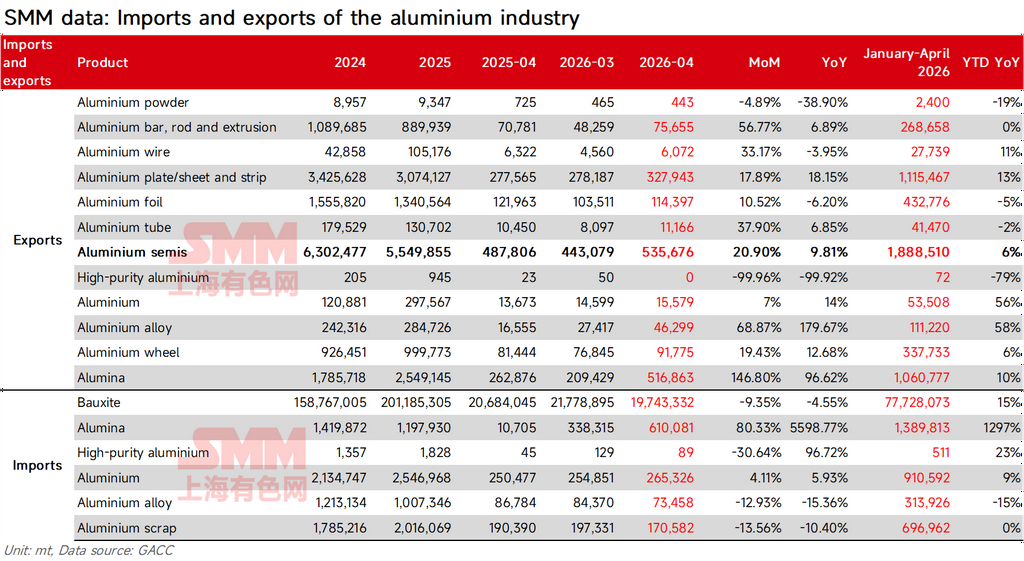
Image source: SMM
3. H2 2026 export outlook and full-year expectations
Currently, key aluminium semis export enterprises in China reported that orders for June-July maintained a growth trend, with some top-tier players seeing M-o-M growth of 15 per cent-20 per cent. However, the industry's overall production schedule has not yet recovered to the best levels of 2024. Ex-China, raw material inventory at semis processing enterprises was generally low. The backwardation structure in nearby LME aluminium prices suppressed stockpiling willingness, but rigid demand persisted in the construction, power, and electronics sectors. The core variables for H2 are: first, whether the production resumption of the leading North American flat-rolled products plant in June remains uncertain, and whether the stickiness of redirected orders can be sustained; second, whether tensions in the Strait of Hormuz will ease; and third, whether the price spread between domestic and overseas markets can maintain a widening trend. Overall, under the optimistic scenario, if rerouting shipments via the Middle East gradually becomes the norm, some North American orders are retained, and the price spread holds, aluminium semis exports are expected to increase to 600,000 tonnes in May and reach 670,000-680,000 tonnes in June, bringing full-year export volume to approximately 6.35 million tonnes, surpassing the 2024 level (approximately 6.3 million tonnes). Under the conservative scenario, if North American orders flow back after June, the Middle East recovery falls short of expectations, and the earlier export rush front-loads demand, full-year exports would be approximately 6 million tonnes, but still higher than 2025 (approximately 5.55 million tonnes). Regardless, the tone of recovery and rebound in China's aluminium semis exports in 2026 has been set. "Reclaiming the ground lost in 2025" is a high-probability event, and the pace of geopolitical conflict evolution and the sustainability of structural demand will be the core focus for subsequent tracking.
Note: This article has been issued by SMM and has been published by AL Circle with its original information without any modifications or edits to the core subject/data.

China's aluminium processing rate falls 0.3%, sector performance varies
Next articleWorldwide Aluminium returns to profit in the March quarter despite a dip in sales
Grow with
AL Circle