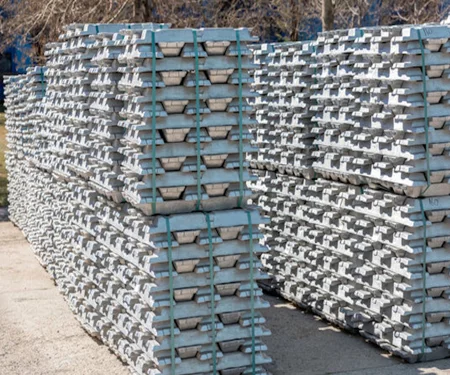
India’s bauxite import is witnessing a turning point in 2025, as Ghana makes its debut as a key bauxite exporter, filling the void left by Guinea’s sudden export slump.
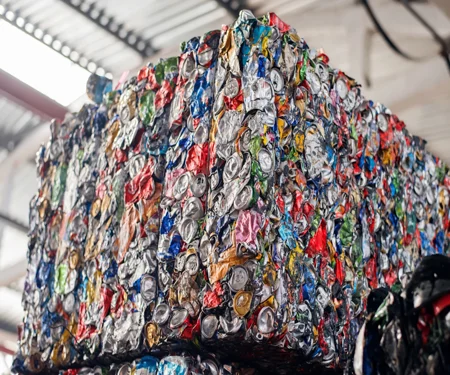
Image for representational purpose
According to data from the Ministry of Commerce, India imported 0.31 million tonnes of bauxite in Q1 2025, a staggering 76 per cent decline compared to 1.28 million tonnes in the same period last year. The plunge underscores both external supply constraints and internal realignments in India's aluminium industry.
But despite the overall quarterly decline, March 2025 witnessed a brief rebound, with imports rising to 0.19 million tonnes, a 13 per cent year-on-year increase.
Guinea’s collapse, Ghana’s gain
The most dramatic shift was the collapse in bauxite shipments from Guinea, which historically accounted for the bulk of India’s imports. In Q1 2025, imports from Guinea plummeted to 0.15 million tonnes, down from 1.24 million tonnes in Q1 2024, an 87 per cent decline. The drop is widely attributed to political instability, infrastructure bottlenecks, and Guinea's growing preference to serve Chinese demand.
Ghana, on the other hand, entered the scene with 0.12 million tonnes of bauxite exports to India in Q1 2025, up from zero in the same period last year. This sharp rise signals Ghana’s emergence as a strategic new supplier, offering India a much-needed alternative in the face of Guinea’s unreliability.
From China, India’s imports remained largely stable at 0.032 million tonnes, compared to 0.031 million tonnes a year earlier.
Ghana’s export surge fuelled by infrastructure and intent
The sudden surge in Ghanaian exports was not accidental. The country has been actively expanding its bauxite production capacity, reaching a record 1.7 million tonnes in 2024, with projections to hit 2 million tonnes in 2025, according to the Ghana Chamber of Mines. This growth is largely credited to the efforts of the Ghana Integrated Aluminium Development Corporation (GIADEC), which has unlocked new mining zones in Awaso and Nyinahin, significantly boosting the nation’s resource output.
The momentum intensified in early 2025 when Emirates Global Aluminium (EGA) signed a strategic Memorandum of Understanding (MoU) with GIADEC. The agreement not only covers long-term bauxite offtake but also outlines plans for port and rail infrastructure development, directly aimed at serving major global markets such as India.
This wave of international collaboration is positioning Ghana as a reliable and competitive exporter, well-placed to fill supply gaps in aluminium-producing countries. A key enabler of this strategy is the deepening of India–Ghana trade relations.
In May 2024, the India–Ghana Joint Trade Committee met in Accra, resulting in agreements to simplify customs procedures and digitally integrate India’s UPI system with Ghana’s GHIPSS platform. These initiatives are expected to make cross-border mineral trade especially in bauxite more efficient, timely, and digitally seamless.
India’s domestic push can’t fill the gap yet
Meanwhile, the Indian government is working to reduce reliance on imports by enhancing domestic bauxite mining. The Ministry of Mines recently auctioned new bauxite blocks in Odisha and Maharashtra, and is pushing for faster environmental clearances.
In April 2025, production of bauxite rose 13.9 per cent year-on-year from 1.87 million tonnes to 2.13 million tonnes. During FY2024-25, the country produced 24.7 million tonnes of bauxite, securing its place as the world’s fifth-largest producer after Guinea, Australia, China, and Brazil. Year-on-year, the shift in production marked a 2.9 per cent increase from the 24 million tonnes recorded in FY2023-24.
Historical data since FY2019-20 shows that India’s bauxite production rebounded strongly after two consecutive years of decline, bottoming out at 2.04 million tonnes in FY2021. Output began to recover in FY2022, reaching 22.5 million tonnes, and continued its upward trajectory to 23.84 million tonnes in FY2023.
As Guinea fades and Ghana rises, 2025 marks a recalibration of India’s bauxite supply chain one that underscores the urgency of diversification, diplomacy, and domestic mining reform in securing long-term resource stability.
Note: To feature your brand and share insights, contribute an article or interview in our forthcoming e-magazine "American ALuminium Industry: The Path Forward".












_md.webp)
_md.webp)
_md.webp)