Over the past week, the United States and Ukraine have dominated news headlines — but not for the right reasons. After the US announced its support for Russia in blocking Ukraine's draft resolution at the United Nations, global attention shifted towards the US-Ukraine meeting held on February 28, 2025. However, what followed took an unexpected turn, leaving the world stunned. The meeting, which was meant to be a diplomatic milestone, focused on the Mineral Resources Agreement for joint investment in Ukraine's natural resources - including rare-earth elements – quickly spiralled into a heated exchange between President Donald Trump, Vice President JD Vance, and Ukrainian President Volodymyr Zelensky.
The talks that were intended to seal a significant partnership in the mineral and metal industries instead left stakeholders questioning whether the fiery discussions would pave the way for groundbreaking collaboration or trigger full-blown fallout. So, what did the historic face-off ultimately lead to — triumph or catastrophe?
According to several reports, four sources informed Reuters on Tuesday, March 4, that the Trump administration and Ukraine plan to sign the Mineral Resources Agreement, granting the US access to Ukrainian minerals in exchange for military aid. President Donald Trump acknowledged that Ukrainian President Volodymyr Zelensky's strong negotiation approach and willingness to strike the deal to mend strained ties with the US left a positive impression on him.
Zelensky reportedly urged the US to proceed with the agreement, calling the recent clash a regrettable episode. However, the sources cautioned that the deal remains unsigned, and the situation could still take an unexpected turn.
However, in the meanwhile, let us evaluate the potential benefits if the deal materialises and the US invests in Ukraine's mineral resources. But first, why does the Trump administration agree to secure this agreement?
- Access to about $500 billion worth of Ukraine's mineral wealth would empower the United States to counter China's dominance in the global rare earth supply chain. This deal would serve as a payback to the US as Trump claims to have given $350 billion worth of military assistance to Ukraine over the past three years since its geopolitical conflict with Russia.
- Russia has offered the US joint ventures on rare earth extraction in the Ukrainian territories it controls. According to CBS report, about 50 per cent of Ukraine's rare earth deposits are now in Russia-occupied territory since Russia managed to seize control of 20 per cent of Ukrainian land from eastern Donbas and Crimea.
- Ukraine holds 5 per cent of the world's total rare earth reserves, a valuable asset that can strengthen the US position in the ongoing global competition for critical minerals.
At present, the global rare earth supply chain is primarily controlled by China, with a maximum capacity for production and processing. But with this deal signed, the United States, Russia, and Ukraine would introduce a new dimension to this lopsided supply chain.
What are the Ukraine-US deal terms?
The proposed deal outlines the plans to utilise revenues from Ukraine's rare earth and critical minerals reserves, oil and gas.
- The revenues should be invested back in Ukraine for reconstruction, development projects, infrastructure, and state-owned enterprises.
- Ukraine will contribute 50 per cent of revenues from its state-owned resources to the joint fund. Ukraine's revenue from aluminium exports also notably rose in 2024. In H1, its export was valued at $54.175 million, up by 12.8 per cent year over year. Growing further in the second half of the year by US$70.233 million, the nation's aluminium export value at the end of the year amounted to US$124.408 million, according to the States Customs Service of Ukraine.
- The US will support Ukraine for its long-term economic stability.
- The US will support Ukraine in achieving peace in the ongoing war with Russia but offer no guarantee for security.
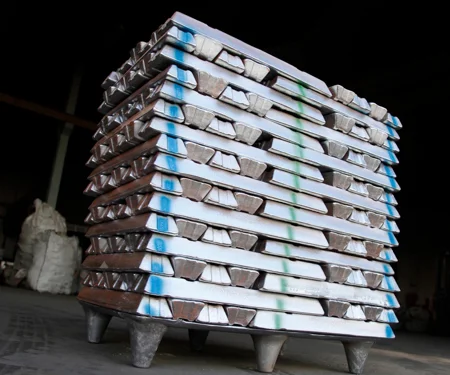
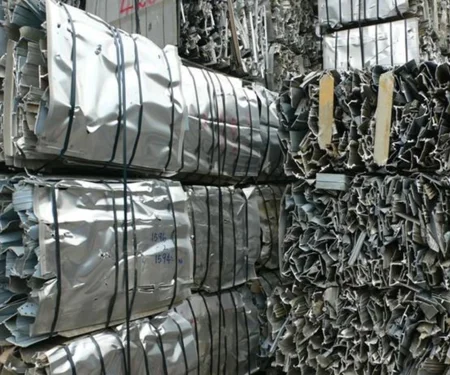
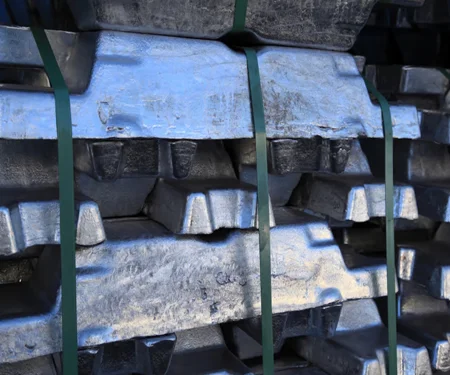
Alongside access to critical minerals, the deal with Ukraine can also help the United States gain control over the former's aluminium and its raw materials supply chain. Very recently, Ukraine confiscated aluminium raw materials worth 2.11 billion hryvnias (US$50.3 million) from Russian aluminium magnate Oleg Deripaska. On January 29, 2025, the Sluzhba Bezpeky Ukrayiny (SBU) or the Security Service of Ukraine said it seized close to 500,000n tonnes of bauxite and alumina that were stored at Mykolaiv Alumina Plant, which Ukraine nationalised alongside other Deripaska-owned factories following Russia's full-scale invasion.
Moreover, Ukraine's rare earth elements and minerals play a crucial role in the aluminium industry. The country holds 7 per cent of Europe's titanium supplies and boasts large lithium deposits, along with significant reserves of copper, lead, zinc, silver, nickel, cobalt, and manganese. Many of these minerals are essential in aluminium production. Titanium acts as a grain refiner, enhancing the overall structure of aluminium alloys. Copper is used to boost strength through precipitation hardening, while manganese helps moderate strength through solution strengthening, making it ideal for applications requiring high strength without extensive heat treatment. So, getting an access to these minerals will help the United States strengthen its aluminium manufacturing sector. Minerals used in aluminium alloys
- 2XXX Series – Copper Alloy
- 3XXX Series – Manganese Alloy
- 4XXX Series – Silicon Alloy
- 5XXX Series – Magnesium Alloy
- 6XXX Series – Magnesium & Silicon Alloys
- 7XXX Series – Zinc Alloy