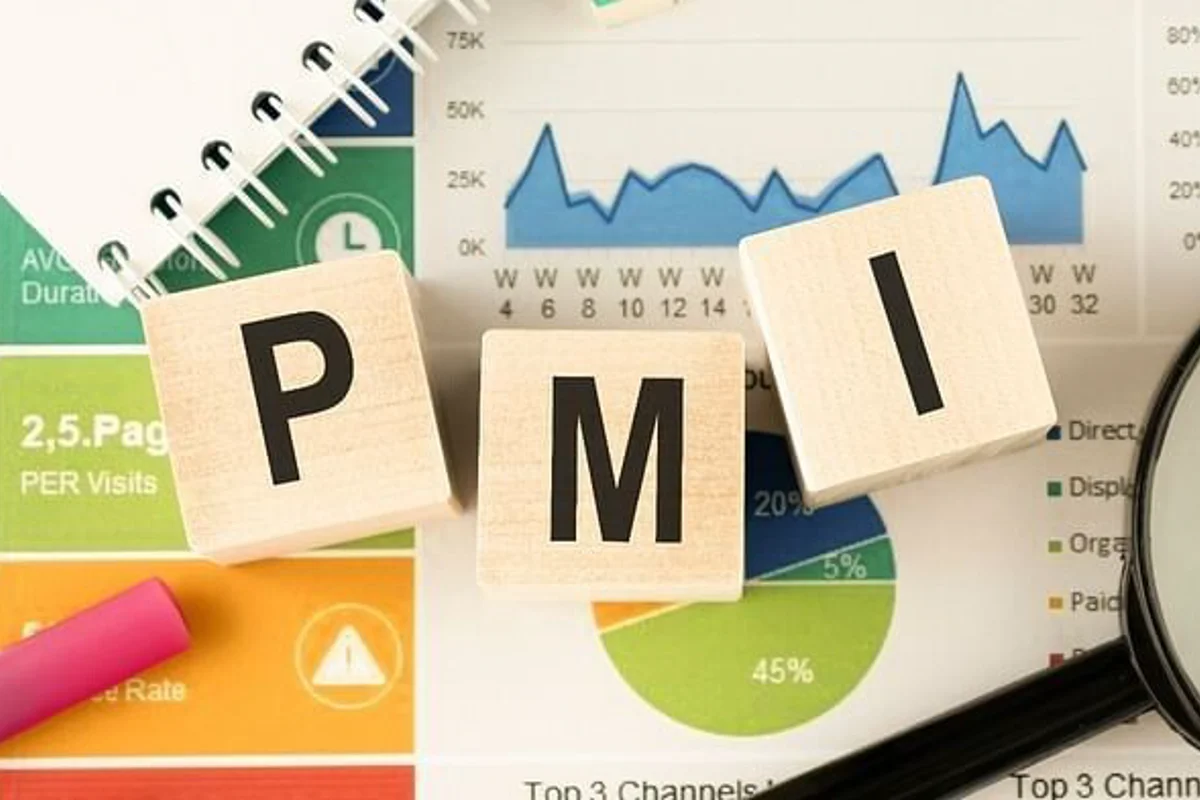
China's factory activity accelerated in February, fuelled by stronger supply, rising demand, and a rebound in export orders, according to a private-sector survey released Monday. Seasonal factors linked to the holiday period also contributed to the growth. The Caixin/S&P Global manufacturing PMI climbed to 50.8 per cent, up from 50.1 per cent in January, reaching a three-month high and surpassing analysts' expectations of 50.3 per cent, as predicted in a Reuters poll.
However, towards the end of December, China's aluminium demand faced a major backlash due to the construction sector's deteriorating market condition. As a result, the government introduced some extensive stimulus measures to help the industry grapple with the ongoing challenges. Spearheaded by the People's Bank of China (PBOC), the package included –
- The PBOC implemented bold monetary policies, including deeper-than-expected cuts to both the policy interest rate and the reserve requirement ratio (RRR). The RRR will be reduced by 0.5 percentage points, injecting approximately RMB 1 trillion (US$137 billion) into the financial system, with the possibility of further cuts ranging from 0.23 to 0.5 percentage points later this year.
- Mortgage rates on existing homes will be reduced by around 0.5 percentage points, providing homebuyers with an estimated RMB 150 billion (US$21.1 billion) in interest savings. This initiative aims to ease financial pressures, stimulate household spending, and encourage investment in the housing market.
- Liu Shijin, former deputy director of the Development Research Centre of the State Council, has called for a RMB 10 trillion (US$1.37 trillion) stimulus package, potentially funded through ultra-long-term government bonds. These funds would be allocated to vital sectors such as public services, affordable housing, and infrastructure, with a particular focus on small and medium-sized cities where housing demand — especially among migrant workers — remains high.
Caixin/S&P Global manufacturing PMI
A reading above 50 indicates expansion, while below 50 signals contraction. According to AFP-Yonhap, China's purchasing managers' index (PMI) — a key gauge of manufacturing activity — climbed to a three-month high in February, signalling a return to growth as the country intensified efforts to stimulate its economy. One of the greatest contributors to this significant growth can be attributed to the aluminium industry.
As per data, with an annual output of around 43 million tonnes, China's aluminium industry significantly impacts the country's manufacturing sector. Essentially, the specific metal industry in China is considered a massive and integral part of its manufacturing landscape. According to SMM data, China's aluminium processing industry recorded a composite PMI of 55.6 per cent in February 2025, staying firmly above the expansion threshold of 50.
Despite this momentum, manufacturers grappled with rising input costs, especially for materials like copper and various chemicals, squeezing profit margins. In response, factory owners prioritised cost-cutting measures. Employment in the sector continued to decline while output prices stayed low, highlighting weak pricing power.
Purchasing Managers' Index (PMI) by product type for aluminium
- In February, the PMI for China’s aluminium plate, sheet, and strip industry reached 54.8 per cent, rising 17.6 points month-on-month, according to SMM data.
- As per the SMM data, in February, the PMI for China’s aluminium foil industry climbed to 65.6 per cent, well above the 50-point threshold, signalling strong expansion.
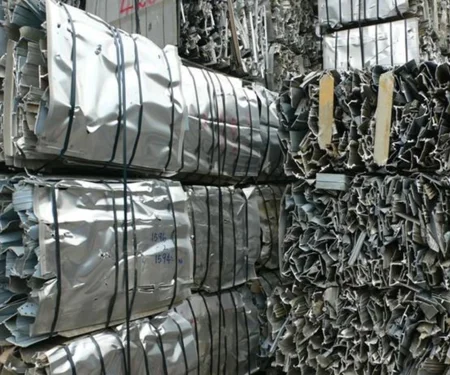
- The PMI for China’s construction aluminium extrusion industry rose to 53.75 per cent in February, climbing back above the 50-point threshold, according to SMM data.
- For aluminium wires and cables the composite PMI reached 52.4 per cent, staying above the 50-point threshold as work resumed after the holiday and order fulfilment accelerated, according to SMM data.
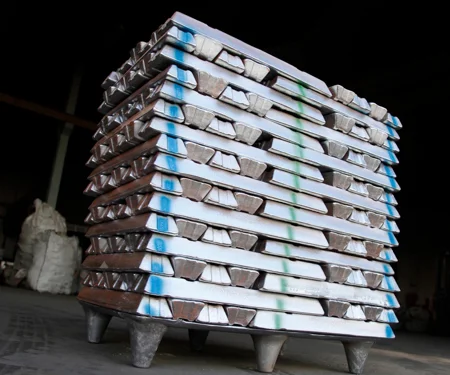
- In February, the PMI for China’s primary aluminium alloy industry rose to 60 per cent, up 12.8 points month-on-month, signalling a shift toward recovery, according to SMM data.
PMI to remain firm – says SMM
SHFE aluminium surged past the RMB 21,000 mark, holding steady at high levels and signalling potential for further gains. On the fundamentals side, most aluminium processing sectors resumed operations as expected, with new orders boosting production efficiency and accelerating procurement. The industrial extrusion sector stood out with particularly strong performance, while the new energy industry continued to drive incremental aluminium consumption.
With the traditional peak consumption season approaching in March and April — alongside heightened market expectations for policy signals from the Two Sessions — industry orders and downstream production efficiency are expected to improve further. SMM anticipates that the PMI for China’s aluminium processing industry will remain firmly above the 50-point threshold in March, reflecting sustained growth momentum.