40% forging deformation enhances aluminium alloy strength, ductility and corrosion resistance, study finds
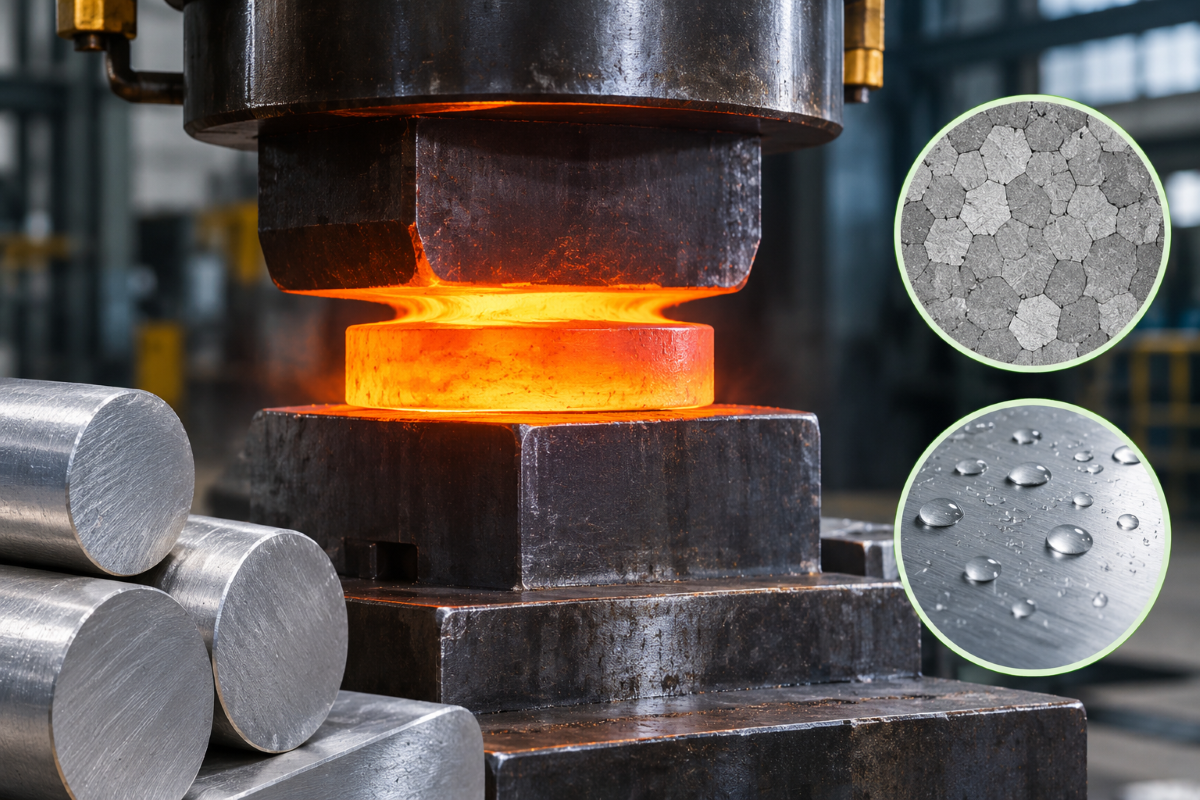
The image used in this article is generated with an AI tool and does not depict any real-time moment
A 40 per cent forging deformation level has delivered the best combination of strength, ductility and corrosion resistance in an experimental study of Al–Zn–Mg–Cu aluminium alloys. Researchers found that this processing condition produced the highest tensile strength, yield strength and elongation to fracture, while also improving the alloy's resistance to corrosion.
The study examined an aluminium alloy with a combined zinc and magnesium mass fraction of 11.3 weight per cent under different forging deformation levels. The findings show that the extent of deformation plays an important role in determining the alloy's final properties by influencing grain size, second-phase fragmentation, dislocation density and dynamic recrystallisation.
40% deformation delivers better mechanical properties
To examine these changes, researchers used optical microscopy, scanning electron microscopy and electron backscatter diffraction to study the alloy's grain structure, distribution of secondary phases and recrystallisation behaviour at different deformation levels.
Following forging, the specimens underwent solution treatment and aging before being tested for tensile properties at room temperature.
The results showed that specimens subjected to 40 per cent deformation achieved the highest tensile strength, yield strength and elongation to fracture after aging among all the tested conditions.
To know the aluminium casting demand forecast, explore our report "Global Aluminium Casting Market 2026-2032: Plant Economics, Alloy Segmentation, Pricing Intelligence, Supply Chain Analysis & Strategic Recommendations"
Microstructural analysis also revealed that these specimens had the smallest average grain size in both the longitudinal and short-transverse directions. Electron backscatter diffraction further showed that they had the lowest degree of texture aggregation and the lowest texture strength.
These results demonstrate the relationship between forging deformation and the internal structure of the alloy, with the 40 per cent condition delivering the strongest mechanical performance among the samples examined.
Corrosion resistance also improves at 40% deformation
Alongside mechanical testing, researchers evaluated the corrosion behaviour of the aged specimens through intergranular corrosion tests and electrochemical measurements.
The specimens subjected to 40 per cent deformation recorded the shallowest corrosion penetration depth during intergranular corrosion testing, indicating better resistance than the other processing conditions.
Electrochemical measurements supported this result. The 40 per cent deformed alloy showed the most positive self-corrosion potential and the lowest self-corrosion current density among the tested samples.
Taken together, the mechanical and corrosion tests identified 40 per cent forging deformation as the most favourable condition for the investigated Al–Zn–Mg–Cu alloy.
Looking for aluminium extrusion equipment providers? Browse through a comprehensive list on AL Biz.
Grow with
AL Circle













_md.webp)
_md.webp)