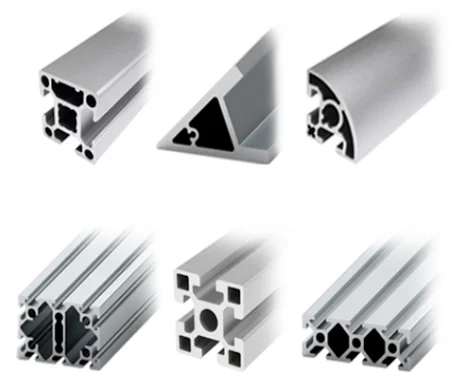
Sunday’s report on Turkey initiating anti-dumping probe into Chinese aluminium solar frames imports make both the global aluminium and solar industries wonder 'WHY', given the nation’s growing solar energy capacity. In only two and half years, Turkey’s solar energy capacity surged by 102 per cent and reached 19.6 GW by the end of 2024, surpassing the 2025 target ahead of time. Against this backdrop, Turkey’s decision to target China, a key supplier of aluminium solar frames, comes as a surprise.
China – dominant supplier under scrutiny
China remains Turkey’s largest exporter of aluminium photovoltaic (PV) frames. In 2023, China alone exported 280,000 tonnes of solar frames, accounting for 76 per cent of Turkey’s total imports. This, according to Turkey, is undercutting local manufacturers, creating an uneven playing field and pressuring domestic producers with unfair pricing competition.
Yet the fundamental question remains unanswered that how Turkey will maintain its momentum in deploying solar capacity if access to affordable Chinese frames becomes restricted with up to 25 per cent duty?
Turkey’s production – may or may not meet demand without China?
Turkey houses three companies involved into manufacturing aluminium frames - Arslan Alüminyum, Anka Alüminyum Sanayi ve Ticaret A.S., and CW Enerji. Arslan Alüminyum has 5,200 tonnes of annual extrusion profile production capacity after adding on new extrusion presses in 2023. Anka Alüminyum, on the other hand, possesses 7,200 tonnes of annual aluminium profile. So, these two companies together boast 12,400 tonnes of annual aluminium profile capacity.
In addition, CW Enerji, one of the leading companies in the renewable energy sector, has recently expanded its product portfolio into aluminium frame profiles. The company is set to launch a new production facility in the Antalya Organized Industrial Zone, 2nd Section, with operations scheduled in the second half of 2025.
The planned addition of new production capacity is expected to enhance Turkey’s domestic output of aluminium solar frames, which could likely be one of the motivations behind the government’s move to curb low-cost imports from China and bolster local manufacturing. But if steep duties are imposed on Chinese imports, who or what will fill the ensuing shortfall of 280 thousand tonnes?
1 MW solar installation typically requires around 21 tonnes of aluminium. At that rate, Turkey’s 19.6 GW of installed solar capacity will require 412 thousand tonnes of aluminium, underscoring the considerable supply gap that could emerge if Chinese imports are significantly restricted.
Is controlling unlicenced solar growth an attempt?
This anti-dumping measure by Turkey could also be an attempt to restrict easy availability of aluminium frames at cheap costs in order to control the rise of unlicensed solar power facilities, which has been a driving force to Turkey’s solar growth.
Under existing regulations, unlicensed solar systems are allowed as long as some of the electricity is self-consumed. Initially, such installations were required to be on-site, but regulatory changes have since relaxed this requirement, allow systems and consumption points within the same distribution zone, and later expanding to different zones altogether.
“For example, if you have a facility in Istanbul, you can now install your solar panels in Antalya, where there is more sunshine. There was a marked take up [in unlicensed solar power plants] after this regulation,” said Ufuk Alparslan, Ember’s Regional Lead of Turkey.
Anti-dumping duty could reshape market dynamics
Should the investigation validate Turkey’s claims, punitive tariffs ranging between 18 per cent and 25 per cent could be imposed on Chinese aluminium frame imports. While such a move may bolster domestic manufacturers in the long term, it also poses immediate risks to the pace and cost-efficiency of Turkey’s solar expansion.
However, this move by Turkey is not a one-of-a-kind incident, but a strategic part of its earlier anti-dumping duties rated at $25/m2 imposed on PV modules imports from Vietnam, Malaysia, Thailand, Croatia, and Jordan













_md.webp)