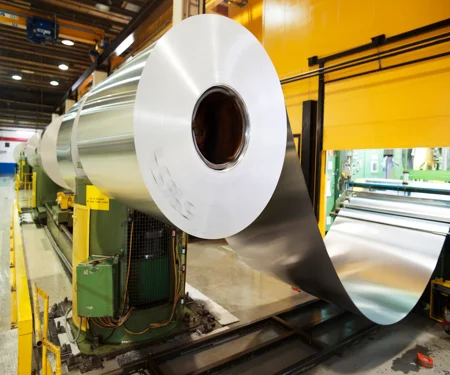
In a calculated move to tackle the overstuffing of the ‘material in question’ in its domestic aluminium industry, the Indian government imposed a provisional anti-dumping duty on aluminium foil imports from China. Effective from March 17, 2025, this measure levies duties ranging between USD 619 and USD 873 per tonne on aluminium foil up to 80 microns in thickness, with the exception of foil below 5.5 microns intended for non-capacitor applications.
This action follows the Directorate General of Trade Remedies’ (DGTR) preliminary findings, which concluded that the influx of low-priced Chinese aluminium foil has inflicted material injury on India’s domestic producers.
The DGTR’s investigation revealed that Chinese imports had seized nearly 30 per cent of the Indian market despite the country’s ample local production capacity. China exported 1.56 million tonnes of aluminium foil in 2024, among which 10 per cent was sent to India, the BofA analysts said in a note to clients on Monday, citing Shanghai Metal Market data.
“According to SMM, [...] India’s anti-dumping measure would impact China aluminium export,” the analysts led by Matty Zhao wrote.
The surge in Chinese aluminium foil imports has been more than domestic anticipation. In the first eleven months of 2024, India imported 140,234 tonnes from China, marking a 15.64 per cent increase compared to the same period in the previous year. This consistent upward trend has been evident since 2021, raising concerns among Indian aluminium producers about the potential for increased market saturation, especially in light of similar tariffs imposed by other countries.
The DGTR’s investigation identified several Chinese companies engaged in dumping practices, including Henan Mingtai Technology Development Co. Ltd., Henan Mingsheng New Material Technology Co. Ltd., and Jiangsu Dingsheng New Materials Joint-Stock Co. Ltd. The highest duty of USD 873 per tonne is designated for Chinese aluminium foil exports from producers not explicitly listed.
The domestic aluminium industry has welcomed this protective measure. Hindalco Industries, a leading aluminium manufacturer in India, along with other producers like Shyam Sel & Power Ltd., Venkateshwara Electrocast Pvt. Ltd., and Ravi Raj Foils Ltd., had previously petitioned for an inquiry into the adverse effects of Chinese imports. They argued that the unchecked influx of underpriced Chinese aluminium foil was undermining their competitiveness and financial stability.
However, the imposition of anti-dumping duties has ignited concerns among downstream industries that rely on aluminium foil as a primary input.
Manufacturers in the flexible packaging sector, for instance, dread that the heightened input costs could render their finished products less competitive, both domestically and internationally. There is apprehension that such duties might inadvertently lead to a monopoly, limiting the availability of quality aluminium foil and affecting the ability of downstream producers to meet customer demands effectively.
This development occurs against a backdrop of escalating global trade tensions. The United States has recently imposed a 25 per cent tariff on all steel and aluminium imports, a move that has prompted fears of trade diversion, with Chinese products potentially flooding alternative markets like India. Indian aluminium producers have expressed concern that, following the US tariffs, Chinese exporters might increasingly target the Indian market, exacerbating the challenges faced by domestic manufacturers.
The provisional nature of the anti-dumping duty means it will be in effect for six months, during which a more comprehensive investigation will be conducted to determine if a permanent measure is warranted. The stipulated period will be crucial for assessing the impact on both the domestic aluminium industry and the subsequent downstream sectors that depend on aluminium foil.
With reciprocal tariff imposition at the doorstep, the global trade landscape is one step away from a drastic revolution. In the Asian continent, concurrently, India’s strategic duty levying policy will clearly direct the balance of the protection of its domestic industries with the complexities of international trade relationships.












_md.webp)