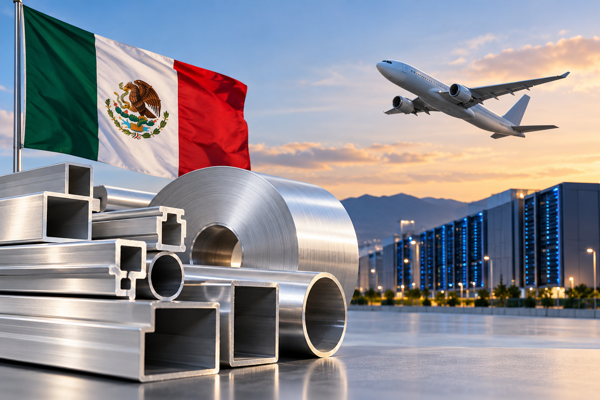
Mexico’s aluminum industry is looking to capitalize on rising demand from artificial intelligence (AI) infrastructure, electric mobility, automotive manufacturing, and aerospace. Expanding technology investments and international market opportunities are expected to support sales growth, while the country’s reliance on imported aluminum highlights the importance of strengthening domestic processing capabilities. Ramón Beltrán, president of Mexico’s National Chamber of the Aluminum Industry (Canalum), expects the country’s domestic and international aluminum sales to gain momentum in 2026, supported by demand from advanced technology applications and established manufacturing sectors. “We expect to close out this year with growth of between 7.5% and 7.8% in domestic and international...
The Confederation of British Metalforming (CBM) has called for closer UK-EU relations, warning that proposed European industrial policies could affect British manufacturers supplying the aluminium, steel and automotive industries. Stephen Morley, CBM President and Chair of the Euroforge Automotive Sector, made the call at the organisation's autumn meeting in Munich. He said stronger cooperation between the UK and EU was important for protecting manufacturing jobs, investment and cross-border supply chains. He stated, “ We need to protect British industry, but we also need to recognise that the UK and European automotive sectors are deeply connected. What damages one part of the supply chain will inevitably affect the other. ” Join the fourth edition of webinar " Hedging for recyclers -...
Grow with
AL Circle

India’s largest aluminium producer, Vedanta Aluminium, took initiatives of installing solar-powered borewells with advanced purification systems across villages in Odisha. The company reinforces its commitment to community well-being through its Water, Sanitation and Hygiene (WASH) programme across the villages of Odisha’s Kalahandi and Rayagada. To strengthen community ownership and ensure long-term sustainability, the Panchayati Raj Institutions (PRIs) have accepted the handover of the newly commissioned systems. Community members were also trained on proper operation and maintenance of the systems in the presence of local Sarpanches (heads of the villages) and PRI representatives. For the global aluminium value-chain 2026 outlook, book our exclusive report “ Global ALuminium Industry...

The UK government has issued the second draft of its Carbon Border Adjustment Mechanism (CBAM) framework, the new regime to be effective from January 1, 2027. Exemptions can be noted in administrative details, but with no fundamental scope changes. The new regulations would apply across the UK, including Northern Ireland. Extending beyond usual third-country trade flows, imports from the Crown Dependencies, Overseas Territories, and the UK Continental Shelf. Explore- Most accurate data to drive business decisions with Global ALuminium Industry Outlook 2026 across the value chain Same sectors but new scope and exemptions The core sectors for CBAM to impose a carbon price on emissions embedded in imports remain aluminium, cement, fertiliser, hydrogen, and iron and steel, but only for...

Kentucky’s Metals Innovation Initiative (MI2) has appointed Laura Haury from Logan Aluminum as its new sustainability project coordinator. To learn about the global aluminium outlook, download our report: Global Aluminium Industry Outlook 2026 In her new role, Haury will connect manufacturing practices with environmental stewardship and public engagement. She is expected to lead initiatives centered on recycling, sustainability education, and community outreach. Working alongside The Recycling Society through its Million Can Contest program, Haury will promote aluminium recycling awareness and help develop school and community-based programs aimed at improving recycling participation across Kentucky. Read More: China’s solar panel industry is shrinking: Impact of overcapacity, price...

China’s solar panel manufacturing sector is facing a serious slowdown despite solar energy becoming the cheapest form of clean power worldwide. Over the past decade, China emerged as the global leader in solar panel production. Strong government support, large-scale industrial expansion, and technological advancements enabled manufacturers to significantly reduce production costs. As a result, solar panels became more affordable. This rapid expansion has created a major imbalance. Manufacturing capacity in China is 500 GW per year, exceeding the global demand of 270 GW in 2024. This oversupply has intensified competition among producers, leading to a sharp decline in prices. In many cases, solar panels are being sold below their production cost. For the global aluminium value-chain 2026...

A consortium comprising Fives, Aluminium Dunkerque, Trimet and Rio Tinto has formally begun pilot testing of a new carbon capture system designed specifically for primary aluminium production. For the global aluminium value-chain 2026 outlook, book our exclusive report “ Global ALuminium Industry Outlook 2026 " The initiative, known as C4Capture, entered its trial phase following a partners' meeting on January 14, 2026 at the Aluminium Dunkerque facility. In the upcoming weeks, testing will be conducted at sites in Dunkerque and Saint-Jean-de-Maurienne. The objective is to validate the technical reliability and economic viability of the proposed solution before moving forward with the potential industrial development. Also Read: Indonesia’s aluminium industry to be hit by 317% inflated...

Indonesia’s aluminium industry is growing fast, tackling all the stalled sites and upgrading technology at processing units. The RKAB structure has made sure that the ore and the subsequent production process are streamlined. But what about the electrons? Globally, electricity alone accounts for roughly 30-35 per cent of the cost of producing one tonne of primary aluminium. By 2028, Indonesia’s primary aluminium smelting capacity is projected to rise from 0.75 million tonnes per annum in 2024 to 3.13 million tonnes in 2028, a 317 per cent increase in just four years. That expansion is the final leg of Jakarta’s downstream pivot: converting bauxite reserves into integrated alumina and aluminium output. But the decisive constraint is neither geology nor capital. It is power. For the global...

China is approaching a symbolic and structural shift in its power sector as solar energy is on track to overtake coal in installed capacity for the first time in 2026. But since this milestone is unfolding alongside an aggressive coal build-out that critics say risks diluting the gains of China’s renewable success. To know more about the global primary aluminium industry 2026 outlook, book the report “ Global ALuminium Industry Outlook 2026 " According to the China Electricity Council, China’s installed solar capacity is projected to surpass coal within the next year, with the gap widening in 2026. By the end of that year, non-fossil energy sources, led by solar and wind, are expected to account for 63 per cent of total power capacity, while coal’s share falls to 31 per cent. The numbers...

The development journey of Kalahandi showcases trust as an equally essential factor as investment in any long-term progress. Vedanta Aluminium’s Milaap programme was designed as a periodical engagement platform rather than a one-time intervention. With each visit, building continuity and a deeper understanding over time, the dialogue between the villages and Vedanta Aluminium changed its nature for the better. Explore- Most accurate data to drive business decisions with Global ALuminium Industry Outlook 2026 across the value chain Building a community beyond the plant Under Milaap, company authorities leave plant premises to meet communities in village courtyards, schools, and shared spaces. Conversations cover varied topics such as agriculture, education, livelihoods, healthcare access,...

Alcoa’s proposed sponsorship agreement for Perth's Kings Park Everlasting Festival in Western Australia, worth AUD 200,000 with the Botanic Gardens and Parks Authority Board, has led to debates. Environmental organisations have raised concerns regarding the alignment between the company’s environmental track record and the park’s conservation values. Discussion has generated around how industrial companies can participate in environmental and community-focused partnerships while maintaining public confidence. Explore- Most accurate data to drive business decisions with Global ALuminium Industry Outlook 2026 across the value chain Stakeholders have pointed out the essentiality of corporate contributions complementing conservation goals. This plays a key role in maintaining transparency in...

The process of channelling industrial waste heat from TRIMET’s aluminium smelter located in Essen has been launched by TRIMET Aluminium SE in partnership with Iqony Fernwärme GmbH. This launch directly aims towards incorporating carbon-neutral energy, which will aid in boosting the environmental efficiency of the district heating network, further solidifying the sustainability credentials of the local heat supply. TRIMET Aluminium SE, which is deemed to be one of the largest aluminium producers in Germany and France, with this launch, will be able to feed nearly 31 thousand MW-hours of unavoidable waste heat annually. It is possible because the unavoidable waste heat generated during the process of electrolysis furnaces is converted into Iqony's district heating network. These are...
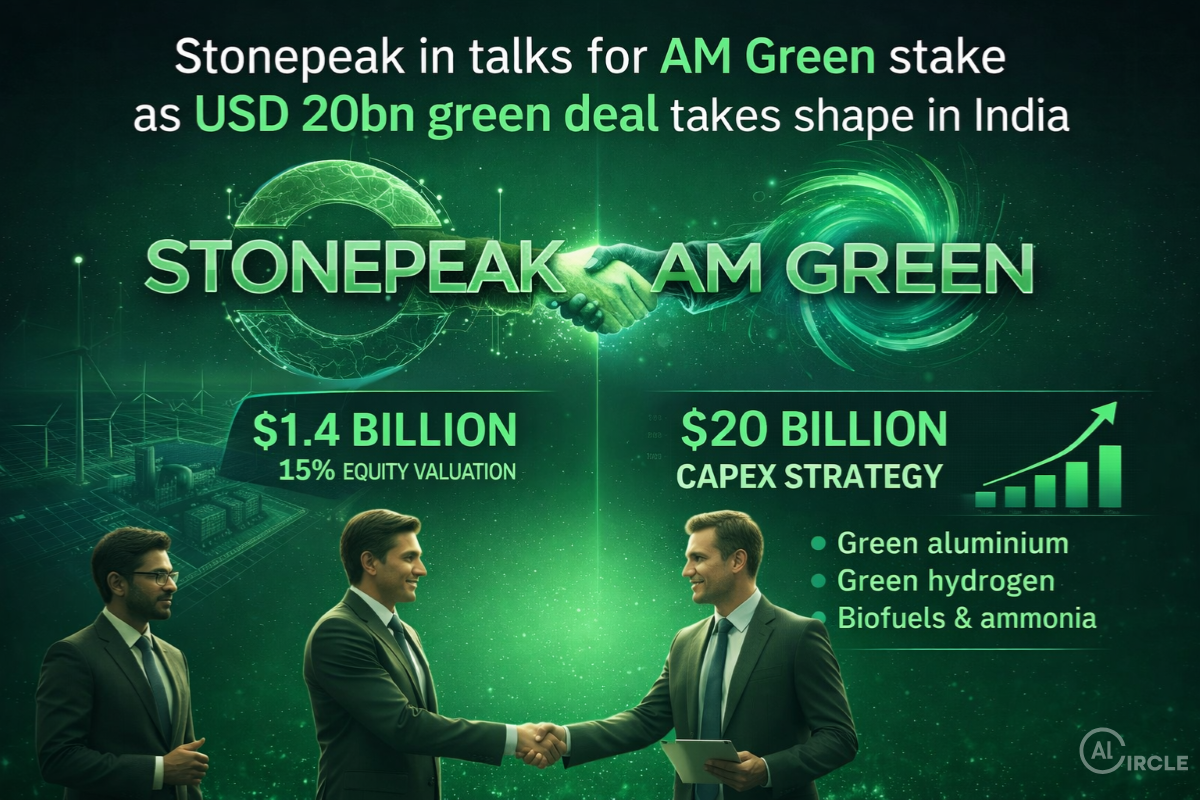
The US-based alternative investment firm, Stonepeak, is looking to undertake a 15 per cent stake in AM Green, the holding company of green energy, which is in advanced discussion now. With this, India is on the route to becoming one of the largest energy deals. The base of the deal It can be anticipated that the AM Green (Luxembourg) S.à r.l., sale stakes will be completed by next month. This capital boost will allow the firm to pay back USD 650 million in private credit. This was previously used to secure a 17.5 per cent stake in Greenko Energy Holdings from Japan’s Orix Corp, as part of a larger USD 7.5 billion deal. Also read: Union Budget FY2026–27 puts nuclear energy, carbon storage and critical minerals at the centre of India’s decarbonisation strategy The deeds of the expansion...

The much-awaited Union Budget FY2026-27, presented by the Finance Minister Nirmala Sitharaman on Sunday, February 1, signals a decisive shift towards aligning India’s economic growth with its decarbonisation ambitions and the long-term vision of Viksit Bharat 2047 . This Budget comes at a juncture when India prepares to leverage opportunities arising from the EU–India trade deal while simultaneously navigating the cost risk posed by the European Union’s Carbon Border Adjustment Mechanism (CBAM). Also, for carbon-intensive industries like aluminium, which emits 20.88 tonnes of CO2 per tonne of production in India, making the industry as one of the most carbon-intensive sectors in the country compared to the global average, this budget underpins the urgency of accelerating the transition to...

India Energy Week 2026, which concluded on January 30, has left the energy ecosystem with much to reflect on for the year ahead. The fourth edition of the 4-day conference reinforced a clear message and that was every industry, whether directly or indirectly connected to power, electricity, and fuel must now reassess its strategies in light of accelerating energy transition journey. And among all the industries, definitely aluminium takes a centre stage in this discussion, given its energy-intensive nature. Data indicates aluminium embodies total 186-211 GJ of energy per tonne, while primary aluminium production alone needs 13.5 to 17 MWh per tonne. At the same time, the industry is under mounting pressure to decarbonsie its ecosystem, with a near-term goal of bringing the carbon...

Intending to revamp energy configuration for aluminium operations , NALCO is making sincere efforts to reduce carbon emissions from its power-intensive industrial processes by minimising its dependence on coal-based captive power generation. Presently, the state-owned miner and metal producer is evaluating the development of 200–300 MW of renewable power capacity, supported by battery energy storage systems, to ensure a steady electricity supply for its smelters. NALCO currently operates 1,100 MW of captive coal-fired power plants, which contribute close to 80 per cent of its total carbon emissions. Coal-generated electricity is priced at around INR 3 to 3.5 (3.3 to 3.8 cents) and offers cost advantages, while renewable power remains extremely expensive, with tariffs ranging from INR 4.5...

At the event in New Delhi, NITI Aayog shared three reports which talked about the roadmap for decarbonisation for sectors like aluminium, cement and other MSMEs. At the event, NITI Aayog Vice Chairman Suman Bery shared his perspective on the urgency of all MSME sectors towards the country's economic growth and overall development. These three decarbonisation reports by NITI Aayog also build a comprehensive contrivance for navigating the EU’s carbon border tax regime by including clean manufacturing processes for these sectors. The EU’s Carbon Border Adjustment Mechanism (CBAM) aims to impose a carbon price on high-emission products like cement, aluminium, iron and steel and fertilisers, which are imported into the EU’s 27 member countries. Bery further pointed out that nudging the MSME...

The India Government has reportedly brought four additional industrial sectors under greenhouse gas (GHG) emission reduction norms, and those sectors include petroleum refinery, petrochemicals, textiles, and secondary aluminium. This move is part of the efforts to strengthen climate action across energy and resource-intensive industries. Environment Ministry officials said on Tuesday, January 20, that industrial units in these sectors must reduce emissions by a stipulated amount after they are included in the country’s GHG emissions intensity reduction regime. The reductions are expected to be implemented in accordance with the Greenhouse Gases (GHG) Emission Intensity Target Rules, 2025. The inclusion of the four sectors comes months after the ministry brought traditionally high-emission...

Children’s bicycle manufacturer Frog Bikes is taking a step towards lower-carbon production as it has secured GBP 150,000 (USD 201,000) in funding to support the use of recycled aluminium in its frames and forks. The loan has been provided through the Development Bank of Wales’ Green Business Loan Scheme and will enable the company to reduce emissions associated with each bike it produces. By incorporating aluminium that contains 25 per cent post-consumer recycled content, Frog Bikes expects to cut carbon emissions by around 5.8 per cent per bicycle. The change is estimated to save approximately 3.5 kilograms of CO₂ for every kilogram of aluminium used, equating to roughly 5.8 kilograms of CO₂ per bike. Testing carried out by independent specialists found that the recycled aluminium...

Guests boarding the Delhi-based Taj Surajkund Resort & Spa will now be part of a more meaningful, nature-friendly and sustainable shift. The hotel has recently commissioned a 50 kWp solar power plant, taking an approach to hospitality that is well-founded in renewable energy. Referring to the eco-friendly endeavour, Ramneet Singh, Hotel Manager, Taj Surajkund Resort & Spa, Delhi NCR, stated, “Sustainability is central to our operating philosophy and the guest experience we create at Taj Surajkund.” Explore- Most accurate data to drive business decisions with Outlook 2026 insights across the value chain The solar promise The power plant is expected to generate green energy of an estimated 73,000 kWh annually and renewable energy of almost 1.82 million kWh throughout its lifetime. Guided by...