UK’s second CBAM draft for 2027 to offer registration relaxations
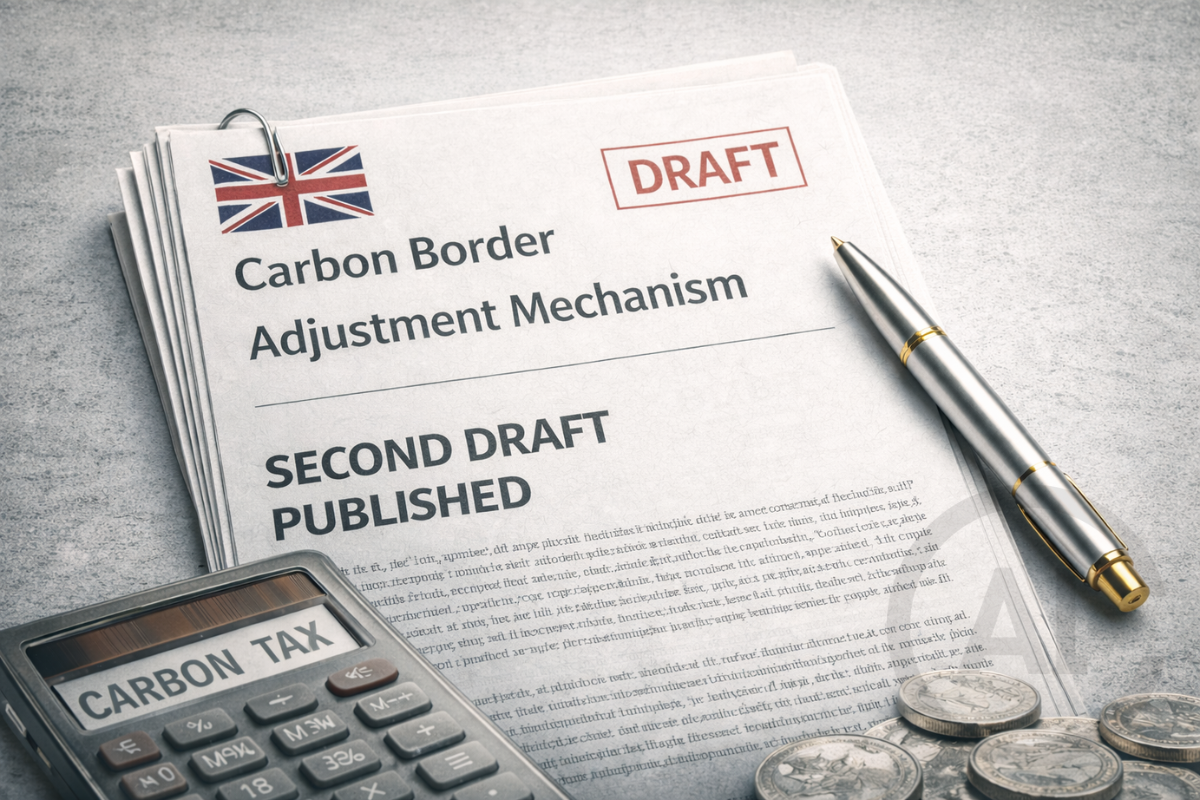
The UK government has issued the second draft of its Carbon Border Adjustment Mechanism (CBAM) framework, the new regime to be effective from January 1, 2027. Exemptions can be noted in administrative details, but with no fundamental scope changes. The new regulations would apply across the UK, including Northern Ireland. Extending beyond usual third-country trade flows, imports from the Crown Dependencies, Overseas Territories, and the UK Continental Shelf.
Explore- Most accurate data to drive business decisions with Global ALuminium Industry Outlook 2026 across the value chain
Same sectors but new scope and exemptions
The core sectors for CBAM to impose a carbon price on emissions embedded in imports remain aluminium, cement, fertiliser, hydrogen, and iron and steel, but only for specified goods within each sector. Imported aluminium scrap and iron and steel scrap are excluded, indicating the UK’s objective of not targeting recycled items for penalty.
The draft narrows liability through specific exemptions. The registration threshold has been raised from the previous ceiling of GBP 10,000 (USD 13,591.75). Under the second draft, importers would register for UK CBAM with HM Revenue & Customs once the cumulative value of CBAM-covered imports hits or exceeds GBP 50,000 (USD 67,958.75).
At registration, importers have to submit business identifiers, contact details, EORI and VAT numbers, as well as the value and expected weight of CBAM goods, calculated under customs valuation rules.
CBAM returns must be filed for each consignment, detailing the eight-digit commodity code, net weight of the product, emissions data (or approved default values), carbon price relief amount, and its origin. Even if shipped collectively, each CBAM good must be reported separately. Additionally, an accuracy declaration must be submitted alongside record maintenance to verify origin and emissions data for the consignments.
Private, non-commercial imports, UK-origin goods, qualifying returned goods, and imports under full temporary admission relief are not liable and therefore not in the scope. Regarding complex items, emissions from UK-produced precursor materials embedded in imported products are excluded from CBAM calculations.
Product weight is defined as net weight at import, excluding packaging, depicted in kilograms. Importers are required retain supporting evidence, though HMRC may apply weights in case of insufficient documentation.
Carbon pricing method and accompanying price reliefs
CBAM charges will be linked to the UK Emissions Trading Scheme (ETS), through the average auction price from the previous quarter, adjusted for sector-specific free allocation levels.
Carbon price relief can be claimed where goods are produced under a qualifying carbon pricing regulation, to be verified independently. Verifiers must confirm emissions data, free allocations, carbon costs incurred, and any monetary support received. Relief claims require submission of a verified carbon pricing form.
If verified emissions data are unavailable, importers are allowed to apply default emissions values. From January 1, 2027, the UK will publish one default value per CBAM good in advance.
Accounts and filing periods
The first accounting period will run from January 1 to December 31, 2027, with returns and payments due by May 31, 2028. From 2028 onward, CBAM will shift to quarterly accounting, with fixed filing and payment deadlines.
Any CBAM reimbursements must be passed on in full to entitled parties within a defined timeframe, with unreimbursed amounts returned to the tax authority. Detailed reimbursement records must be retained for six years. Separately, importers must maintain comprehensive CBAM records, covering commodity codes, import dates, values, and weights, for the same retention period.
Don't miss out- Buyers are looking for your products on our B2B platform

Laura Haury becomes sustainability project coordinator for Kentucky's MI2 Metals initiative
Next articleVedanta Aluminium installs solar-powered borewells to improve drinking water access in Odisha villages
Grow with
AL Circle