NITI Aayog charts India’s decarbonisation path for aluminium, cement and MSMEs
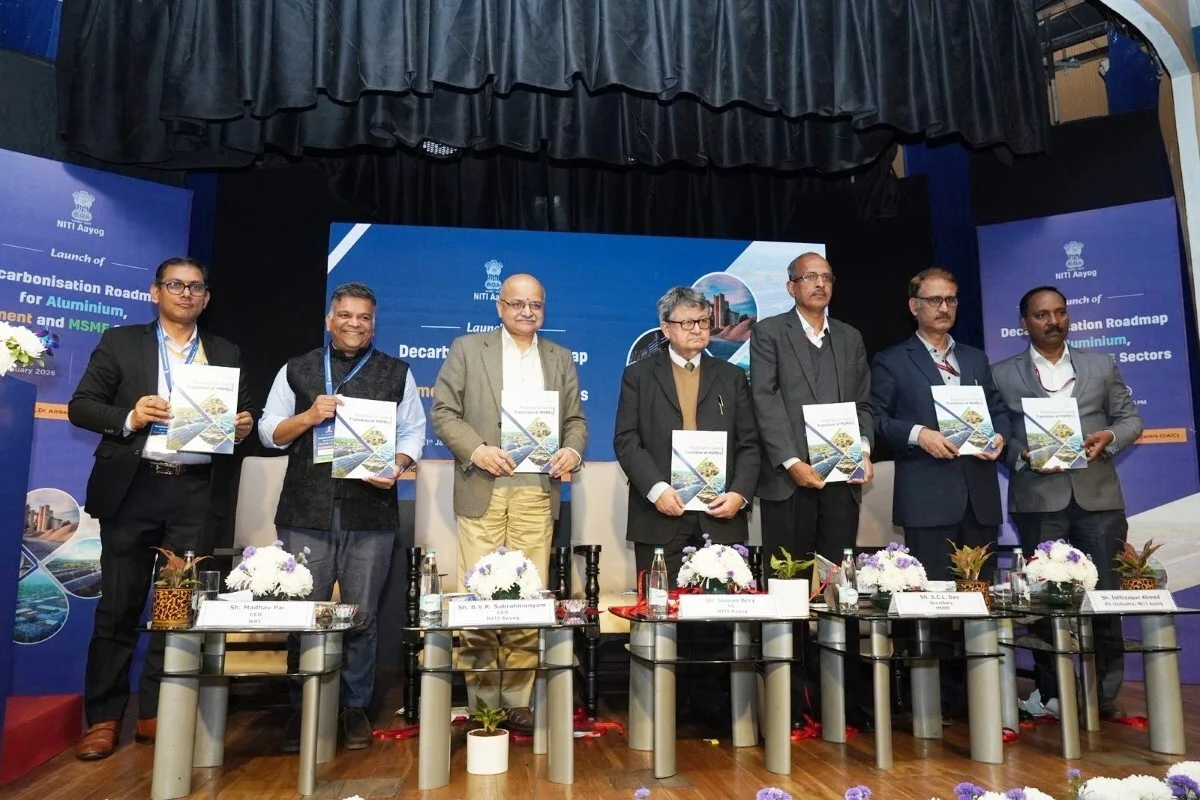
At the event in New Delhi, NITI Aayog shared three reports which talked about the roadmap for decarbonisation for sectors like aluminium, cement and other MSMEs. At the event, NITI Aayog Vice Chairman Suman Bery shared his perspective on the urgency of all MSME sectors towards the country's economic growth and overall development. These three decarbonisation reports by NITI Aayog also build a comprehensive contrivance for navigating the EU’s carbon border tax regime by including clean manufacturing processes for these sectors.
The EU’s Carbon Border Adjustment Mechanism (CBAM) aims to impose a carbon price on high-emission products like cement, aluminium, iron and steel and fertilisers, which are imported into the EU’s 27 member countries.
Bery further pointed out that nudging the MSME ecosystem has become vital because it plays a crucial role in generating employment, fostering innovation and promoting inclusive growth.
At the event, NITI Aayog CEO BVR Subrahmanyam made a statement, highlighting that the aluminium and cement industries belong to the most energy-hungry sectors and play a vital role in industrial emissions. Therefore, it is vital to develop decarbonisation efforts for these sectors to fulfil India’s climate commitments while also ensuring long-term economic competitiveness.
Also read: India extends GHG emission reduction norms to four more industries, including secondary aluminium
In addition to this, he further noted that this roadmap outlines a vision to assist the aluminium, cement and the MSME sectors in reducing emissions while still pursuing growth and maintaining their competitive edge.
Not only this, he also states that for MSMEs, the roadmap emphasises the importance of accessing affordable green finance, technology and capacity building to ensure a smooth and inclusive transition. These three reports suggest focusing on refuse-derived fuels, clinker substitution, enhancing Carbon Capture, Utilisation and Storage and effectively implementing the Carbon Credit Trading Scheme to achieve significant decarbonisation in the sector.
Must read: Key industry individuals share their thoughts on the trending topics
It also presents the Green Transition roadmap for MSMEs, centred around three main strategies, which include deploying energy-efficient equipment, adopting alternative fuels and integrating green electricity.
Indian aluminium production will shift from 4 million tonnes in 2023 to 37 million tonnes by 2070. The decarbonisation roadmap lays out a three-phase strategy: first, in the short term, which will focus on transitioning to Renewable Energy–Round the Clock (RE-RTC) and improving grid connectivity.
Second is the medium term, where the country will bring nuclear power into the mix and finally, in the long term, the government will embrace CCUS technologies to reduce emissions.
If India fails to undertake these decarbonisation measures within these sectors, it will keep facing tariff pressures from carbon border taxes, which could hurt the country’s exports. As of 2023, the reports reveal that the aluminium production held nearly 2.8 per cent of India's total GHG emissions.
To know more about the global primary aluminium industry 2026 outlook, book the report “Global ALuminium Industry Outlook 2026".
_0_0.png)
India extends GHG emission reduction norms to four more industries, including secondary aluminium
Next articleNALCO plans to build 200–300 MW renewable power capacity for greener aluminium production
Grow with
AL Circle