Constellium’s sustainability report 2025: progress in recycling and decarbonisation, but limits persist
The aluminium industry’s sustainability narrative is often framed around circularity and lightweighting benefits. Yet the sector remains deeply tied to energy-intensive upstream processes and global supply chains that are difficult to decarbonise. In its 2025 Sustainability Report, Constellium presents measurable progress across emissions reduction, recycling expansion and operational efficiency — but the numbers also reveal how much of the company’s footprint remains outside its direct control.
With roughly USD 8.4 billion in revenue, 24 manufacturing facilities across 10 countries, and about 11,500 employees, Constellium operates as one of the world’s largest manufacturers of high-value-added aluminium products for packaging, automotive, aerospace and speciality markets. In 2025, the company sold approximately 1.5 million tonnes of aluminium, generating USD 846 million in adjusted EBITDA and USD 178 million in free cash flow.
Yet the sustainability profile of such a scale operation remains complex. Even as the company emphasises circularity and recycling, its lifecycle assessments acknowledge that around 80 per cent of the carbon footprint associated with its products typically originates from the production of primary aluminium, which occurs upstream in the value chain.
For the global aluminium value-chain 2026 outlook, book our exclusive report “Global ALuminium Industry Outlook 2026"
Emissions performance
Constellium reported a measurable improvement in operational carbon intensity in 2025.
The company reduced its Scope 1 and Scope 2 greenhouse gas emissions intensity to 0.57 tonnes of CO₂ equivalent per tonne shipped, representing a 14 per cent improvement compared with 2024 and 19 per cent below the 2021 baseline.
The reduction allowed Constellium to outperform a key target tied to its sustainability-linked bonds, which required the company to bring emissions intensity below 0.615 tCO₂e per tonne of sales by 2025.
However, the mechanism behind this reduction highlights the limits of operational decarbonisation. According to the report, the primary driver was reduced Scope 2 emissions through renewable electricity procurement, rather than fundamental process changes. In 2025 Constellium sourced nearly 400 GWh of renewable electricity, covering 26 per cent of its total electricity consumption.
Scope 3 emissions (those occurring across the supply chain) remain far larger. The company reported Scope 1, 2 and 3 emissions intensity of 4.55 tonnes of CO₂ equivalent per tonne of product shipped, underscoring how indirect emissions dominate the company’s footprint.
Although Scope 3 emissions intensity improved by 16 per cent year-on-year, Constellium acknowledges it has “less room to manoeuvre” in this category because it depends heavily on supplier practices and the energy sources used in primary aluminium production.
Recycling strategy
If emissions reductions are constrained upstream, Constellium’s main sustainability lever lies in recycling.
In 2025, 47 per cent of the company’s metal input came from recycled aluminium, an increase of 13 per cent compared with the previous year.
In absolute terms, recycled aluminium input reached approximately 717,000 tonnes, already surpassing the company’s 2026 sustainability-linked bond target of 685,000 tonnes.
The growth was driven partly by the ramp-up of a new recycling centre in France, which the company describes as a cornerstone of its long-term circularity strategy.
This strategy aligns with aluminium’s theoretical advantage as a fully recyclable material. Recycling aluminium typically requires only a fraction of the energy needed for primary metal production, allowing manufacturers to reduce lifecycle emissions when scrap availability is high.
Still, the model depends heavily on scrap flows and market structures. High recycled content is easier to achieve in packaging and automotive markets, where scrap collection systems are well established, than in aerospace applications requiring stricter alloy specifications.
Operational efficiency and technological experimentation
Constellium has also focused on reducing the energy intensity of its manufacturing processes.
Energy consumption across its operations averaged 12.5 gigajoules per tonne of product shipped in 2025.
The company is exploring several technological pathways to reduce emissions from casting and recycling.
One area of experimentation is hydrogen combustion. Constellium is testing hydrogen-oxygen burners to replace natural gas in metal processing, as part of the EU-funded HyInHeat project, provided green hydrogen becomes commercially available.
Another pilot involves plasma torch technology, which could potentially reduce furnace emissions by up to two-thirds compared with conventional gas burners.
Digitalisation is also being used to improve efficiency. The company’s SmartMelt system, a digital twin furnace technology deployed at the Neuf-Brisach site in France, reportedly improved energy performance and productivity by around 10 per cent during initial trials.
However, these technologies remain in early stages of deployment and will require large-scale industrial validation before delivering meaningful global emissions reductions.
Don't miss out- Buyers are looking for your products on our B2B platform
Workforce and safety metrics
Constellium’s sustainability strategy also emphasises worker safety and human capital development.
In 2025 the company reported a Recordable Case Rate (RCR) of 1.91 incidents per million hours worked, which management states is significantly better than industry averages in Europe and North America.
Employees received an average of 25 hours of training per year, while 25 per cent of professional and management roles are now held by women, reaching the company’s diversity target for the year.
Nearly 98 per cent of employees hold permanent contracts, reflecting a relatively stable workforce structure across its manufacturing sites.
Constellium has shared that 1,834 employees completed Code of Conduct training in 2025, matching the number of employees targeted for the programme, compared with 1,720 trained out of 1,936 targeted in 2024 and 1,590 trained out of 1,988 targeted in 2023. The training covers employees in professional and management roles and forms part of the company’s broader effort to embed sustainability, ethics and compliance awareness across the organisation.
Constellium also introduced new internal engagement initiatives during the year, including “Planet Café,” a sustainability-focused internal community, and continued rolling out programmes such as Climate Fresk workshops designed to improve employee understanding of climate science and decarbonisation challenges.
Supply chain sustainability and governance
Sustainability risks increasingly lie beyond the factory gate.
Constellium reported that 78 per cent of group spending with suppliers identified as “at risk” from a sustainability perspective is now covered by a detailed risk-based sustainability assessment.
The company also maintains certification under the Aluminium Stewardship Initiative (ASI) Performance Standard for all operations, reinforcing supply-chain traceability and environmental governance.
Externally, its ESG performance received several ratings:
- EcoVadis gold rating (score 78/100), placing it in the top 5 per cent of assessed companies
- MSCI ESG rating of AA within the metals and mining sector
- Carbon Disclosure Project climate rating of B in 2025
These ratings indicate strong ESG governance structures, though they do not necessarily capture lifecycle emissions embedded in upstream metal production.
Must read: Key industry individuals share their thoughts on the trending topic
The dilemma
Despite the improvements highlighted in the report, Constellium’s own analysis mentions the sustainability dilemma facing downstream aluminium producers.
The company’s life-cycle assessments reveal that primary aluminium production (typically occurring outside Constellium’s operations) remains responsible for the majority of lifecycle emissions associated with its products.
As a result, decarbonisation depends not only on operational efficiency or recycling expansion but also on broader shifts in the global aluminium supply chain, including:
- low-carbon smelting technologies
- renewable energy deployment in smelters
- increased scrap availability
- policy frameworks supporting circular material flows
Until these upstream changes occur at scale, downstream fabricators like Constellium will continue to operate within a sustainability framework where their most visible improvements represent only part of the overall emissions equation.

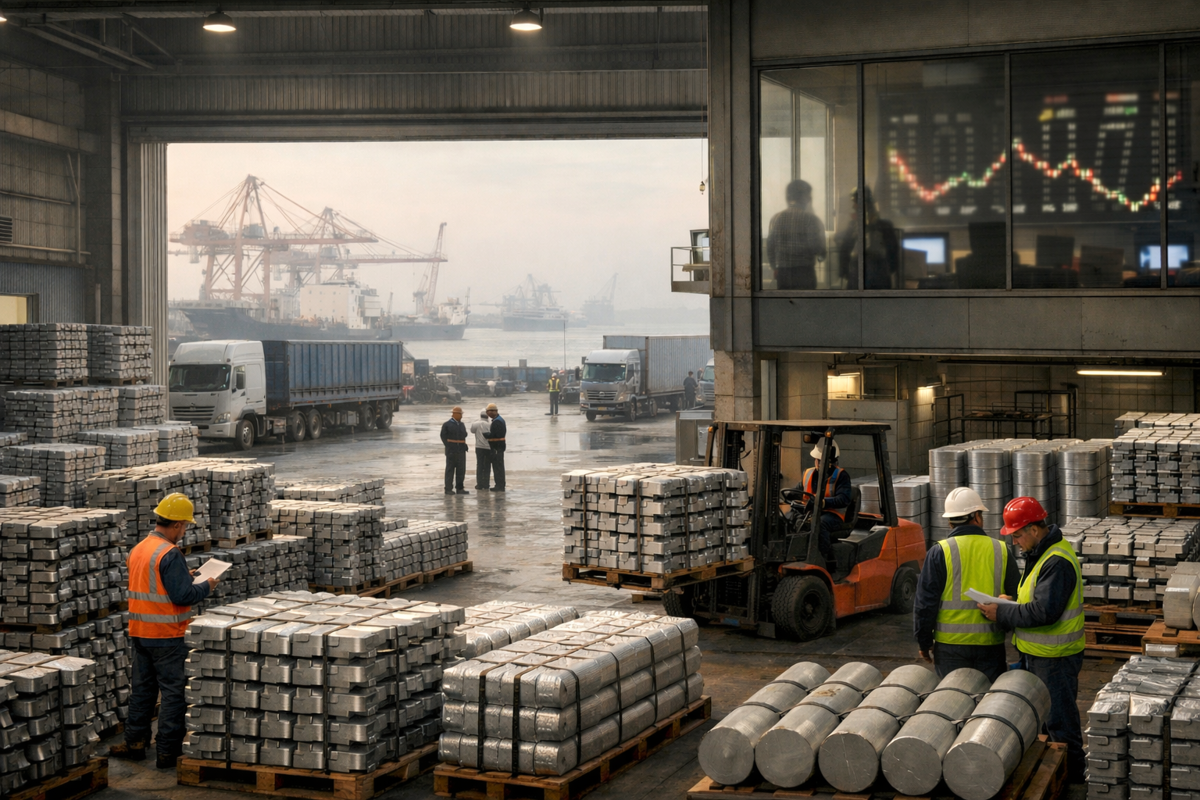
Note: The image used in this article is generated with an AI tool and does not depict any real-time moment
Jamaica launches phase VIII of bauxite community development programme with $400M allocation
Next articleVedanta Aluminium deploys all-women team to run command control room
Grow with
AL Circle


