Rare earth minerals become strategic resources for clean energy, defence and advanced manufacturing
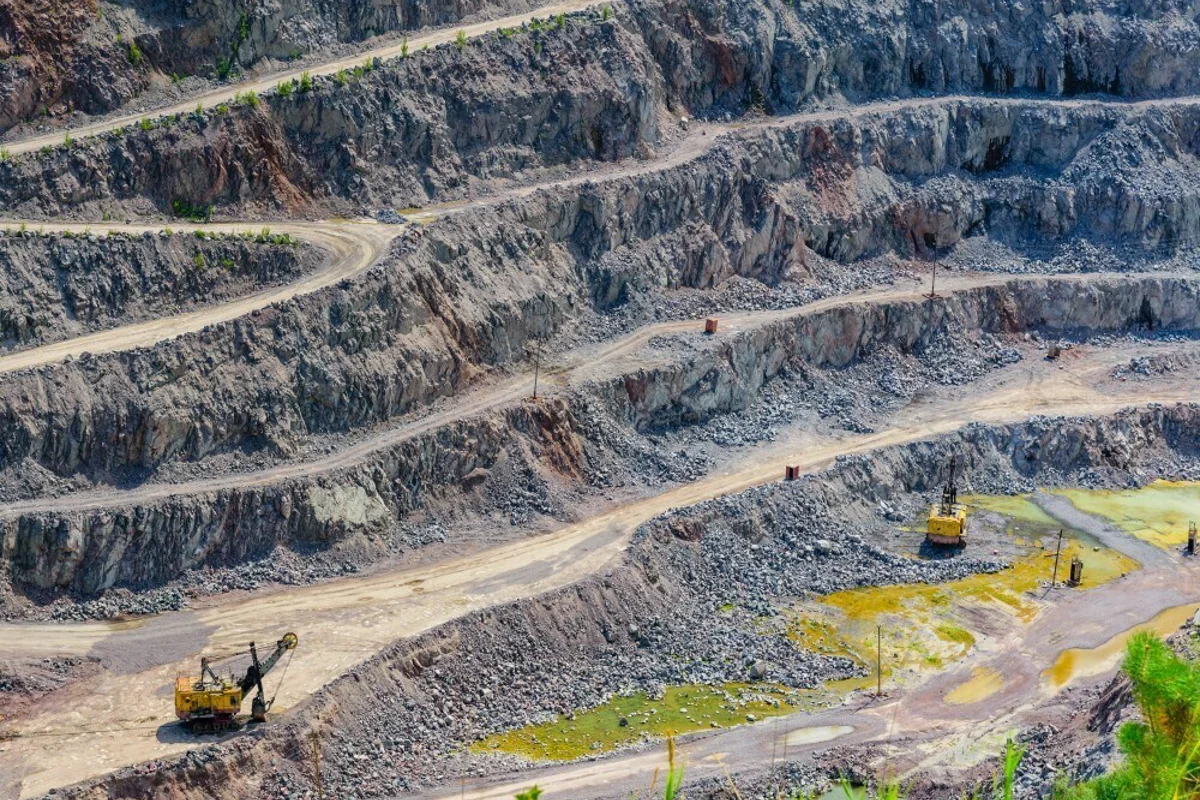
Stock image for referential purposes only
Rare earth minerals have moved from a niche group of metals to a strategically important resource that is vital to sectors from clean energy to consumer electronics, defence and advanced manufacturing. As demand rises and supply chains are dominated by a few countries, rare earths are being labelled critical minerals by governments around the world.
Rare earths demand ties aluminium downstream industries more and more
The downstream aluminium industry is also increasingly impacted by the rising use of rare earth magnets, particularly as aluminium continues to replace heavier materials in transportation, renewable energy and advanced manufacturing applications.
The rare earths are a set of 17 chemically similar elements. Neodymium (Nd), praseodymium (Pr), dysprosium (Dy) and terbium (Tb) are the most commercially significant rare earth elements. The International Energy Agency (IEA) says these elements are used in magnets, which account for about 95 per cent of the value of rare earth consumption globally.
They are used to make neodymium-iron-boron (NdFeB) permanent magnets widely used in electric vehicles (EVs), wind turbines, industrial motors, robotics, smartphones, hard disc drives, medical equipment, satellites, fighter aircraft and missile guidance systems.
In the electric vehicle sector, lightweight aluminium body structures are often combined with high-performance rare earth permanent magnet motors to improve vehicle efficiency and driving range. Aluminium parts are also found in structural applications for wind turbines and rare earth magnets are used in high-efficiency generators.
The demand for EVs and renewable energy systems is expected to go hand in hand with increasing consumption of both aluminium and rare earth materials. Rare earths also have an indirect role in aluminium end-use markets like consumer electronics, aerospace, robotics, industrial automation and defence, where aluminium is widely used for lightweight casings, structural components and thermal management.
Many of these products also use rare earth magnets for motors, sensors and precision control systems, making the two material groups increasingly interconnected in advanced manufacturing supply chains.
Explore: The most comprehensive and forward-looking industry-focused report - Global Bauxite & Alumina Market Forecast to 2036: Supply–Demand, Trade Flows & Price Outlook
Demand growth and strategic importance
Demand for magnet rare earths, driven largely by the growth of EVs and wind energy, has already doubled since 2015, according to the IEA. Under current policies, demand is expected to increase by a further one-third by 2030, with automation, artificial intelligence and robotics expected to provide further long-term growth.
The strategic importance of rare earths became clearer in 2025 when China imposed export controls on several rare earth elements. Prolonged supply disruptions could impact downstream industries worth around USD 6.5 trillion annually outside of China, including more than USD 3 trillion in the automotive sector alone, according to IEA estimates.
Though labelled "rare", these minerals are relatively abundant in Earth's crust. The US Geological Survey (USGS) estimated global reserves of rare earths to be roughly 110 million tonnes in 2024. But commercially viable deposits are few and far between, and separating individual rare earth elements is both technically difficult and environmentally taxing.
China dominates processing while India builds capacity
China has the world's largest reserves of rare earths at around 44 million tonnes, and continues to be the dominant player in processing. China accounted for around 60 per cent of global magnet rare earth mining in 2024, as well as 91 per cent of refining capacity and 94% of permanent magnet production, according to the IEA.
Industry experts note that the main challenge is no longer identifying new mineral deposits but expanding processing, refining and advanced manufacturing capacity outside China.
India is also seeking to strengthen its position in the sector.
India’s rare earth imports increased from about USD 14.1 million in 2014 to USD 17.5 million in 2024, with over 45 per cent sourced from China, according to the Institute for Energy Economics and Financial Analysis (IEEFA). China’s share of India’s permanent magnet imports is between 59.6 per cent and 81.3 per cent between 2022-23 and 2024-25.
Along with mining projects, India will have to develop processing technologies, environmental management capabilities and downstream manufacturing to cut import dependence, experts say.
The IEA estimates that USD 60 billion will be needed globally over the next decade to diversify rare earth supply chains, with refining and magnet manufacturing making up nearly 80 per cent of that investment.
For more in-depth insights and exclusive analysis on the global aluminium industry, explore the e-Magazine - Mine to Market: ALuminium Producers & Manufacturers 2026
Australia, Japan and the US back Alcoa's gallium project to reduce supply chain risks
Next articleASEAN urged to prepare workforce as EU CBAM reshapes aluminium trade
Grow with
AL Circle