While the United States witnessed a modest uptick in aluminium imports during Q1 2025, aluminium exports took a noticeable plunge. Not by a marginal 10,000 or 20,000 tonnes, but a steep 95,000 tonnes year-on-year. From 854,000 tonnes in Q1 2024, US aluminium exports (including scrap) shrank to 759,000 tonnes in Q1 2025, marking an 11 per cent annual decline.
This decline, however, isn’t evenly spread across all aluminium product categories or destinations, and it raises questions about the underlying shifts in global aluminium trade dynamics.
According to recent figures from the US Geological Survey, the fall in aluminium exports touched all categories - crude metal and alloy, semi-fabricated products, and even scrap, though to varying degrees. Crude metal and alloy exports dropped by a staggering 37 per cent year-on-year, while semi-fabricated exports (bars, sheets, plates) fell by 13.6 per cent. Scrap, the most resilient of the three, edged down by just 1.6 per cent, primarily due to a dip in March.
Despite a quarter-on-quarter slowdown, monthly trends showed steady growth in scrap exports from 153,000 tonnes in January to 162,000 tonnes in February, and 171,000 tonnes in March. If not the 11,000-tonne shortfall in March compared to last year, scrap could have bucked the declining trend altogether.
Thailand: the unexpected leader
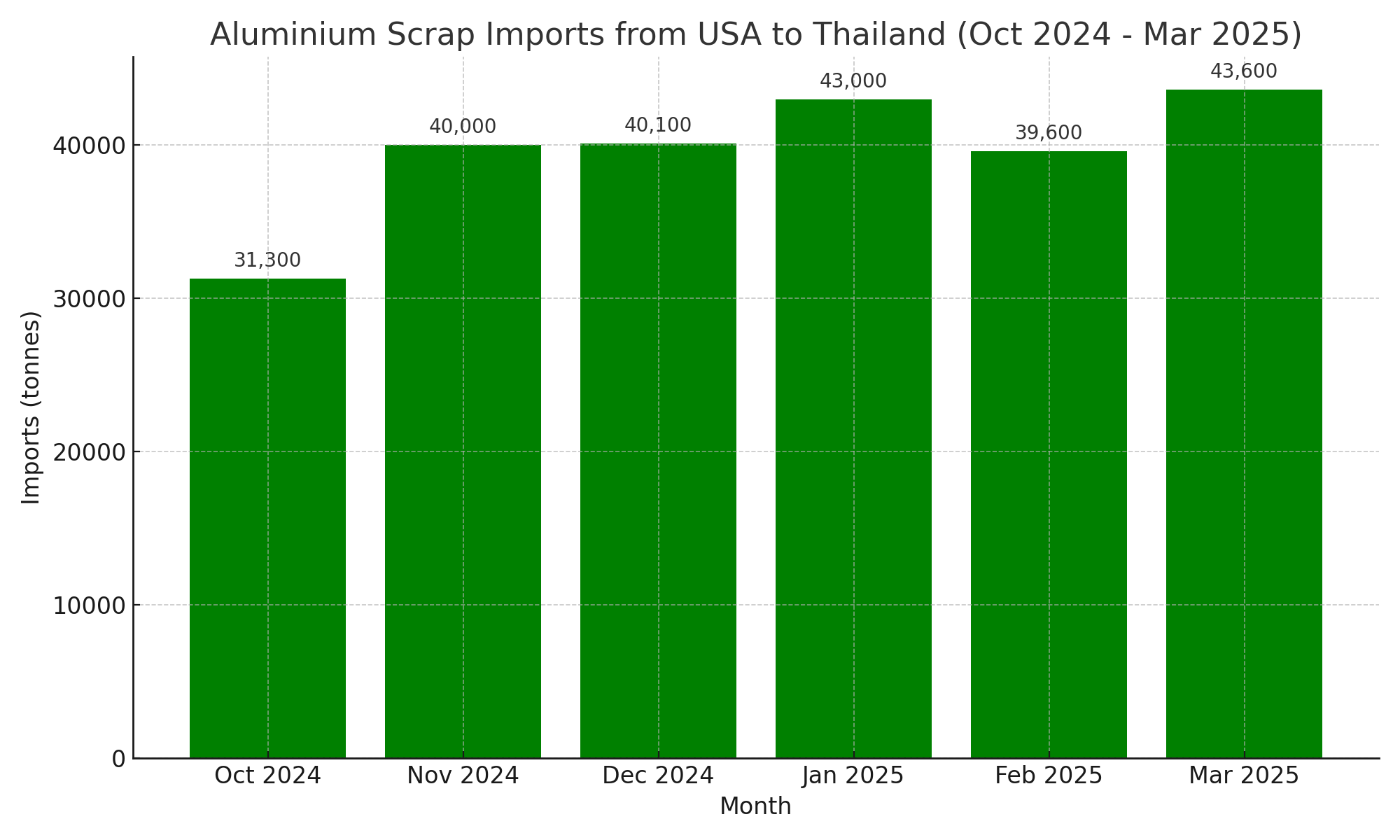
However, the most intriguing shift lies not in what the US is exporting, but where it's exporting to. Thailand surged ahead to become the largest importer of US aluminium scrap in Q1 2025, overtaking previous frontrunners Malaysia and India.
The numbers speak for themselves: Thailand imported 126,000 tonnes of US scrap this year, up from 78,800 tonnes last year. In contrast, Malaysia’s imports dropped to 66,200 tonnes (from 88,500), while India managed 73,600 tonnes, down from 87,700 tonnes.
The writing had been on the wall since late 2024. In September, Thailand outpaced Malaysia for the first time with 31,800 tonnes, and by October, it became the top importer outright - driven not by coincidence, but by calculated policy and market strategy.
EV ambitions fuel scrap surge
Thailand’s scrap appetite is a byproduct of its growing ambitions in electric vehicle (EV) manufacturing. The country’s EV3.5 initiative, featuring subsidies, tax breaks, and tariff reductions, has catalysed demand for secondary aluminium. Under the scheme, starting in 2026, automakers must produce two Thai-made EVs for every imported one, creating a pressing need for localised aluminium sourcing.
As EV manufacturers pivot away from sluggish sales in Europe, North America, and Japan, Southeast Asia, particularly Thailand, has emerged as the new frontier. According to Fastmarkets, global carmakers are increasingly investing in the region, with Thailand poised to become a central hub for both production and material sourcing.
Geopolitics meets market realities
Beyond industrial policy, geopolitics is also playing its part. The intensifying US-China trade dispute has made Thailand an attractive export partner for Washington. As tariffs, sanctions, and supply chain recalibrations deepen, American exporters strategically re-route flows towards more reliable, politically neutral markets.
The drop in overall aluminium exports may paint a grim picture, but the devil lies in the detail. Scrap, while dipping slightly, is shifting in focus—not disappearing. The real story is about new trade corridors and emerging industrial centers. With Thailand climbing to the top of the scrap import ladder, the US aluminium trade appears to be less in decline, and more in redirection.
Note: To feature your brand and share insights, contribute an article or interview in our forthcoming e-magazine "American ALuminium Industry: The Path Forward."