A quarterly and annual jump in the United States aluminium imports during the first quarter of 2025 comes as no surprise – and here’s why. President Trump’s February 10 proclamation announcing steep tariffs on aluminium and steel imports, effective March 12, sparked a wave of anticipatory buying. US importers rushed to stockpile metal in the weeks ahead of the tariff deadline, setting off a temporary import boom.
According to data from the US Geological Survey, aluminium imports surged to 1.6 million tonnes in Q1 2025, marking a 17.65 per cent jump year-on-year and a 20 per cent rise from the previous quarter. March alone saw a 35 per cent month-over-month spike, from 459,000 tonnes to 619,000 tonnes.
Of course, Canada, America’s long-standing aluminium supplier, naturally played a central role in the surge (with exports up 19.77 per cent M-o-M to 309,000 tonnes), the real headline was the United Arab Emirates.
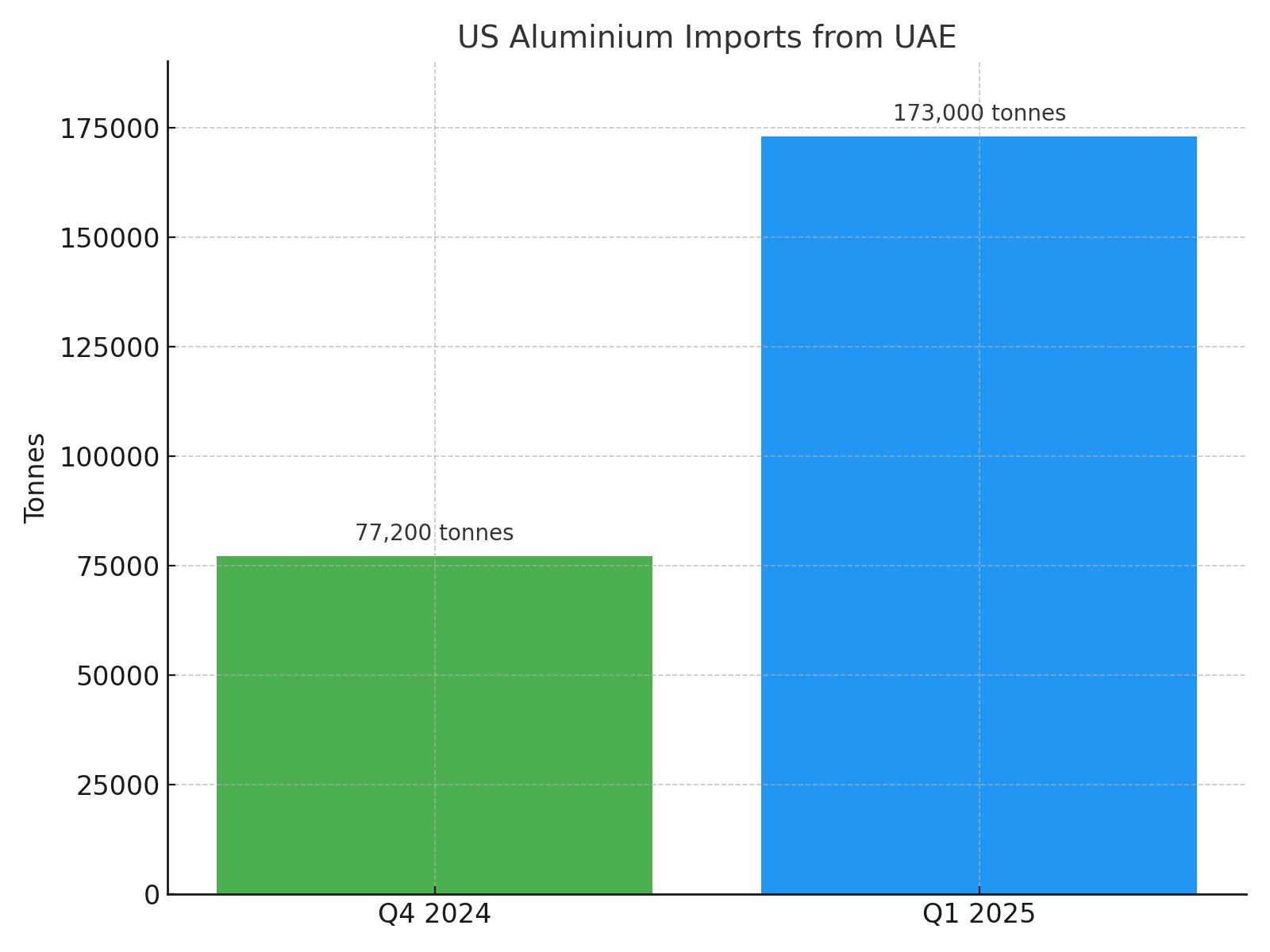
The UAE, typically a modest player on the US aluminium board, exported a staggering 95,900 tonnes to the US in March—more than its usual quarterly volume. In February, the figure was a mere 29,500 tonnes. This sudden upswing pushed UAE aluminium shipments to 173,000 tonnes in Q1 2025, a massive 124 per cent increase over the previous quarter.
Across the board, imports from Mexico, South Korea, and India also saw notable quarterly gains of 13.6 per cent, 26.9 per cent, and 41.6 per cent, respectively. But it’s the composition of imports that tells the real story: primary aluminium and alloys led the pack, rising 25 per cent quarter-over-quarter to 1.07 million tonnes. Scrap imports followed with a 13 per cent increase, while semi-finished aluminium products such as plates and bars ticked up 11 per cent.
Behind Canada, the UAE ranked as the second-largest supplier of crude aluminium and alloy to the US, shipping 171,000 tonnes—16 per cent of the total primary aluminium imports.
But this growing trade relationship isn’t a sudden outcome; rather it is a strategic alignment. The UAE, with its low-carbon aluminium output and export-driven smelting infrastructure, produces around 2.7 million tonnes of aluminium annually and exporting nearly 90 per cent of that. If the US continues to import at this new elevated pace, it could account for nearly 29 per cent of the UAE’s global aluminium exports.
The two countries are not just trading goods—they’re forging a broader economic alliance. In 2024, US-UAE bilateral trade hit USD 34.4 billion, with US exports making up USD 26.9 billion. That’s an 8.5 per cent rise from the previous year and resulted in a USD 19.5 billion US trade surplus. US trade with the UAE now supports more than 161,000 American jobs.
The UAE is also doubling down on its US ambitions. In March, the Gulf nation announced a jaw-dropping USD 1.4 trillion investment plan in the United States over the next decade. The goal: expand its economic footprint across sectors, including aluminium.
But now, the big question looms: can this momentum survive Trump’s new 50 per cent aluminium tariff?
As of June, four sources confirmed that Washington and Abu Dhabi are entering negotiations for a bilateral trade agreement. The outcome could decide the trajectory of this burgeoning aluminium trade. A successful deal might neutralise the new tariffs, or at least carve out exemptions, while a failure could put the brakes on what has rapidly become one of the most vital trade lanes for US aluminium buyers.
For now, the UAE is an emerging lifeline to America’s aluminium supply chain. But with high-stakes talks on the horizon, that lifeline may yet be tested.