Canada and China extend aluminum and steel trade deal through 2028, securing Canola market access
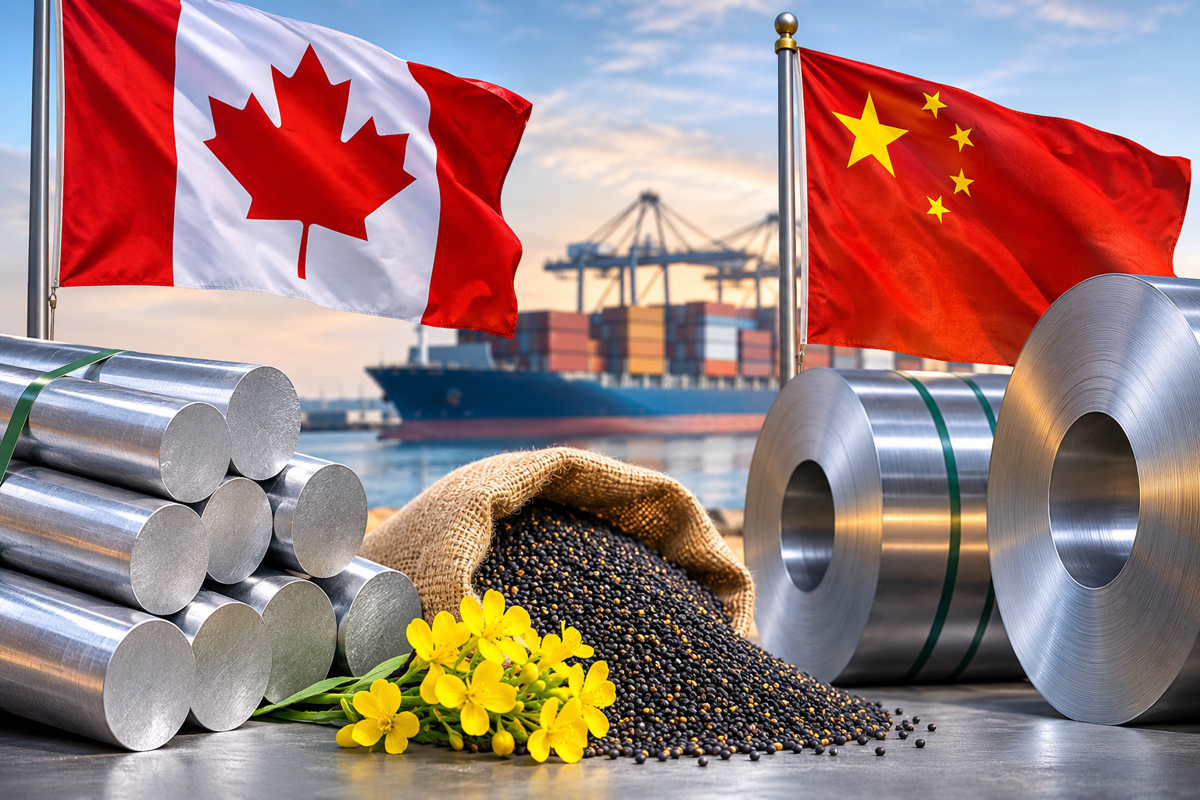
The image used in this article is generated with an AI tool and does not depict any real-time moment
Canada and China have extended a bilateral trade arrangement that links Chinese market access for Canadian agricultural products with Canada's access for Chinese steel and aluminum. The decision provides greater certainty for exporters on both sides as Ottawa seeks to expand its trade relationships beyond the United States.
The extension, announced on November 4, 2026, will keep the existing arrangement in place until the end of 2028. It comes amid renewed efforts by the two countries to strengthen economic ties and address outstanding trade issues.
For the aluminum industry, the agreement offers a clearer timeline for market access, while its agricultural provisions provide Canadian producers with greater predictability in one of their key export markets.
Canada-China trade agreement extended for two years
Canadian International Trade Minister Maninder Sidhu announced the extension following a meeting of the Joint Economic and Trade Commission (JETC) in Beijing. Sidhu co-led the meeting with China's Minister of Commerce, Wang Wentao.
The arrangement was initially negotiated during Canadian Prime Minister Mark Carney's visit to Beijing in January 2026. It was scheduled to expire at the end of this year.
Under the agreement, China provides favorable market access for Canadian canola meal, peas, lobster and crab. In return, Canada maintains remission measures allowing certain Chinese steel and aluminum products that are not manufactured domestically to enter the Canadian market.
Explore the production, demand and consumption forecasts of bauxite and alumina in our report: "Global Bauxite & Alumina Market Forecast to 2036: Supply–Demand, Trade Flows & Price Outlook"
The extension maintains this reciprocal framework through the end of 2028, giving businesses additional time to plan their trade and investment activities.
Sidhu said the arrangement would support Canada's efforts to expand exports and provide greater certainty for domestic producers.
“This extension gives Canadian farmers, producers and harvesters stable access to China and supports billions in export opportunities,” Sidhu said in a media statement.
The agreement also forms part of Canada's broader strategy to diversify its export markets and reduce its dependence on the US.
Chinese steel and aluminum retain access to Canada
The extension is particularly relevant to China's steel and aluminum exporters, as it preserves the existing remission measures for eligible products.
The provisions apply to certain Chinese steel and aluminum products that are not manufactured in Canada. The continuation of these measures provides exporters with a more predictable framework for accessing the Canadian market.
However, the agreement does not represent unrestricted access for all Chinese metal products. Its scope remains tied to the specific categories covered by the original arrangement.
The development also comes against the backdrop of Ottawa's efforts to balance its economic relationship with Beijing with its trade relationship with Washington.
The agreement's extension could become a consideration in Canada's broader trade discussions with the United States, particularly as the country seeks to maintain access to multiple international markets.
Looking for unwrought aluminium business opportunities? Explore potential leads of primary aluminium on AL Biz
Canola and seafood exports gain longer-term certainty
The agreement's agricultural provisions have delivered measurable changes in Canadian exports since the arrangement took effect in March.
According to Sidhu, Canadian canola seed exports to China increased by 84% year over year, rising from USD 1.04 billion to USD 1.91 billion.
Canola meal exports more than doubled, climbing from USD 146 million to USD 390 million. Pea exports also increased from USD 107 million to USD 345 million, while lobster shipments grew by 57%, reaching USD 200 million from USD 128 million.
The extension is expected to provide farmers, seafood harvesters and exporters with greater predictability as they plan production, sales and shipments.
Canadian beef has also regained access to the Chinese market. The product returned in January after being excluded since 2021.
Between January and August, Canadian beef exports to China reached USD 363.2 million, nearly twice the value recorded for the entire year in 2021.
The continuation of the arrangement is therefore relevant beyond the metals sector, supporting a broader effort to restore and expand bilateral trade.
Ottawa targets 50% growth in exports to China by 2030
Canada is pursuing a more diversified trade strategy, with the government aiming to increase exports to China by 50% by 2030.
The extension of the market access arrangement supports this objective by maintaining a framework for agricultural, seafood and industrial trade.
China is Canada's second-largest single-country merchandise trading partner. Bilateral merchandise trade totalled USD 125.7 billion in 2025.
The Canadian government has also emphasized the importance of expanding trade relationships amid an increasingly uncertain global economic environment.
Showcase your brand, aluminium recycling initiatives and sustainability vision in our upcoming magazine - Sustainability & Recycling: Aluminium’s Commitment 2026
Grow with
AL Circle