Aluminium billet stocks fall for a third week; shipments stay high, processing fees diverge
This image has been obtained via official Press Release
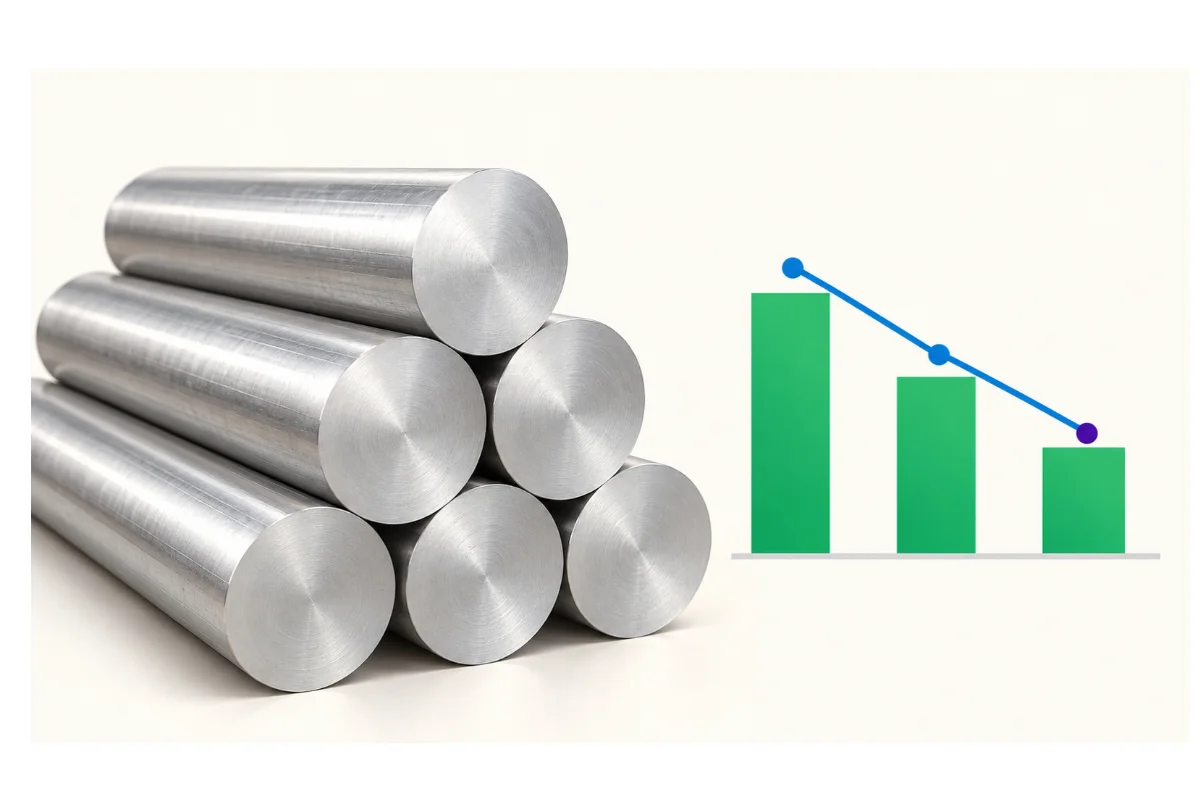
According to SMM statistics, China's aluminium billet inventories at major consumption areas stood at 138,000 tonnes on October 29, down 10,500 tonnes from Thursday a week earlier and down 4,000 tonnes from Monday this week, marking a third consecutive weekly decline since the National Day holiday. Compared with the same week in previous years, inventories are broadly flat with 2025 and about 24,000 tonnes higher than 2024, having returned to the level of the past two years.
Weekly billet shipments totalled 56,800 tonnes over October 19-25, down 1,100 tonnes from the previous period but still clearly above the same period in the previous three years. By region, Foshan accounted for the bulk of destocking with a decline of 16,000 tonnes, while Changzhou, Huzhou and Nanchang posted small decreases; Wuxi was the only region to build stocks, up 9,500 tonnes.
The continued drawdown reflects both supply and demand: on the demand side, downstream processors kept drawing material after the holiday and shipments, although slightly lower, remained high; on the supply side, arrivals into Foshan slowed, allowing stocks to be absorbed quickly, while Wuxi saw a clear increase in arrivals, widening the divergence between regions.
Aluminium prices rose then retreated during the week, with the SMM A00 aluminium spot price edging up to RMB 23,740 per tonne on Thursday from RMB 23,710 per tonne a week earlier, a gain of about RMB 30 per tonne. Against this narrow range, processing fees diverged across regions. In Foshan, processing fees for φ90 billet were quoted at RMB 380 per tonne and φ120 at RMB 330 per tonne, up RMB 20 per tonne from Thursday a week earlier; in Wuxi, φ90 stood at RMB 360 per tonne and φ120 at RMB 210 per tonne, down RMB 40 per tonne and RMB 50 per tonne respectively; in Nanchang, φ90 was quoted at RMB 400 per tonne, flat from a week earlier, while φ120 rose RMB 20 per tonne to RMB 320 per tonne.
Intraweek volatility widened noticeably, with Foshan and Nanchang φ90 quotes briefly spiking to RMB 420 per tonne and RMB 450 per tonne on October 23 before falling back quickly, so the weekly net change was far smaller than the intraweek range. The divergence mainly reflected differences in regional arrivals: rapid destocking and slower arrivals supported fees in Foshan; higher arrivals and consecutive stock builds weighed on fees in Wuxi; and flat, low inventories kept Nanchang fees steady. Processing fee trends next week will depend on aluminium prices and the pace of arrivals in each region.
Note: This article has been issued by SMM and has been published by AL Circle with its original information without any modifications or edits to the core subject/data.
AMAG Group’s revenue climbs 16.4% to $1.4b as nine-month EBITDA jumps 59%
Next articleFord's 5,000-casting milestone puts aluminium at the heart of its next EV
Grow with
AL Circle