NTNU researchers create new aluminium alloys suitable for use in transportation
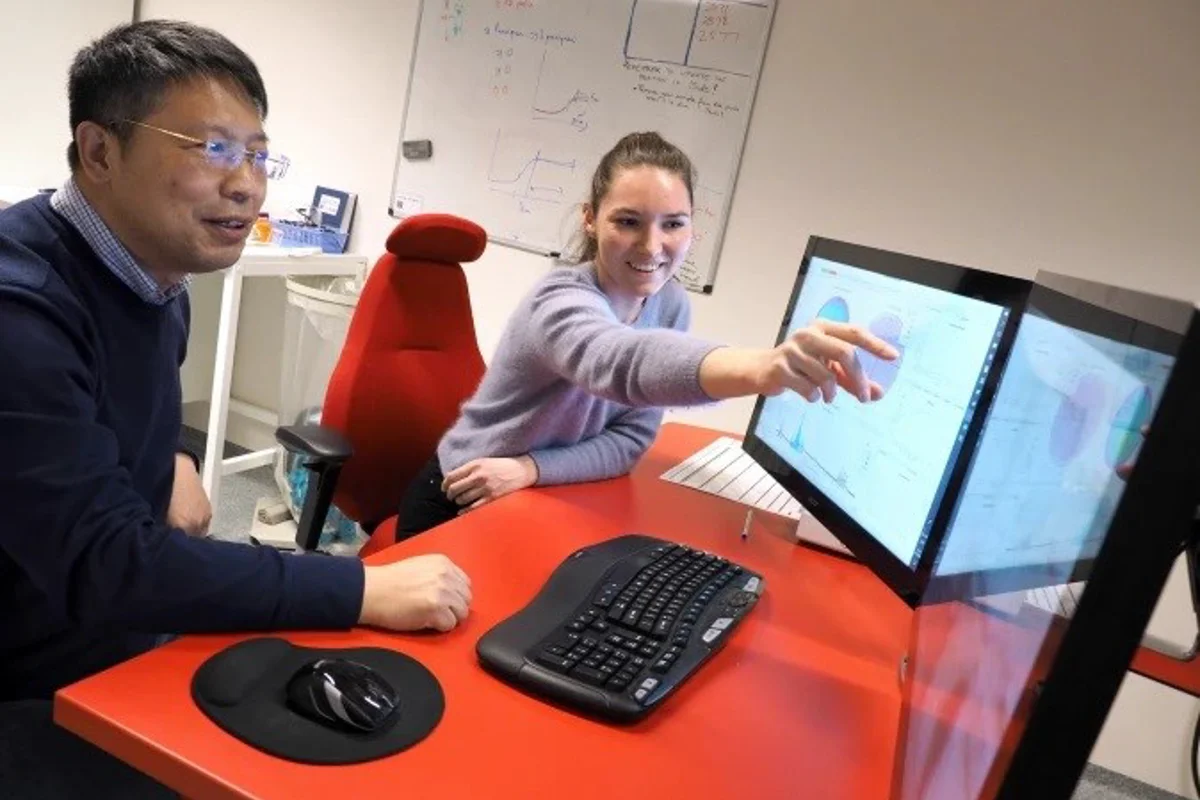
Researchers at the Norwegian University of Science and Technology (NTNU) have discovered a surprising approach to increasing the strength of nano-grained alloys, including grains of the alloying element that are only a few nanometers. Since it is lightweight and strong, aluminium is a metal that is frequently used to produce components for the building, transportation, and aerospace sectors. Aluminium alloys maintain these characteristics while being more potent than pure aluminium.
"If it was a pure aluminium, of course, it's not strong enough," said Yanjun Li, professor of Physical Metallurgy in the Department of Materials Science and Engineering at NTNU.
Yet, in recent years, scientists have encountered a problem in creating nano-grained alloys of aluminium and copper. Particularly at temperatures above 100°C, the copper atoms tend to group and create coarse particles with aluminium inside the material. The alloy deteriorates when the copper is not distributed uniformly throughout the substance.
If there is a vacancy in the material or no atoms are present, copper atoms can go there. So, to limit the capacity of atoms to migrate, researchers have been working to lower the number of vacancies. Using Atom Probe Tomography (APT), a method that allows one to observe what's happening at the atomic level inside a material, the team NTNU was able to see the copper-scandium-vacancy clusters.
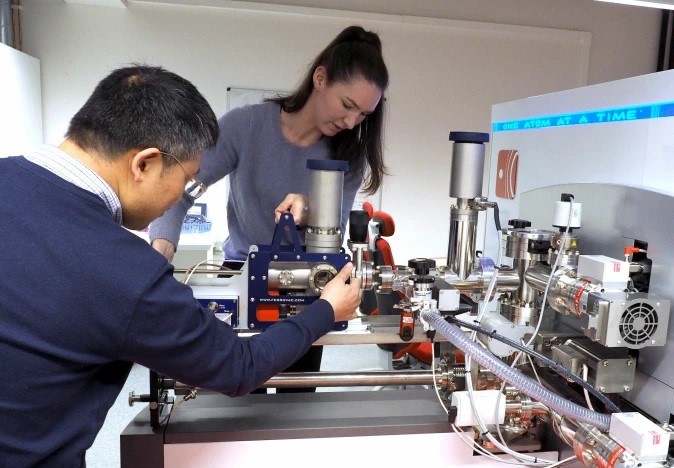
Using the Focused Ion Beam at NTNU Nanolab, PhD student Hanne-Sofie Sreide created thin alloy needles just 50 nm in diameter. Next, as a detector recorded data about them, she used the atom probe to vaporise atoms off the needle's top one by one.
"By really understanding the material in the atomic scale, it can help us to design new alloys, new materials with even higher strength. Without this kind of instrument, it's almost impossible to understand these materials," added Yanjun Li.
Nevertheless, Li and his colleagues have now discovered a method to raise the number of vacancies while raising the alloy's strength. The number of vacancies was also increased when copper and scandium atoms were added to aluminium by the researchers. Along with the vacancies, the scandium and copper atoms created structures that hindered the material's ability to flow.

The new scandium-copper structures repressed large aluminium-copper particles that would have otherwise developed, even after the alloy was heated to 200°C for 24 hours. Because of its stability, the alloy maintains its additional strength and the copper atoms are kept uniformly dispersed throughout the material.
Indonesia’s PT Inalum signs up for ASI Performance Standard Certificate
Next articleCanada debars Russian aluminium and steel imports
Grow with
AL Circle