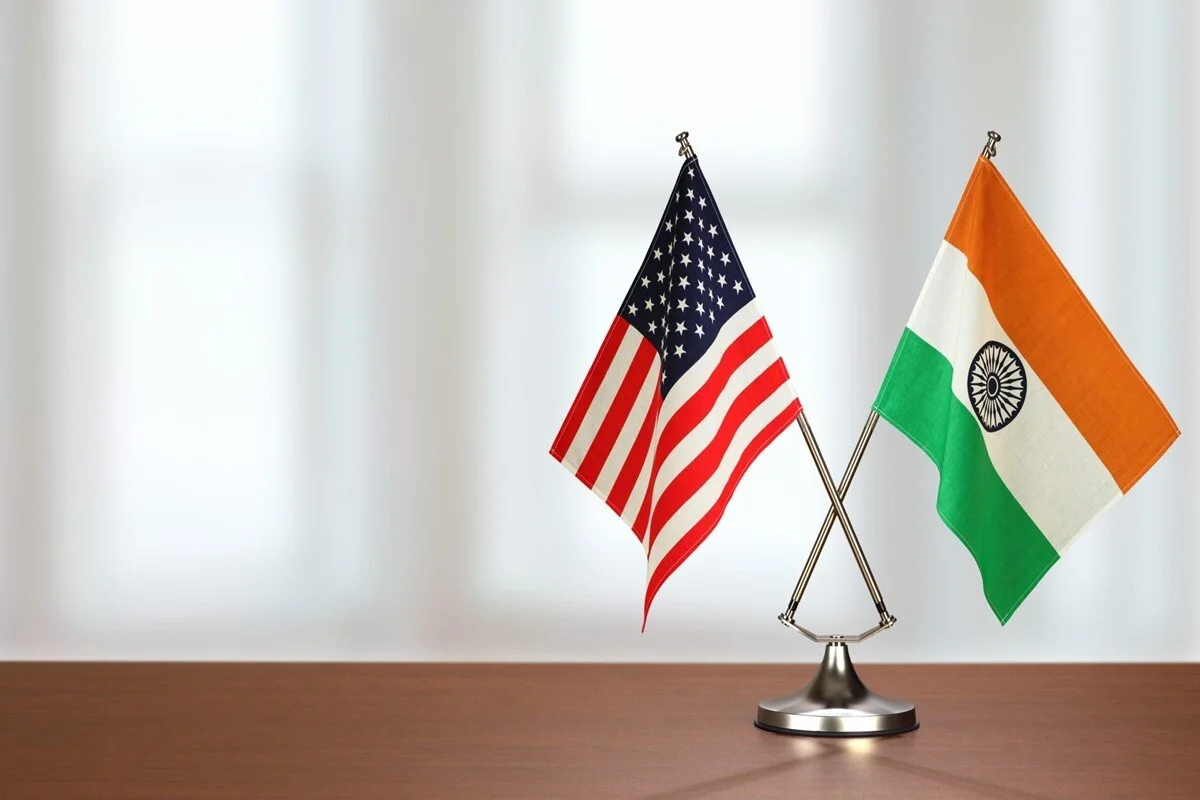
The United States and India are about to shake hands on new duty protocols under which tariffs on most Indian-made products are expected to be reduced to 18 per cent. However, aluminium and steel are expected to face the previously announced higher tariffs until further discussions.
To know more about the global primary aluminium industry 2026 outlook, book the report “Global ALuminium Industry Outlook 2026".
While India has maintained high import tariffs on vehicles and automotive parts to protect its domestic automobile industry from being crushed by global giants and promote local manufacturing, as companies like Hindustan Motors, Tata, and Mahindra were still developing. The agreement also addressed the US concerns over these high automotive tariffs (60-100 per cent).
India is now thinking about lowering these tariffs, with an aim to progress in resolving a key trade friction between the two countries.
The automotive sector, being one of the largest end markets for aluminium sheets and extrusions, will be facing some challenges. Local manufacturers may face price competition as imported cars will have open windows for cheaper imported materials. In contrast, domestic manufacturers may have the opportunities of exporting to other markets if local demand declines, and companies may pivot to EV components, using more aluminium (battery casings, lightweight frames).
Initially, the US imposed a baseline tariff of 10 per cent on most of the imports from all countries. Under its reciprocal tariff policy, India faced a higher country-specific tariff of around 25-26 per cent on its exports. The tariffs were again raised by 25 per cent on Indian passenger vehicles, light trucks, and certain auto parts.
Aluminium tariffs were doubled, also around 25 per cent in February 2025, while high steel tariffs were maintained under national security provisions. In August 2025, these measures were further increased with the addition of punitive tariffs of 25 per cent, which were linked to India’s continued purchase of Russian oil.
Washington is reportedly willing to reduce tariffs on other Indian goods from 50 per cent to 18 per cent in exchange for New Delhi’s promise to halt the purchase of Russian crude oil. As a result, made-in-India products are expected to face lower tariffs in the US market, while India is expected to purchase more oil from the United States and potentially Venezuela.
India now faces one of the lowest tariff rates imposed by the United States among Asian countries such as China, Laos, Myanmar, and Vietnam, which continue to face higher tariff rates, although India’s rates remain slightly higher than those applied to Europe, Japan, and South Korea.
Before 2025, goods exported from the US to India faced high tariffs on steel, aluminium, and automobiles, about 25 to 50 per cent, while pharmaceuticals, defence, and electronics generally faced lower tariffs of around 10 per cent. In contrast, Indian exports to the US faced tariffs of around 15-20 per cent on steel, 10-15 per cent on aluminium, and very high tariffs of about 60-100 per cent on automobiles, with lower tariffs of 0-10 per cent on pharmaceuticals, defence, and electronics.
According to the Global Aluminium Trade Monitor, US imports of aluminium from India have oscillated between 2015 (60 thousand tonnes) and 2024 (160 thousand tonnes). While the 2016 (53,985 tonnes) to 2019 (249,153 tonnes) period marked an increase in imports, reaching a peak of around 249 thousand tonnes in 2019, a decline in 2020 (144,351 tonnes) and 2021 (116,523 tonnes) was seen right after. This was followed by a moderate increase in 2022 (186 thousand tonnes), then another decline in 2023 (116,524 tonnes) and a rise again in 2024 to about 159 thousand tonnes.
In value terms, aluminium imports from India also show a similar fluctuating trend, with a sharp rise from 2017 to 2019, a fall during 2020, and a peak again in 2022 at around USD 655 million, showing variations over time.
The trade volume available till October 2025 shows that while the US imports were higher, around 20 thousand tonnes, exports were about 4 thousand tonnes.
As a result, the overall trade balance remained negative, recorded at approx. -192,034.99. This indicates that the United States is struggling with a trade deficit, with imports clearly exceeding exports.
The US now aims to reduce its trade deficit while continuing stable trade relations with India. Tariffs are used more to influence India’s trade decisions than to stop trade completely. The issue of Russian oil is connected to this approach, as the United States is encouraging India to buy oil from other sources instead of Russia while still maintaining economic cooperation between the two countries.
Since Russia invaded Ukraine and now has a chance to maximise its revenue from oil and gas, the US, along with Canada, the European Union and other international organisations, imposed financial sanctions on Russia.
India, like other countries, has bought Russian oil (from around 2 per cent import to nearly 40 per cent in recent years) at a lower rate (USD 2-4 per barrel), a trading pattern that can not be controlled directly by the US and encounters American import restrictions and tariffs.
Don't miss out- Buyers are looking for your products on our B2B platform