The US President’s surprise move to impose a 25 per cent tariff on all steel and aluminium imports has sent shockwaves across global markets. However, industry experts have reinstated their trust upon Hindalco’s 100 per cent subsidiary Novelis, confirming that it is well-equipped to weather this storm. The 20-year-old Atlanta-based business has been owned by Indian metals company Hindalco Industries since 2007.
Novelis, a major exporter of aluminium to the US, has made a recent USD 2.5 billion investment in a new plant in Alabama and is seen as a strategic hedge against potential tariff impact. Brokerage firm Nuvama says ‘the effect of tariff imposition, if it happens, shall be minimal on Novelis’s earnings’.
The Hindalco management has indicated that any increase in aluminium prices due to the tariffs will be decreed on to buyers through higher premiums. This, coupled with Novelis’ operational efficiency, is expected to cushion the blow.
Novelis’ soft earnings in the recent quarter have already been factored in, as the management had earlier guided for weaker numbers. However, Nuvama expects Novelis’ earnings to bounce back in the final quarter of the fiscal year.
Maintaining a ‘Buy’ rating on Hindalco, Nuvama believes the parent company’s strong performance, driven by higher aluminium prices, will offset any potential tariff-related challenges faced by Novelis.
Novelis operates 15 aluminium production facilities across North America, including the United States. Among these, six are dedicated recycling operations located in Berea, Kentucky; Davenport, Iowa; Greensboro, Georgia; Oswego, New York; Russellville, Kentucky; and Uhrichsville, Ohio.
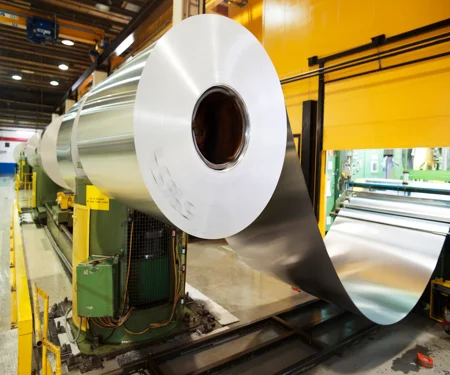
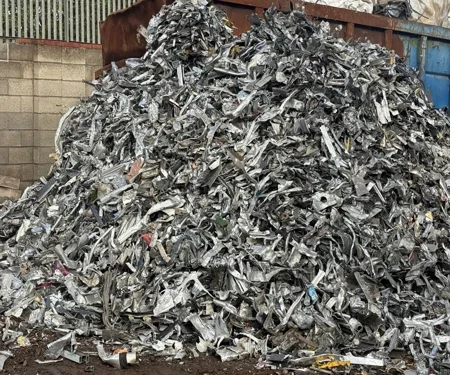
Globally, Novelis is the leading producer of flat-rolled aluminium products and the world’s largest recycler of aluminium. In the fiscal year 2024, the company processed approximately 2.3 million tonnes of recycled aluminium, which includes over 82 billion used beverage cans.
What does the net debt indicate?
Novelis’s net debt rose by USD 534 million quarter-on-quarter to USD 5.29 billion. Capital expenditure in Q3 of the 2025 financial year was USD 458 million. Management kept the 2025 financial year capital expenditure target unchanged at the lower end of guidance, between USD 1.8 to USD 2.1 billion. They guided that the 0.6 million tonnes per annum Bay Minette expansion and ramping up funding could increase net debt to EBITDA. However, Nuvama expects Novelis’ net debt to peak in the 2027 financial year, with earnings reviving in Q4 of the 2025 financial year, as they anticipate deleveraging from the end of the 2027 financial year once the Bay Minette facility is commissioned and ramped up.
Despite elevated scrap prices, Nuvama is factoring in EBITDA per tonne of USD 510 and USD 525 for the 2026 and 2027 financial years, respectively, which they believe is achievable given management’s efforts to mitigate the impact of higher scrap prices.
December-ending quarter’s result
On Monday, Novelis reported a drop of 9 per cent year-on-year in its net income for the December quarter, which was USD 110 million. Excluding special items, the net profit declined 32 per cent compared to the same quarter of the previous year at USD 119 million. Novelis’ net sales were 4 per cent higher compared to a year ago at USD 4.1 billion, mostly helped by higher average prices of aluminium, as shipments were at similar levels for both years at 904 thousand tonnes.
Hindalco’s investors can take heart from the resilience displayed by its aluminium subsidiary. With strategic investments and operational agility, Novelis seems poised to navigate the turbulent waters of global trade policies.
Overall anticipation of Indian aluminium industry
The Indian aluminium industry has the United States of America as its primary export market and now foresees a decline in exports owing to Trump’s declared steel and aluminium tariffs. As per a repot by Reuters, in the fiscal year ending March 2024, India has exported approximately 0.2 million tonnes of aluminium (primary and downstream) to the US, valued at INR 78.3 billion (USD 901.5 million). Producers are considering to redirect exports to alternative markets, though the prospective regions may take time to absorb the additional supply.
All-in-all, the metal industry is showcasing mixed reactions to the US tariff announcement. However, the US steel and aluminium companies have seen a surge in share prices, anticipating reduced competition from imports. Conversely, global producers, including those in Europe and South Korea, have faced declines due to concerns over decreased access to the US market.
In response to these developments, Indian Prime Minister Narendra Modi is preparing to engage in discussions with US officials to propose tariff reductions that could benefit US and Indian trade relations, potentially preventing a trade conflict. The outcome of these negotiations will be crucial in determining the future landscape of India-US trade relations, especially concerning the aluminium sector.












_md.webp)