GMG’s graphene aluminium-ion battery: A breakthrough in ultra-fast charging performance

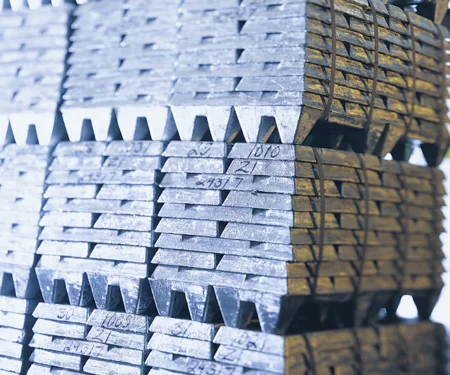
Stock image for referential purposes only
Graphene Manufacturing (GMG) has reported a notable improvement in the performance of its Graphene Aluminium-Ion Battery technology (G+A CELLS), being developed in collaboration with the University of Queensland. Working under a Joint Development Agreement with one of the globally leading metals and mining companies, Rio Tinto, the project highlights progress toward next-generation fast charging energy storage solutions.
Explore- Most accurate data to drive business decisions with Global ALuminium Industry Outlook 2026 across the value chain
The latest development records the enhancement of energy density under rapid charging conditions, as the company indicates that performance levels during six-minute charging cycles have considerably improved over its previously established benchmarks.
Bob Galyen, Non-Executive Director at GMG and former CTO of CATL, highlighted the significance of the development, stating, “With the possibility of charging from empty to full in around six minutes, this chemistry fundamentally changes how designers can think about electric vehicles, consumer electronics, and stationary storage.”
Energy density gains allowing for fast-charging capability
Gaylen pointed out that the traditional approach to designing systems around long charging times and large battery packs could give way to faster, more flexible energy use.
“Instead of planning around long charge stops with large packs, engineers can optimise for rapid energy turnaround, with higher power, and safer, with GMG’s battery made from abundant raw materials,” he said.
Recent test results indicate GMG’s battery technology is steadily closing the gap between ultra-fast charging and usable energy density, an area where conventional technologies typically face trade-offs.
The battery that used to deliver 26 Wh/kg since the update in December 2025, has doubled its performance by April 2026, delivering 49 Wh/kg when charged in six minutes, while achieving 101 Wh/kg when charging to 100 per cent State of Charge (SOC), up from 58 Wh/kg under a one-hour charge cycle.
The company now expects further optimisation of components, including cathode, anode, electrolyte and overall cell architecture, to considerably elevate these figures over time.
Don't miss out- Buyers are looking for your products on our B2B platform
Breaking away from lithium-ion constraints
Conventional lithium chemistries such as LNMC and LFP are typically engineered for charging cycles of one to two hours, with only limited tolerance for rapid charging. Sustained six-minute charging, equivalent to a 10C rate, is generally outside their operating design.
Only traditional technologies like the Lithium Titanate Oxide (LTO) batteries can handle such high-power cell designs, though often at a higher cost and lower energy density. Rather than adapting existing systems, GMG’s approach differs in that it has been built specifically for high-speed charging from the ground up.
While the LTO batteries remain dominant, their limitations are becoming harder to ignore, particularly in fast-charging environments.
“Lithium-ion will remain a key part of the energy landscape for years to come, but its limitations in fast charging, temperature tolerance, and critical-mineral supply are increasingly evident,” Galyen noted.
In contrast, GMG’s aluminium and graphene-based system offers a pathway to reduce reliance on lithium, while also opening the door to hybrid or multi-chemistry energy systems.
“This is not an incremental tweak to existing cells – it is a new platform that can open markets and use cases that were previously uneconomic or impractical.”
The global LTO market, valued at around USD 5.67 billion in 2025, is projected to grow at almost 17 per cent annually through 2030.
According to GMG, its aluminium-ion cells could serve as a lower-cost alternative in many of these segments, offering comparable fast-charging capability with improved economics.
New materials and design innovations optimise performance
A key part of GMG’s advancement lies in its material design. The company has introduced a chloride-free, non-corrosive hybrid electrolyte, addressing a long-standing issue in aluminium-based batteries.
This is paired with a complex cathode and anode configuration that supports stable performance under repeated fast-charging cycles. Notably, both electrodes use aluminium foil as a substrate, eliminating the need for copper and reducing both weight and cost.
The absence of lithium and copper also simplifies the supply chain and lowers exposure to critical mineral risks. GMG has filed a new patent covering these developments.
Improved performance paves the way for the next development phase
Craig Nicol, GMG’s Managing Director and CEO, described the progress as a turning point. “This is a significant step up from where we were at with battery performance in December 2025, and we see the required performance for our targeted use case being largely met,” he commented.
He added that the company is now preparing for the next stage, including partnerships and scaling plans, indicating that the company can “start to put together the next stages of the battery maturation program – including partnerships and manufacturing plans.”
With continued optimisation, GMG expects its cells could exceed 160 Wh/kg under one-hour charging and over 80 Wh/kg under six-minute charging conditions.
To build commercialisation and scaling
At present, the technology sits at Battery Technology Readiness Level (BTRL) 4, though it has progressed significantly within this stage. Ongoing work is focused on refining electrochemical performance in pouch-cell formats.
Through collaboration with industry partners such as BIC, GMG expects to advance toward BTRL 7 and 8, leveraging manufacturing processes similar to those used in lithium-ion battery production.
The company is targeting customer testing in 2026, followed by initial commercial production in 2027.
Chairman Jack Perkowski noted, “I am extremely proud that GMG has progressed its battery to this stage – the Company is getting very close to final commercialisation steps.”
Interest has already emerged from multiple global players, including Rio Tinto, across sectors such as transport, energy storage, and industrial systems.
Galyen summed up the broader implications of the technology shift, mentioning, “The companies that adapt quickest to this shift will lead the next wave of electrification, and GMG intends to be at the centre of that transition with graphene aluminium-ion technology.”
Must read: Key industry individuals share their thoughts on the trending topics

Taural India featured as Harvard Business School case study, showcasing India’s rise in advanced manufacturing
Next articleEkta Joshi named key managerial personnel at Hind Aluminium Industries
Grow with
AL Circle