Glencore in hope of talks to restart the $240 billion merger with Rio Tinto as coal price climbs
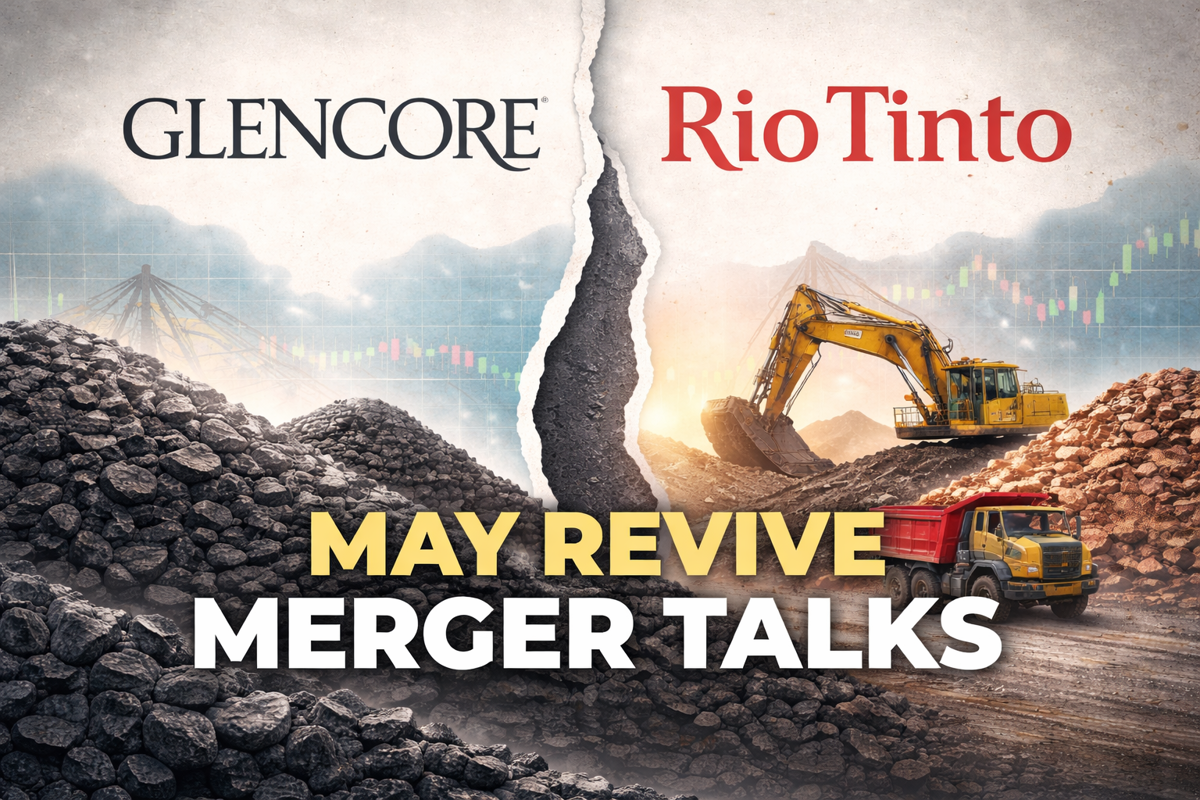
Glencore Chief Executive Officer Gary Nagle expects the recent rise in coal prices to revive merger discussions with Rio Tinto.
Earlier this year, the two companies talked about creating a USD 240 billion mining group. The deal would have combined Glencore’s trading business and copper assets with Rio Tinto’s large-scale mining operations. They aimed to form the world’s largest mining company and strengthen supply for the growing demand for copper.
For the global aluminium value-chain 2026 outlook, book our exclusive report “Global ALuminium Industry Outlook 2026"
Negotiations ended in February, and the companies failed to agree on valuation. Under UK takeover rules, Rio Tinto cannot resume formal talks for six months. Simon Trott, CEO of Rio Tinto said, “Ultimately we formed the view that we couldn’t stand up a value case, and that’s where it stands.” However, investors said Nagle remains optimistic that another opportunity to negotiate may arise.
Glencore believes recent market movements may strengthen its position in any future deal. Since January 7, coal prices and Glencore’s shares have risen 26 per cent, while Rio Tinto’s shares have increased 9 per cent, partly limited by weaker iron ore prices.
As a result, Glencore’s share of the combined market value has increased to about 35 per cent. The company had previously argued it should receive around 40 per cent of the combined company.
Glencore also expects that Rio Tinto’s iron ore business, which is central to the company’s earnings, may face pressure if the iron ore market moves into oversupply. A decline in iron ore prices could change the relative valuation of the two companies and make a future agreement easier.
Rio Tinto previously sold its coal assets to strengthen its environmental credentials, and a deal with Glencore could reintroduce large coal operations into the company’s portfolio.
In addition, five Australian investment funds sent a letter to Rio Tinto’s board in January, raising concerns about governance issues. This included past corruption investigations involving Glencore.
Don't miss out- Buyers are looking for your products on our B2B platform
While Glencore believes these investors represent only about 4 per cent of Rio Tinto’s shareholder base, Australian shareholders still hold significant influence. More than half of Rio Tinto’s profits come from Australian operations, meaning any merger would require government approval in Australia.
A potential deal would also require approval from 50 per cent of shareholders present and voting on the ASX, and 75 per cent of votes cast. Some investors noted that differences also remained over the value of Glencore’s undeveloped copper assets in Argentina, which contributed to the failure of earlier negotiations.
Must read: Key industry individuals share their thoughts on the trending topics
For now, investors say it may take more than short-term movements in coal and iron ore prices to bring Rio Tinto back into merger discussions with Glencore. One of them stated, “I don't see how Rio can change their mind in six months just because coal has gone up and iron ore has gone down.”

Note: The image used in this article is generated with an AI tool and does not depict any real-time moment
MoEFCC scientist inspects NALCO’s Panchpatmali bauxite mines, reviews environmental compliance
Next articleGuinea weighs bauxite export controls to stabilise prices amid global market volatility
Grow with
AL Circle