Fraunhofer IWU develops aluminium foam panels to keep cargo ships moving in low water
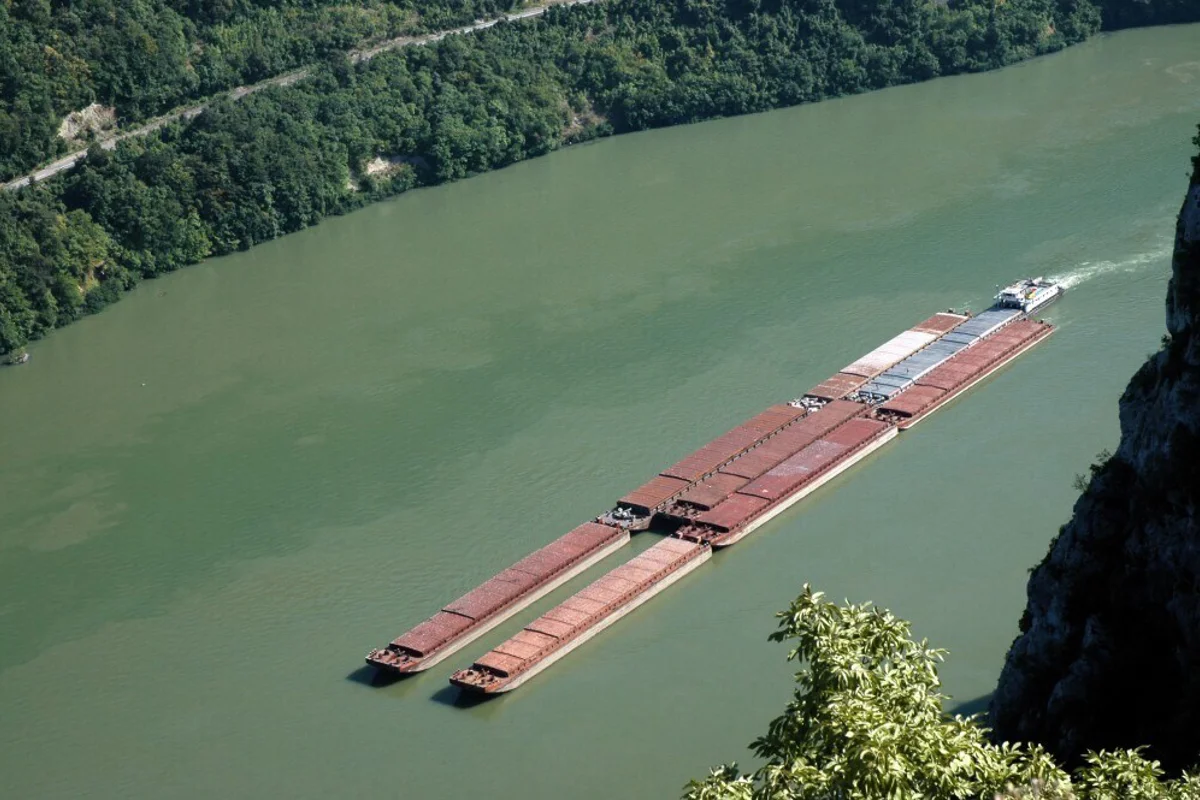
Stock image for referential purposes only
Fraunhofer IWU is developing lightweight aluminium foam sandwich panels that could help inland cargo vessels continue operating when low water levels force conventional ships to reduce their loads or risk running aground.
The proposed shipbuilding structure could reduce vessel weight by approximately 30 per cent compared with conventional shipbuilding steel. During low-water periods, this could allow vessels to carry up to 30 per cent more cargo relative to their net weight, or transport the same cargo while navigating in shallower water.
The approach could offer an alternative to two difficult choices facing European freight networks: deepening river channels, which can raise environmental concerns, or shifting heavy cargo to roads, which would increase pressure on already busy routes and ageing bridges.
Foam core makes vessels lighter
The Fraunhofer IWU design uses an aluminium foam core positioned between two thin steel or aluminium face sheets. Instead of relying on a solid metal plate to provide strength, the sandwich structure uses the distance between the outer sheets to maintain bending stiffness.
The foam core is very light, with a density of well below 1 gram per cubic centimetre. It also provides shear rigidity, helping the two outer sheets remain in position while the sheets absorb and transfer loads.
For ship operators, the practical benefit is straightforward: a lighter vessel sits higher in the water. That can create additional clearance below the hull, allowing the ship to continue serving inland routes when heavier vessels must unload part of their cargo.
Dr Jörg Hohlfeld, head of the Metal Foam Group at Fraunhofer IWU, said the panels weigh approximately 30 per cent less than conventional shipbuilding steel while maintaining comparable stiffness.
To know the aluminium casting demand forecast in the transporation sector, explore our report "Global Aluminium Casting Market 2026-2032: Plant Economics, Alloy Segmentation, Pricing Intelligence, Supply Chain Analysis & Strategic Recommendations"
No adhesive could support recycling
The panels are produced by adding a blowing agent, such as titanium hydride, to aluminium powder. When the material is heated, the agent releases gas and creates bubbles throughout the molten aluminium. As the aluminium expands, it forms a porous foam structure.
During production, the foam bonds directly to the metal face sheets. No adhesive is required, creating a metal-to-metal connection that could simplify end-of-life recycling compared with composite structures that combine metals with bonding agents.
Fraunhofer IWU says the pore structure can now be controlled in large components with sufficiently consistent properties. Panels can be prefabricated in dimensions such as 2.0 metres by 1.5 metres and joined into larger assemblies using standard welding methods, including metal active gas welding.
The institute is already developing aluminium foam structures for other applications, including machine tools and traction battery housings for electric vehicles. Its research indicates that ship hulls, decks, sidewalls and superstructures could also benefit from the material’s combination of low weight and stiffness.
Explore downstream aluminium suppliers, product listings and trade opportunities on AL Biz
Higher cost remains a barrier
The technology is not yet a simple replacement for conventional shipbuilding steel. Fraunhofer IWU acknowledges that material and processing costs for the sandwich panels are currently somewhat higher than those for standard steel plates.
The business case would therefore depend on whether the additional cost can be offset by higher payloads, greater operating availability during low-water conditions and potential environmental benefits. A vessel that can carry more cargo without increasing its draft could reduce the need for partial loads, while helping inland waterways retain freight that might otherwise move to roads.
The approach is also not intended to eliminate the need for waterway maintenance or channel management. Instead, it offers a way to make vessels more adaptable to changing river conditions.
With low water levels increasingly disrupting major European waterways such as the Rhine, Danube and Elbe, Fraunhofer IWU’s work highlights how aluminium lightweighting could help cargo operators improve navigability without relying solely on deeper channels or road transport.
AL Circle is coming up with a new Magazine "ALuminium’s Frontline: OEM Edition 2026." Feature your brand and opinion in the edition
Saudi beverage demand drives interest in Packfine's aluminium slim cans
Next articleDetroit automakers warn USMCA revamp could add billions in costs
Grow with
AL Circle