EU, Canada and Asia aluminium prices: Why $3,386/t benchmark can cost $5,792/t - read how regional premiums reshaped markets

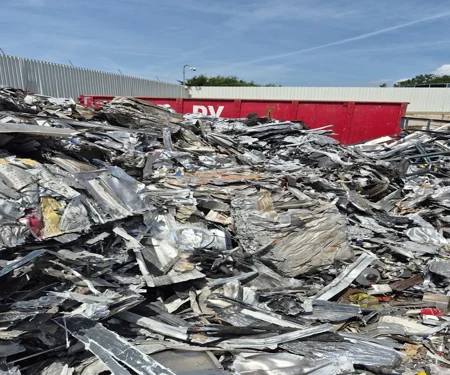
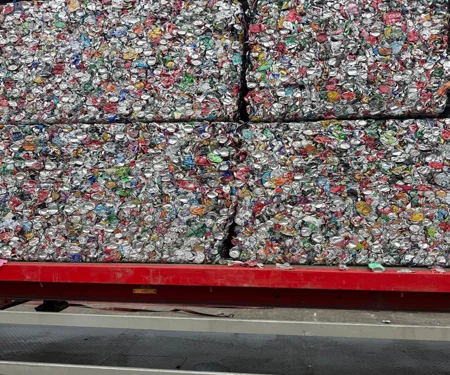
The image used in this article is generated with an AI tool and does not depict any real-time moment
What does a tonne of aluminium actually cost? The answer depends on where you are buying it. There is the price most of the market watches every day - the LME cash price. But a buyer waiting for aluminium to arrive at a Rotterdam warehouse, a US - Canada manufacturing plant or a Japanese port is dealing with something more complicated. The same primary metal can carry very different price tags once regional premiums, freight, tariffs and other costs enter the equation.
That distinction became important in the first half of 2026. The LME cash aluminium price averaged USD 3,386 per tonne, compared with USD 2,538 per tonne in H1 2025, an increase of USD 848 per tonne, or 33.4 percent. But regional premiums moved very differently, meaning buyers in different parts of the world faced very different costs for the same metal.
So, the question is: how much more does it actually cost to get the metal into their market?
The benchmark price - but it was only the beginning
The aluminium market entered 2026 with prices already moving higher. The LME cash price was USD 2,986 per tonne on January 2 and reached USD 3,325 per tonne on January 29. February interrupted the rise, with prices falling to the H1 low of USD 2,996 per tonne on February 13.
Then the market rose again. In March, aluminium climbed from USD 3,226 per tonne on March 2 to USD 3,585 per tonne on March 31. It reached USD 3,685 per tonne on April 24, followed by USD 3,769.50 per tonne on May 29 and the H1 peak of USD 3,855 per tonne on June 2.
By the end of June, however, the rally had reversed some of those gains, with aluminium closing the month at USD 3,105.50 per tonne.
The contrast with the previous year was striking. In H1 2025, aluminium had started at USD 2,536 per tonne on January 2, reached USD 2,675 per tonne on January 20 and USD 2,720 per tonne on February 20, before hitting an H1 peak of USD 2,737 per tonne on March 12.
April then brought a sharp correction, taking prices from USD 2,499 per tonne on April 1 to USD 2,285 per tonne on April 9. The market recovered through May and June, reaching USD 2,530 per tonne on May 14 and ending H1 at USD 2,593 per tonne. June traded between USD 2,432 per tonne and USD 2,599 per tonne.
These numbers explain the rally. They do not explain what a buyer actually paid.
For that, the regional premiums tell a much more revealing story.
Europe: Rotterdam premiums turn higher
At the beginning of 2025, European buyers were seeing their regional premium move in the opposite direction to what would later happen.
Rotterdam's duty-paid aluminium premium was around USD 362.50 per tonne in January, based on a USD 350–375 per tonne assessment on January 9. By February 4, it had fallen to USD 320–365 per tonne, and by April 17 it was down to USD 180-215 per tonne.
Taking the LME average and adding the premium, the change becomes easier to see.
In January, USD 2,575 per tonne plus USD 362.50 per tonne produced an indicative physical price of USD 2,937.50 per tonne.
In February, the USD 2,653 per tonne LME average combined with a USD 320–365 per tonne premium to give USD 2,973-3,018 per tonne. By April, USD 2,381 per tonne plus USD 180-215 per tonne resulted in USD 2,561-2,596 per tonne.
In H1 2026, the Rotterdam premium rose to USD 359.38 per tonne in February, USD 472 per tonne in March, USD 578 per tonne in April and USD 595.50 per tonne in May. It eased to around USD 560 per tonne in June, ending the month at USD 518 per tonne.
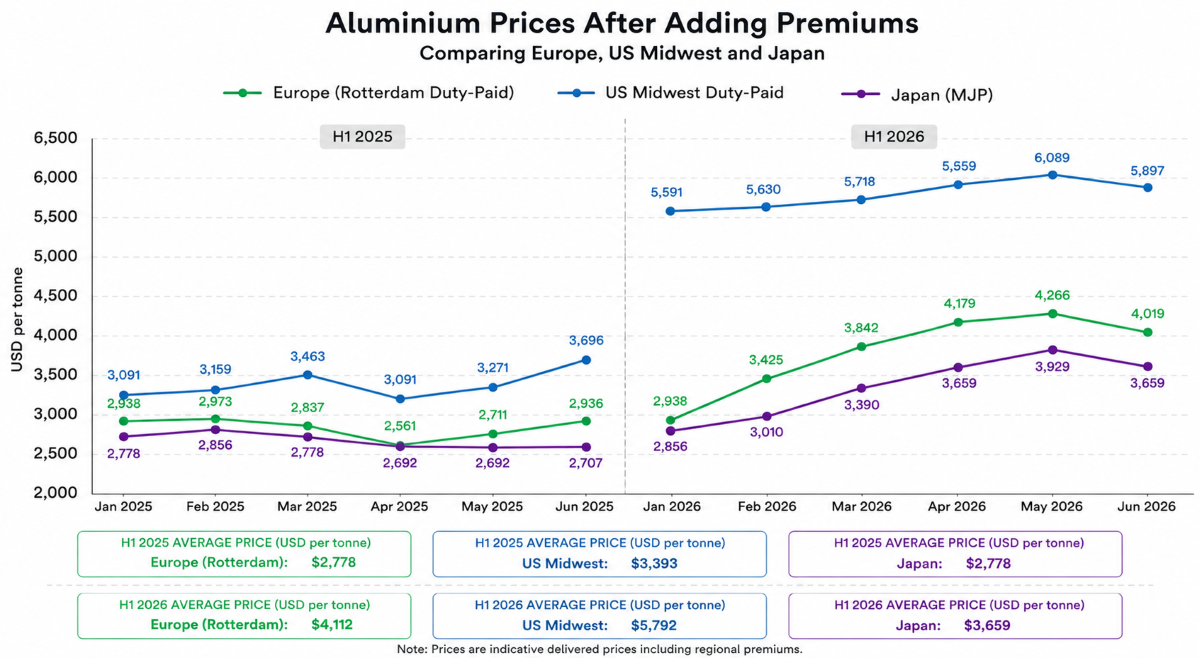
The higher premium, combined with the stronger LME price, pushed the indicative price to USD 3,424.73 per tonne in February, USD 3,842 per tonne in March, USD 4,179 per tonne in April and USD 4,265.50 per tonne in May. In June, it was approximately USD 4,019 per tonne using the USD 560 per tonne premium, or USD 3,977 per tonne using the month-end USD 518 per tonne premium.
Explore- Most comprehensive and forward-looking industry-focused report — Global Bauxite & Alumina Market Forecast to 2036: Supply–Demand, Trade Flows & Price Outlook
The reasons were not confined to the aluminium market itself
CBAM took effect on January 1, 2026, with carbon costs beginning to feed into duty-paid Rotterdam assessments ahead of certificate payments from 2027. At the same time, Norðurál's Grundartangi plant in Iceland remained offline from October 2025 until April 2026, removing nearby low-freight metal from the European supply pool.
GCC smelters supply roughly 8 percent of global primary aluminium and are an important source of European metal. As Strait of Hormuz tensions intensified, freight and insurance costs for Gulf-to-Europe shipments rose.
The Rotterdam premium went from around USD 335 per tonne in January to a record USD 472 per tonne by March 25, a 41 percent increase in three months, before moving towards roughly USD 600 per tonne in May.
In the US, the premium changed the economics altogether
If Rotterdam shows how a premium can rise sharply, the US Midwest shows what happens when that premium becomes a major part of the final price.
In H1 2025, the US Midwest duty-paid aluminium premium averaged approximately 38.8 cents per pound (USD 855 per tonne). It rose from around 23.4 cents per pound (USD 516 per tonne) in January to more than 60 cents per pound (USD 1,320 per tonne) by June.
By H1 2026, the average had reached approximately 109.1 cents per pound (USD 2,406 per tonne). The premium crossed USD 1 per pound (USD 2,205 per tonne) in January and remained at historically elevated levels through the first half.
That was an increase of approximately USD 1,551 per tonne, or 181 percent, from H1 2025. The impact on the final price was substantial. In H1 2025, adding the USD 855 per tonne premium to the USD 2,538 per tonne LME average produced an indicative price of USD 3,393 per tonne.
In H1 2026, the calculation became USD 3,386 per tonne + USD 2,406 per tonne = USD 5,792 per tonne. The indicative all-in price therefore increased by approximately USD 2,399 per tonne, or 70.7 percent.
The premium had more than doubled, moving from roughly a fifth to nearly half of the total delivered cost of a tonne of aluminium in the US. That is also where Canada becomes an important part of the pricing story. The US raised Section 232 tariffs on imported aluminium from 25 percent to 50 percent in June 2025, while Canada supplied around 70 percent of US primary aluminium imports in 2024.
So, the higher tariff landed heavily on Canadian metal, even as the US market remained structurally dependent on Canadian supply.
Explore primary aluminium suppliers, product listings and trade opportunities on the AL Biz platform.
Asia takes a more measured hit
In Q1 2025, LME aluminium averaged approximately USD 2,628 per tonne, while the MJP premium was around USD 228 per tonne. Together, they produced an indicative delivered price of USD 2,856 per tonne.
In Q2 2025, the LME average declined to approximately USD 2,447 per tonne, while the MJP premium increased to USD 245–260 per tonne. That put the indicative price at around USD 2,692–2,707 per tonne.
In Q1 2026, the LME average rose to approximately USD 3,195 per tonne, while the MJP premium was around USD 195 per tonne, producing an indicative price of USD 3,390 per tonne.
The bigger move came in Q2. LME aluminium averaged approximately USD 3,577 per tonne, while the MJP premium climbed to USD 350–353 per tonne. The indicative delivered price therefore reached around USD 3,927–3,930 per tonne.
Across H1 2026, the indicative Japanese aluminium price rose from approximately USD 2,778 per tonne in H1 2025 to USD 3,659 per tonne in H1 2026. That was an increase of USD 881 per tonne, or 31.7 percent.
Japan was also dealing with tighter Middle Eastern supply linked to the Strait of Hormuz situation. At the same time, higher US and European premiums pulled available cargoes away from Asia, leaving Japanese buyers competing for a tighter pool of metal.
Analysis
The H1 2026 aluminium market therefore tells two stories at once. The first is the familiar one: the LME price rose sharply, averaging 33.4 percent higher than in H1 2025.

The second is more revealing for physical buyers. Regional premiums did not move in step with the LME. Rotterdam premiums surged, the US Midwest premium reached extraordinary levels, and Japan saw a sizeable increase in the second quarter.
That left buyers facing sharply different final prices. On the H1 averages used here, the indicative US Midwest price reached $5,792 per tonne, compared with $3,659 per tonne in Japan, while the Rotterdam price stayed above $4,000 per tonne for much of the first half of 2026.
Note: This is exclusive coverage by AL Circle and may not be reproduced, republished or shared without prior permission.
LME aluminium cash bid falls 0.36% as live warrants decline to 243,450t
Next articleLME aluminium cash offer price falls 0.86% to $3,188/t; stocks remain unchanged
Grow with
AL Circle