Destocking continues as the holiday approaches, aluminium prices continue to consolidate at highs
The image used in this article is generated with an AI tool and does not depict any real-time moment
Futures: SHFE aluminium closed at RMB 24,375 per tonne in the previous trading session, edging down 0.04 per cent. The price stood above the MA10 (24,304) and MA30 (24,089.5), but slightly below the MA5 (24,258). Short-term moving averages flattened, while the medium-term bullish alignment remained intact, with the market consolidating at highs overall.
On the MACD indicator, DIF=129.53 and DEA=139.74. DIF stayed above the zero axis but maintained a death cross, with the histogram at -20.43, indicating weakening bullish momentum and lingering short-term correction pressure. Trading volume rebounded slightly to 54,800 lots, with moderate market activity. The suggested core trading range for SHFE aluminium is 24,000-24,600. LME aluminium closed at USD 3,293.5 per tonne, down 0.20 per cent.
The price was slightly below the MA5 (3,282.4) but still above the MA10 (3,288.85), MA30 (3,272.35), and MA60 (3,219.81). Short-term moving averages were intertwined, while the medium-term bullish alignment remained intact. On the MACD indicator, DIF=10.88 and DEA=11.92, with the histogram turning slightly negative to -2.08, suggesting bullish and bearish momentum approaching equilibrium and a directional choice looming in the near term. The suggested core trading range for LME aluminium is 3,270-3,350.
Macro front: The White House issued a statement saying US President Trump signed the Lindsey Graham Sanctioning Russia and Iran Act of 2026. The act authorises and expands statutory sanctions, tariffs, and bans against Russia, and extends existing sanctions against Iran. US President Trump said the US is at a "decision stage" on the Iran issue, and "something very big" will happen in the near future. Options currently on the table include completely destroying Iran, letting Iran's economy continue to deteriorate, or reaching a deal. Iran's Khatam al-Anbiya Central Headquarters issued a statement saying intelligence shows the US has decided to take hostile action against Iran again, with the tacit approval of certain Middle Eastern countries. Any US attack will trigger Iranian retaliation.
Fundamentals: Supply side, China's weekly aluminium production remained stable last week, while some downstream sectors saw certain production cuts. Purchases of liquid aluminium decreased, and the proportion of liquid aluminium edged down by 0.02 percentage points. Outside China, according to foreign media reports, Alba's operating capacity recovered to around 1.3 million tonnes, further lifting operating capacity outside China.
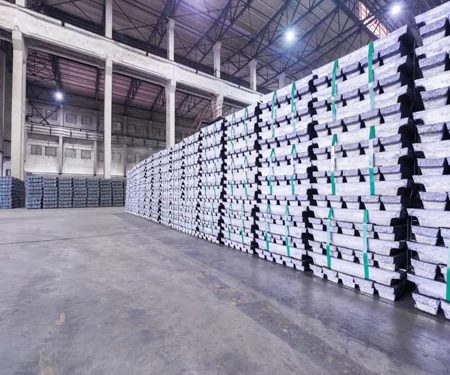
Demand side, with the upcoming holiday, downstream stocking sentiment picked up slightly. Inventory side, aluminium ingot shipments from Xinjiang were disrupted, and combined with downstream stockpiling, aluminium ingot destocking widened this week. As of this Monday, China's aluminium ingot social inventory fell by 12,000 tonnes from last Thursday and by 55,000 tonnes from last Monday. In the near term, the aluminium destocking trend is expected to continue.
Primary aluminium market: Intraday SHFE aluminium 2610 contract prices moved higher from the previous trading day, with spot premiums slightly suppressed. Downstream purchasing sentiment showed divergence, with some downstream players already stockpiling while others continued to push for lower prices. Last Friday, SMM A00 aluminium ingot spot transactions were between parity and a premium of RMB 20 per tonne.
Last Thursday night session, aluminium futures rallied again. Although Friday was a stockpiling cycle, high aluminium prices suppressed purchasing sentiment among downstream processing enterprises in central China, leaving market transactions relatively sluggish.
Meanwhile, large suppliers tended to deliver long-term contracts ahead of schedule to avoid low premiums, showing strong willingness to hold prices firm, and quotes differed significantly between large and small suppliers. Ultimately, actual transaction prices in central China were around a discount of RMB 60-90 per tonne against the SHFE aluminium 10 contract. SMM daily aluminium ingot inventory data across the three regions showed destocking of 9,000 tonnes, with all three regions destocking.
South China market: Last Friday, aluminium prices stopped falling and rebounded slightly, with the spot market in the doldrums. An aluminium enterprise in southwest China launched an incremental aluminium ingot tender. Near-term arrivals were tight but future arrival expectations rose.
Combined with absolute prices at relatively low levels after the pullback, suppliers diverged again, with some holding prices firm and others cutting prices to cash out, easing spot supply circulation. Some downstream players showed willingness to rush to buy amid continuous price rise, steadily restocking. However, traders remained cautious with limited willingness to enter the market, only taking orders as needed. Demand follow-through was insufficient, and transactions weakened marginally.
Aluminium scrap: Last Friday, SMM A00 aluminium prices closed at RMB 24,380 per tonne, up RMB 200 per tonne from the previous trading day. Aluminium scrap market prices followed with gains of RMB 100-150 per tonne. In terms of price differences, on September 18, the price difference between A00 aluminium and mixed aluminium extrusion scrap free of paint in Foshan was about RMB 2,557 per tonne, and the price difference between A00 aluminium and shredded aluminium tense scrap was about RMB 1,336 per tonne.
Supply side, the tight raw material supply pattern remained unchanged, and the scarcity of compliant, invoiced aluminium scrap continued to rise. Notably, tax audits in central China continued to escalate, and the sharp drop in regional aluminium scrap supply will significantly disrupt aluminium scrap circulation. On imports, this week, imported shredded aluminium prices at Ningbo port rose from RMB 21,370 per tonne to RMB 21,470 per tonne (tax inclusive), and at Tianjin port from 21,420 per tonne to RMB 21,520 per tonne (tax inclusive).
Demand side, the cast aluminium alloy "September peak season" underperformed, with demand yet to see substantial volume growth. End-user orders improved only slightly from the off-season, without concentrated restocking. Wrought aluminium alloy demand was moderate, and in-factory aluminium scrap inventory was relatively ample.
Aluminium scrap market is expected to continue consolidating on a strong note. Supply side, the impact of tax audits continued to spread. If aluminium scrap yards slow shipments, circulating supply will tighten again, providing strong support for aluminium scrap prices. Moving forward, we will continue to focus on tracking the chain reactions of tax audits on the secondary aluminium industry chain and changes in orders at scrap utilisation enterprises.
Secondary aluminium alloy: Spot market: Last Friday, overall ADC12 market quotes were raised, with the SMM ADC12 price up RMB 150 per tonne from the previous trading day to RMB 24,500 per tonne. Cost side, recent tightening of tax invoice policy enforcement has intensified enterprises' reliance on purchasing invoiced raw materials, while invoiced supply is limited and priced high, driving up raw material procurement and invoice cost pressure simultaneously.
In addition, futures have strengthened recently, providing some boost to spot market quotes. Overall, the current rise in ADC12 market prices is driven more by cost-side and supply constraints. Although marginal improvement on the demand side still provides some support, the core contradiction behind the current price increase remains concentrated in raw materials and tax invoices, and short-term spot prices are expected to hold up well.
Comprehensive outlook: The US Fed's first rate hike has landed, the situation in the Middle East remains unsettled, and macro sentiment still faces considerable uncertainty. Fundamentals-wise, production resumptions in the Middle East continue to accelerate, but some new projects have been delayed, and the pace of operating capacity increases is expected to slow down in the coming months. With the long holiday approaching, downstream stocking demand supports destocking, and aluminium prices are expected to consolidate at highs in the short term.
Note: This article has been issued by SMM and has been published by AL Circle with its original information without any modifications or edits to the core subject/data.
Grow with
AL Circle