China's progressive transition from fossil fuels to renewable energy, harnessed from sunlight and water for power generation, is instilling a sense of optimism. This shift, by the world's largest polluter, is a promising step towards achieving net-zero emissions, offering a beacon of hope for the global environment.
Encouragingly, the usage of thermal power, which accounts for a lion's share of China's carbon footprint, was reduced by 4.3 per cent in May from the previous year, the most significant drop since 2022.
Instead, thermal power was largely replaced by hydroelectricity. In May, hydropower generation in China surged 39 per cent after heavy rains fed a recovery in Southwest China's Yunnan province, one of the world's largest hydropower-producing regions.
Output from large solar farms also grew 29 per cent, following a record rise in new panels last year.
The above data underpin China's potential to curb carbon emissions by 2030 and achieve the critical milestone of net zero by 2060.
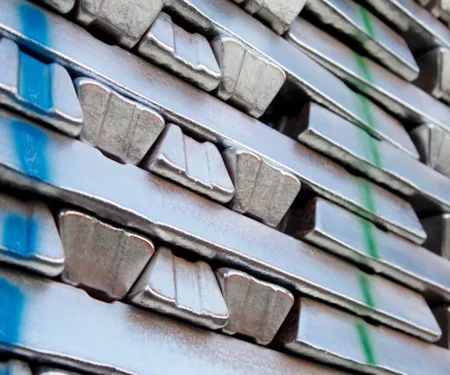
The unwavering efforts of China's manufacturing sectors to reduce their carbon footprint are truly inspiring. The aluminium industry, in particular, has been at the forefront of this movement, accelerating the development of green-power aluminium. This is achieved by increasing the use of renewable energy for electrolytic aluminium production, a testament to the sector's commitment to sustainability.
Many smelters have consciously shifted their production base to Yunnan for sufficient and cheap hydropower. Among them, China Hongqiao Group has relocated its 1.5 million tonnes of capacity to Yunnan from northern Shandong province by September 2023. By the end of 2025, the Group aims to move 4 million tonnes to take advantage of low-carbon energy.
By moving out of fossil-fuelled electricity, China Hongqiao Group expects to address 75 per cent of its carbon footprint.
As mentioned in AL Circle's report: "Sustainability in the Global Aluminium Industry", about 2-3 million tonnes of primary aluminium production capacity will be transferred annually to Southwest China between 2020 and 2025, and by 2060, 90,000-100,000 tonnes will be shifted each year. The grid-powered smelters will also be decarbonised as clean energy, and nuclear energy will account for 82.9% of all energy by 2060.














_md.webp)
_md.webp)
_md.webp)