Can kaolin redefine the HPA supply chain? Andromeda advances pilot-scale production with gallium upside

Stock image for referential purposes only
Australia's Andromeda Metals has moved a step closer to commercialising an alternative route to high-purity alumina (HPA), commissioning its pilot plant to transition from laboratory-scale production to a continuous manufacturing process using Great White kaolin as feedstock.
The milestone marks the company's next phase in developing HPA outside the conventional aluminium feedstock route. The pilot programme, scheduled to run through the third quarter of 2026, is expected to generate commercial-grade 4N HPA samples in the second half of the year for customer qualification while providing engineering data for future feasibility studies.
Unlike traditional HPA production, which typically relies on aluminium metal through the alkoxide process, Andromeda's proprietary technology uses refined kaolin sourced from its Great White Project in South Australia. The company says the approach is designed to support a dedicated HPA supply chain independent of conventional aluminium feedstock.
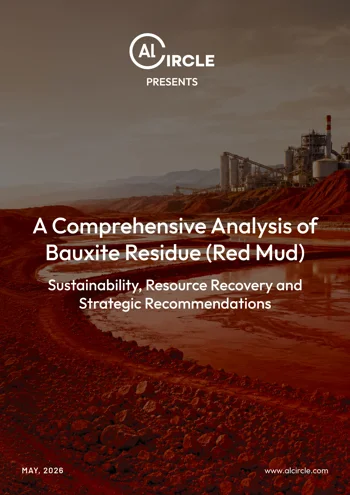
To know the futuristic market and value proposition of red mud, explore the report "A Comprehensive Analysis of Bauxite Residue (Red Mud): Sustainability, Resource Recovery and Strategic Recommendations"
The latest pilot-scale campaign builds on laboratory testwork completed earlier this year, which produced HPA with a purity of 99.9985 per cent. According to the company, continuous operation at pilot scale will validate the process under commercial conditions while producing customer-ready samples required for qualification by potential buyers.
Alongside HPA production, the pilot programme will also evaluate the recovery of co-products, including amorphous silica and potentially gallium. While neither material was incorporated into the project's 2025 scoping study, Andromeda believes successful recovery and commercial application could strengthen the overall project economics by creating additional revenue opportunities.
The 2025 scoping study had already indicated favourable project economics and globally competitive production costs for the proposed HPA operation. The ongoing pilot campaign is expected to generate the technical and operational data needed to support subsequent engineering work and future project development.
Commercial 4N HPA samples are targeted for delivery during the second half of 2026, enabling customer qualification programmes and advancing the project's path towards commercialisation. Beyond demonstrating continuous production, the pilot plant will also help determine whether by-products such as gallium and amorphous silica can add further value to the proposed operation, potentially broadening the project's commercial proposition.
Explore buying & selling leads of alumina and trade opportunities on AL Biz
European Commission examines Ireland's Aughinish Alumina refinery over Russia-linked export flows
Next articleImpact advances Lake Hope HPA project, reports A$2.08m cash balance in June quarter
Grow with
AL Circle