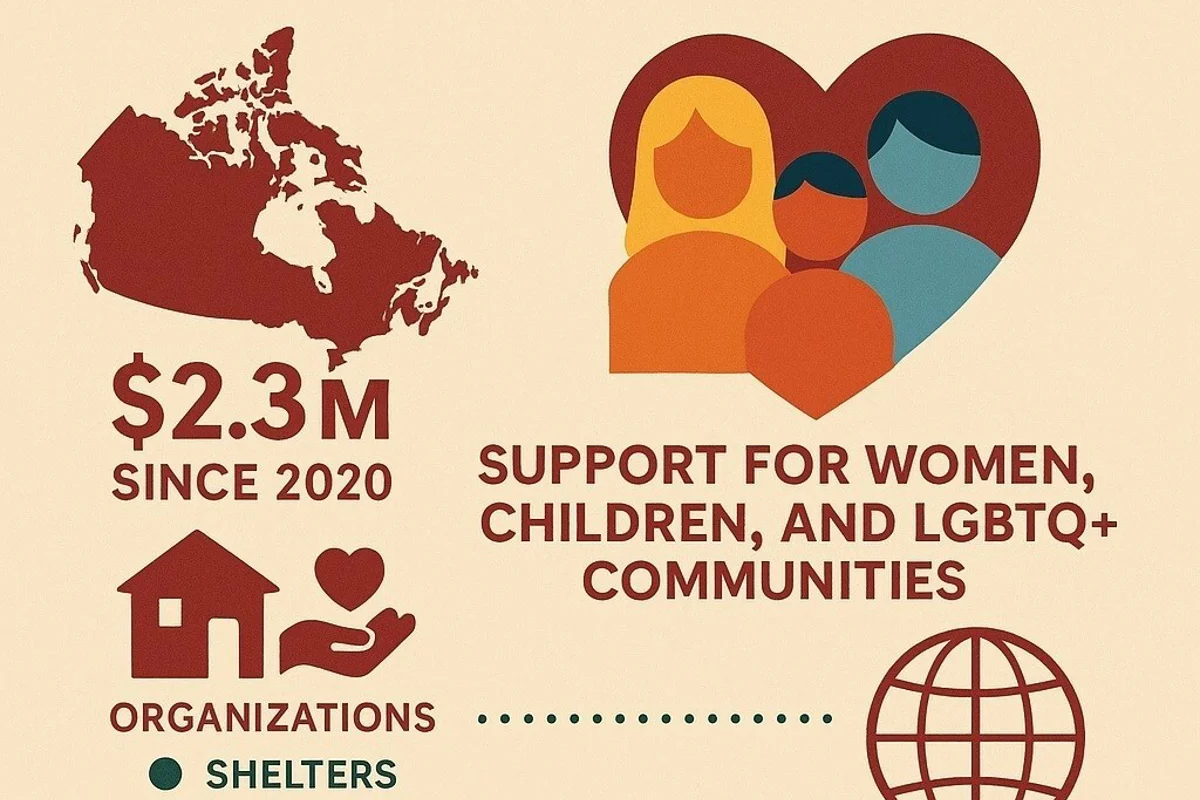
There is another side to Rio Tinto that exists far from its mine sites — a steady, growing effort to support the people and communities round the globe. This year, during the 16 days of activism against gender-based violence, the company renewed its involvement with organisations that help women, children and 2SLGBTQ+ survivors rebuild their lives. This year marks the sixth consecutive time it has stepped forward to support these groups.
The company has put USD 400,000 into supporting 15 organisations across Canada that offer shelter, counselling, education and other essential services. With this latest round, its total contribution since 2020 now reaches USD 2.335 million.
One of the long-standing partners, SOS violence conjugale, has used the support to modernise its tools and protocols, improving safety for victims and helping them access the information they need to break away from violence.
Rio Tinto Aluminium & Lithium Chief Executive Jérôme Pécresse said, Our responsibility as an employer begins with ensuring that every person at Rio Tinto feels safe and supported. This same priority extends to the communities around our operations. Gender-based violence has significant impacts on individuals and families, and organisations across Canada provide critical assistance to those affected. Through this initiative, we are contributing to the work they do to protect individuals and strengthen community resilience."
This year, support goes to a long list of community organisations — Centre Femmes Aux 4 Vents in Sept-Îles; Centre Le Volet des Femmes and Centre Napeu Ekuanitshit in Havre-Saint-Pierre; Elisabeth Fry Society in Burns Lake; Hope Haven in Labrador City; Ksan Society in Terrace; La maison d’hébergement Ashpukun in Matimekush-Lac John; La Maison d’hébergement Le Rivage in Saguenay–Lac-Saint-Jean. The list also includes Le Chaînon in Montreal; Maison La Source in Sorel-Tracy; Montreal Women’s Y Foundation; Optimum in Saguenay–Lac-Saint-Jean; Puakuteu Comité de femmes de Mashteuiatsh; SOS violence conjugale in Montreal; and YWCA Sutherland House in Fort Smith.
Explore- Most accurate data to drive business decisions with 50+ reports across the value chain
A global web of community investment
While the initiatives in Canada often gets the spotlight, it is only a part of the big picture. In 2024, around the world, Rio Tinto contributed USD 95.9 million into voluntary social contributions. Western Australia alone accounted for at least AUD 1.37 million (USD 0.89 million), directed to more than 300 local groups — small community organisations working with grants of up to 5,000 dollars. This money supports the sort of work that never makes headlines: sports clubs, youth groups, Indigenous cultural initiatives, elder care, mental-health workshops and regional education programmes.
These contributions come from several sources — direct corporate funding, community budgets, structured grant systems, partnerships — and indirectly through taxes, royalties, procurement and employment. During the peak of COVID-19, Rio Tinto allocated 10 million dollars across Canada and the United States to keep food banks running, support counselling services and help communities pivot to online education.
In Australia’s Pilbara, community work is tied closely to daily life. Workers can choose different employment setups — FIFO from Perth and regional hubs, residential roles for those living locally, part-time arrangements or job-share positions. Parental leave provides 4.5 months at full pay or nine months at half pay, regardless of family structure. There are wellness subsidies, employee-assistance programmes and broader commitments, such as the AUD 250 million (USD 163 million) investment in Western Australia covering education, Aboriginal wellbeing, health and decarbonisation. In Far North Queensland, the company works with Indigital under the Caring for Country programme, where Indigenous communities lead conservation supported by tools like AI and LiDAR.
Further north, in Mongolia, Rio Tinto’s partnership with UNESCO continues to grow. It focuses on sustainable tourism, environmental management, climate-change mitigation and TVET programmes designed to broaden skill access. The Mongolia Delivery Centre in Ulaanbaatar employs 80 people who support both local and global operations, while procurement from more than 630 Mongolian businesses feeds into the Made in Mongolia supply-chain strategy.
In the United States, Rio Tinto’s benefits resemble those of a modern tech employer more than a traditional mining company. Salaries come with 10–20 per cent annual bonuses, 5–15 per cent equity, up to 8 per cent matching and healthcare valued at about USD 12,000 annually. More than half of the employees are in Access Perks discount programme, and flexible work arrangements — worth roughly USD 10,000 each year — which helps with work-life balance.
In Canada and across regions such as Peru, Chile and Indonesia, welfare policies are more for environmental sustainability, cultural leave, psychological safety and community health, reflected in country-specific reports.
Women, children and LGBTQ+ communities at the heart of its social work
Even outside mining regions, Rio Tinto’s work touches different parts of society, especially through women’s empowerment programmes. In past years, the company reported 37 per cent women in its Perth workforce and 21.6 per cent globally. A range of initiatives like, Project Balance Boost, mentorship programmes, leadership development and flexible work policies help push this inclusion forward.
In Guinea, the Simandou project involves women’s rights advocates and integrates gender-sensitive indicators into mining and community development work. The Why Gender Matters policy ensures gender considerations are part of community projects from the start.
Families are supported through parental leave, childcare assistance and wider investments in education and health, especially in Indigenous areas. LGBTQ+ inclusion is incorporated into global DEI programmes, which focuses on psychological safety and anti-violence commitments, including alignment with White Ribbon.
2024 story and future roads
The 2024 results tell a mixed story. Women made up 25.2 per cent of the workforce — a rise of 0.9 per cent from 2023. At senior levels, the numbers climbed as well: 33.3 per cent of executive leaders, 32 per cent of senior leadership and 42.8 per cent of Board roles were held by women. Graduate intake was 56.6 per cent women.
Human-rights training reached 85 per cent completion among high-risk roles through the Human Rights in Action programme. By the end of 2024, the company had 61 Indigenous leaders in Australia, bringing it closer to its 2026 target.
It has broader community goals that stretches into 2026 and 2027. Among them is a commitment to grow the portion of contestable spending that goes to local suppliers each year and to have every one of its sites co-manage cultural heritage with community knowledge holders by 2027.
The company has also set clear expectations around human rights: all employees in high-risk roles were required to complete job-specific training by 2024, and the rest of the workforce must finish general human-rights training by 2026. By 2026, Rio Tinto aims to have 100 Indigenous leaders in Australia. Its diversity targets call for steady increases in the number of women across the organisation — including at senior-leadership levels—along with achieving a graduate intake that is 50 per cent women and ensuring that 30 per cent of graduates come from regions where Rio Tinto is building new business activity.
Beyond this, the company is pushing for yearly reductions in occupational illnesses and has committed to major cuts in Scope 1 and 2 emissions: a 15 per cent reduction by 2025 and a 50 per cent cut by 2030, based on 2018 levels, with a long-term aim of reaching net-zero operational emissions by 2050.













_md.webp)