Australia nears Tomago aluminium rescue as PM joins final funding talks
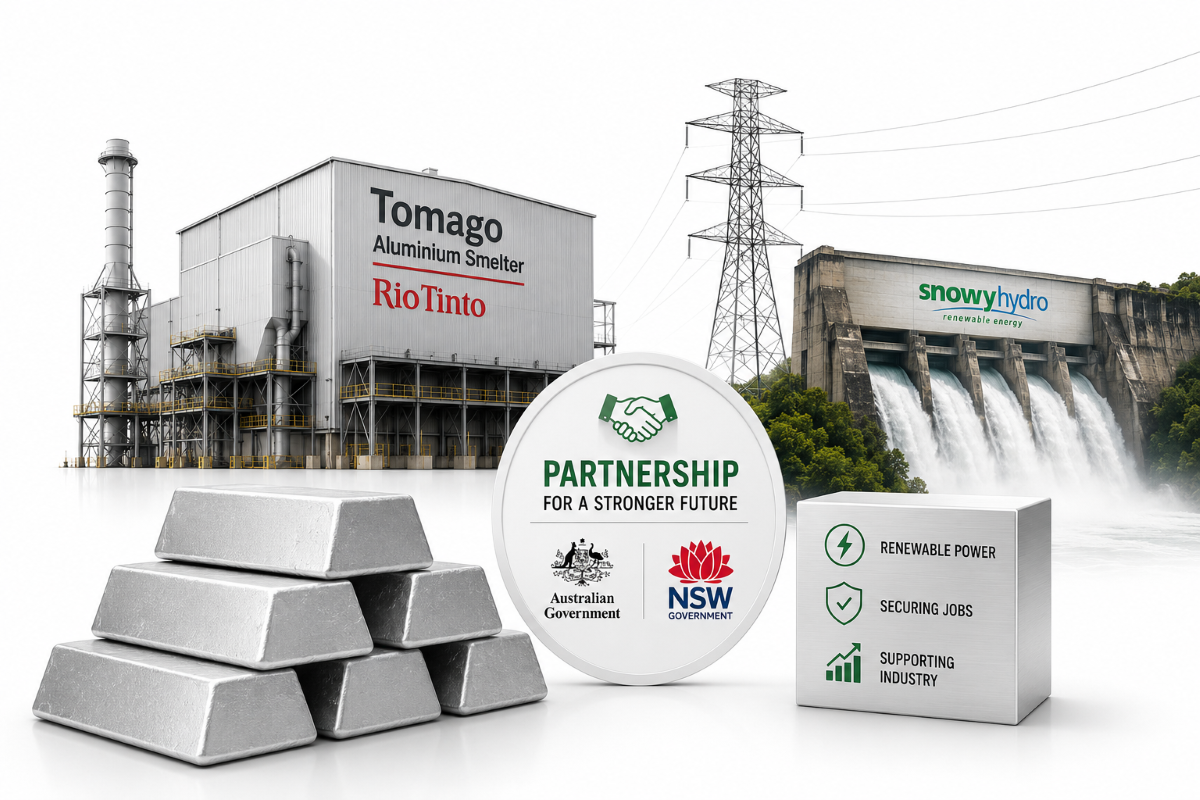
The image used in this article is generated with an AI tool and does not depict any real-time moment
Australia is edging closer to securing the future of Rio Tinto-controlled Tomago aluminium smelter. Prime Minister Anthony Albanese has stepped into final negotiations with New South Wales (NSW) Premier Chris Minns over a long-term funding package to keep the facility operating beyond 2028, when its current electricity contract expires.
An announcement is expected in August, after a long period of negotiations between the Federal and NSW governments over cost-sharing of subsidised electricity supplied through Snowy Hydro.
Explore: The most comprehensive and forward-looking industry-focused report — Global Bauxite & Alumina Market Forecast to 2036: Supply–Demand, Trade Flows & Price Report
Located in New South Wales’ Hunter Valley near Newcastle, the Tomago smelter employs around 1,000 people and consumes roughly 12 per cent of New South Wales’ electricity, making it one of Australia’s most strategically important aluminium assets.
The proposed support package is founded on long-term power purchase agreements with government-owned renewable energy generator Snowy Hydro, which would provide Tomago with electricity below the present market rates.
Estimates from industry and government sources suggest the subsidy could range from USD 300 million to USD 470 million annually, potentially amounting to several billion dollars over the agreement’s duration of a decade.
Negotiations had a primary focus on a fair division of the funding. While the Federal Government has pushed for a 50-50 cost-sharing arrangement, NSW has reportedly sought to contribute 10-20 per cent, arguing it already provides substantial support to the smelter. Although NSW allocated funding for the project in its June budget, the amount reportedly falls short of Canberra’s expectations.
Explore primary aluminium suppliers, product listings and trade opportunities on the AL Biz platform.
Strategic employer and major electricity user
Federal Industry Minister Tim Ayres recently said that both governments were now working in “lockstep together” to secure the smelter’s future, while also indicating that the agreement could include investments in new electricity generation and power infrastructure.
Earlier this year, Ayres praised Queensland’s faster agreement with Rio Tinto’s Boyne aluminium smelter, remarking that “if it was a State of Origin contest for speed of delivery”, Queensland had reached the finish line first.
Political leaders have also reaffirmed their commitment to the operation.
Speaking at the NSW Labor conference, Premier Chris Minns said, “State and federal governments must work together to save the jobs and sovereign capabilities of the Tomago aluminium smelter.”
Prime Minister Anthony Albanese echoed that commitment, telling workers, “We will keep working with the Minns Labor government to secure your jobs.”
If finalised, the Tomago agreement would become Australia’s second major aluminium industry support package this year after Canberra committed AUD 1 billion (USD 702.58 million) to secure Rio Tinto’s Boyne smelter in Queensland, highlighting Canberra’s broader strategy to preserve Australia’s aluminium smelting capacity as the industry faces rising electricity costs and the transition to lower-carbon power.
Explore the position of aluminium at the intersection of sustainability and strategy in Sustainability & Recycling: Aluminium's Dual Commitment
NALCO seeks waiver of stock exchange penalty over SEBI board composition non-compliance
Next articleIndia-EU FTA targets CBAM compliance support for aluminium exporters and SMEs
Grow with
AL Circle