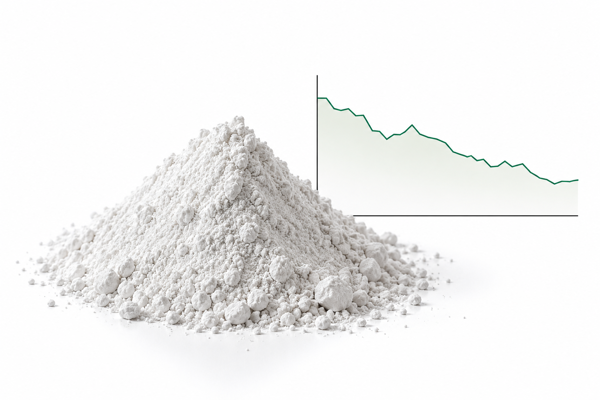
Domestic spot alumina prices edged down slightly last week amid flat trading activity. Recent alumina price movements were mainly attributed to earlier concentrated restocking by downstream buyers, which has led to accumulating inventories at rail stations and smelters. Coupled with supply-side maintenance-driven output cuts that are still building, readily available spot volumes have tightened relatively. Only sporadic tender deals were heard recently, leaving prices in a temporary steady phase. On the bauxite front, domestic ore prices saw limited movement last week. Supply-side bottlenecks are unlikely to ease in the near term, with mines prioritising captive supply, leaving little excess spot material available. For imported ore, freight rates rebounded slightly and consecutively last...
The global aluminium supply chain is facing a series of changes that extend from bauxite mines and alumina refineries to smelters, regional premiums and finished-metal trade. In 2026, the market’s direction is being shaped not only by production volumes but also by freight costs, export restrictions, shifting Chinese demand and tariffs. Developments across Guinea, Australia, China, Europe and North America point to a market where access to supply is increasingly as important as the availability of raw materials. Bauxite supply: Guinea’s cap meets a well-stocked China, but is it stable? Guinea remains central to the seaborne bauxite market, with its shipment connections to China demonstrating the importance of reliable logistics. A new sea-rail route has enabled a Guinea bauxite shipment...
Grow with
AL Circle

According to the Shanghai Metals Market, China’s metallurgical-grade alumina output in December 2022 (31 calendar days) stood at 6.43 million tonnes, reflecting a month-on-month rise of 2.2 per cent from 6.29 million tonnes and a year-on-year increase of 1 per cent from 6.36 million tonnes. But despite the growth in monthly production, the average daily output recorded a downfall of 2,500 tonnes or 1.2 per cent M-o-M from 209,800 tonnes to 207,300 tonnes in December 2022. The monthly growth in December was primarily due to one working day more than the previous month. However, on a year-on-year calculation, China’s daily average alumina output in December’22 recorded 2,000 tonnes or 0.97 per cent higher than 205,300 tonnes. China’s cumulative production of alumina from January to December...

Alcoa Corporation, the world’s eighth-largest aluminium producer, announced on Monday, January 9, that it expects to cut nearly 30 per cent of production at its partially-owned Kwinana alumina refinery in Western Australia. Shortage of gas supplies is the reason behind the production cut, explained Alcoa. A unit of the refinery, majorly owned by Alcoa in a joint venture with Alumina Limited, has already been suspended, and the remaining refinery will face slow operational processes, said Alcoa in a statement. In December 2022, Australia government sought a 12-month price cap on gas and coal prices, but natural gas producers anticipated that might put supply at risk. Kwinana alumina refinery is currently using diesel to fuel its operations instead of gas, as a result of the shortage. Alcoa...

Chevron has requested two more days to take care of the technical problems leading to a drastic breakdown at its Wheatstone domestic gas plant. This can be regarded as the third West Australian (WA) gas plant breakdown during the whole summer. All this turmoil has prompted Alcoa to ignite diesel generators to continue with their smelting activities. On January 8, WA Mines and Petroleum Minister Bill Johnston confined to sources that the Wheatstone plant supplying approximately 175 terajoules or about 17 per cent of West Australia’s domestic gas production, would halt operations until the break of Tuesday this week. The unprecedented breakdown has created a vacuum in WA’s energy supply chain. Mr Johnston made it known that he was “personally disappointed” by Chevron’s delay but “confident...

Alumina production in Europe (incl. Russia) amounted to 577,000 tonnes in November 2022, bringing the total output in eleven months of 2022 to 7.668 million tonnes, found the International Aluminium Institute. The production in November edged 2.86 per cent or 17,000 tonnes lower month-on-month than 594,000 tonnes. On a year-on-year calculation, Europe (incl. Russia)’s alumina production in November 2022 plunged by 31.15 per cent from 838,000 tonnes, found IAI. Europe (incl. Russia)’s total alumina production from January to November 2022 recorded a steep fall of 15.92 per cent from 9.512 million tonnes during the corresponding period of the previous year. Europe’s alumina production in October 2022 also stood lower by 3.57 per cent month-on-month than 616,000 tonnes. In Q3, the output...

Alumina production in Africa & Asia (ex-China) amounted to 1.129 million tonnes during November 2022, which recorded a month-on-month downfall of 4.40 per cent. In October 2022, Africa & Asia’s alumina output was 1.181 million tonnes, up by 6.01 per cent from 1.114 million tonnes a month ago. On a year-on-year calculation, Africa & Asia’s (ex-China) alumina output in November’22 showed not much change from 1.128 million tonnes, found the International Aluminium Institute. In the eleven months of 2022, Africa & Asia produced 127.607 million tonnes of alumina in total versus 126.793 million tonnes during the corresponding period of the last year. That reflected a slight year-on-year increase of 0.64 per cent, according to IAI calculation. The world alumina production in November was 11.585...

According to the International Aluminium Institute, the world alumina production in November 2022 amounted to 11.585 million tonnes, bringing the total output in eleven months of the year to 127.607 million tonnes. The monthly production in November edged a decline of 3.13 per cent from 11.959 million tonnes in October 2022 but recorded a rise of 3.10 per cent year-on-year from 11.237 million tonnes. The world’s total output of alumina from January to November registered a slight Y-o-Y increase of 0.64 per cent from 126.793 million tonnes. China churned out 6.70 million tonnes of alumina in November 2022, compared to 6.930 million tonnes in the previous month. That reflected a month-on-month shrink by 3.32 per cent, according to IAI. However, on a Y-o-Y basis, China’s output stood 10.11...

According to the data revealed by the General Administration of Customs of China, it has been reported that 196,000 tonnes of alumina were imported into China in November 2022, representing an increase of 24.2 per cent over the previous year and a reduction of 21.8 per cent over the previous month. Alumina shipments increased to 85,000 tonnes simultaneously, up 984.9 per cent on the year and 45.6 per cent on the month. Notably, exports to Russia increased by 54.6 per cent MoM to 80,000 tonnes, making up 93.7 per cent of all monthly exports. Between January and November, total alumina imports were 1.87 million metric tonnes, down 39.3 per cent from the previous year, and total alumina exports were 950,000 tonnes, up 719.5 per cent. The alumina import window remained closed in November in...

China’s domestic metallurgical-grade alumina production in November 2022 (30 calendar days) was 6.29 million tonnes, down by 5.84 per cent month-on-month from 6.68 million tonnes but up by 3.11 per cent year-on-year from 6.1 million tonnes, found the Shanghai Metals Market data. Average daily output edged 2.60 per cent lower M-o-M from 215,400 tonnes to 209,800 tonnes, but stood 3.35 per cent higher on the year than 203,000 tonnes, learned SMM. In November, China’s domestic production capacity of alumina was 76.6 million tonnes, with operating rates at 79 per cent versus 81.1 per cent in the previous month. From January to November 2022, China produced 71.26 million tonnes of alumina, which reflected an increase of 8.30 per cent from 65.8 million tonnes during the same period last year....

The United States’ alumina imports in the third quarter of 2022 deteriorated to return 445,000 tonnes, following a rise of 8.76 per cent in the previous quarter, found the US Census Bureau data. The import volume in Q1 was also at the same amount, followed by a sequential rise in Q2 to 484,000 tonnes. However, on a year-on-year basis, the United States imports in Q3 gained 32.44 per cent compared to 336,000 tonnes. From Q1 to Q3 of 2022, the United States total imports of alumina amounted to 1.37 million tonnes, up by 21.24 per cent from 1.13 million tonnes a year ago. Brazil continued to be the top supplier in 3Q2022 despite a declining volume Q-o-Q. Compared to 367,000 tonnes in Q2, Brazil's alumina export to the US dwindled by 33.24 per cent sequentially to 245,000 tonnes. Annually,...

FYI Resources Ltd joined the United Nations Global Compact followings the acceptance of its application to join the United Nations Global Compact in Australia (UNGC). This action demonstrates FYI's dedication to putting universal sustainability principles and UN objectives into practice through developing its crucial minerals projects. The company envisages FYI's revolutionary low-carbon HPA manufacturing goals closely coinciding with the UN sustainability standards. As part of a network of more than 16,000 companies from more than 60 countries, FYI will share best practices and cutting-edge solutions for sustaining ESG advancements on a global scale. For the integrated manufacture of high-grade, high-purity alumina (HPA), primarily for electric vehicles (lithium-ion batteries), sapphire...

The global mining and metal giant Rio Tinto's chief executive Jakob Stausholm has approached the worldwide leader of the iron ore industry’s founder and chairman of Fortescue Metals Group, Dr Andrew Forrest, to identify if the two mining titans can work on the common interest of green hydrogen and its potentiality to replace fossil fuels. Rio Tinto, the owner of bauxite and Iron ore, among other mining activities, with Fortescue, the iron ore exploring giant, mines in Western Australia, are in discussion about a collective approach to lower their carbon footprint, as both the companies intend to build industrial solar and wind farms near their WA mines. In addition to driving Fortescue’s strategy to grace as a significant player in the global supply of green hydrogen, Dr Andrew Forrest is...

An initial air core first-pass drilling programme at Lanthanein Resources' Koolya Project in Western Australia has concluded after 599 metres of drilling and with unprecedented visual results. Brian Thomas, the Technical Director at Lanthanein Resources, said, "The results highlight a significant amount of high-quality bright white kaolin at the project." Due to its conversion into high-purity alumina (HPA), which is used in Li-ion batteries, LED lighting, semiconductors, and sapphire glass, high-purity kaolin is becoming increasingly important as a vital mineral. Contrarily, halloysite can be applied in nanotechnologies for various commercial purposes, including carbon sequestration, agriculture, energy, and health. Thomas stated, "Samples will be sent for dual analysis for rare earth...

Norwegian energy firm Equinor has reached a final investment decision for $430 million in Brazil's 531MW Mendubim solar project. It is a joint venture project between Scatec, Hydro Rein, and Equinor in Rio Grande do Norte. In a 20-year power purchase agreement, Alunorte, one of the world's largest alumina suppliers for the aluminium industry, has already agreed to buy about 60% of the PV project's electricity. However, the remainder will be sold in the Brazilian domestic market. There will be an annual production of approximately 1.2TWh, equivalent to 620,000 Brazilian households' electricity consumption. In addition, it is expected to generate more than 1,000 direct and indirect jobs during construction. Olav Kolbeinstveit, Senior Vice-President at Equinor Renewables Power and Markets,...

Earlier in November, renowned aluminium producer from America, Alcoa Corporation, inaugurated a brand new bauxite residue processing unit in Brazil. The facility makes good use of water and land conservation methods that it had practised to perfection in Australia. The latest Poços de Caldas alumina refinery will use a press filtration system to reprocess the bauxite residue, or red mud yielded at the plant. This move will benefit the regional people who, without direct participation in any alumina unit, had to once pay hefty prices. Bauxite residue is extremely harmful to agriculture and cattle rearing, thus disrupting the local settlements in carrying on with their usual lifestyle. Plus, exposure to it for a long time may also cause respiratory diseases or much more harmful chronic...

Although the Australian aluminium industry has been operating in Australia since 1955 and now includes bauxite mining, alumina refining, aluminium smelting and downstream processing industries, it continues to innovate to meet the needs of consumers today and into the future. Marghanita Johnson, CEO at Australian Aluminium Council Australia is leading global research in innovative alumina refining technologies With a global focus on net zero by 2050, there is a lot of attention on decarbonising the aluminium smelting sector. Still, here in Australia, the emissions associated with bauxite mining and alumina refining are not being forgotten. Alcoa, Rio Tinto and South32’s Worsley Alumina operations have their global research headquarters in Australia, innovating to develop new alumina...

Groupe Réfraco is a leader in manufacturing refractory parts and equipment, mainly for aluminium smelting, foundry, mining and other industries operating in aggressive and high-temperature environments. It is now looking to move into the automation market. Through its subsidiary Robexco, Groupe Réfraco has been working for several years on developing robotic technologies specialized in complex processes that will allow its customers to increase productivity and partially alleviate the problem of labour shortages. The company intends to play a key role in the transition of manufacturing companies to Industry 4.0, a necessary step in which Quebec lags globally. Mélanie Larouche, Communication & Public Relations at Groupe Réfraco As a major player in the refractory industry, Groupe Réfraco...

After talking with company bosses, Niall Collins, the Limerick TD and Minister of State has played down fears of job losses at Aughinish Alumina. According to the company's directors and auditors, the Ukraine-Russia geopolitical conflict and its economic impact are threatening the future viability of Rusal-owned West Limerick. Since the rise in gas prices in the year before the Ukraine invasion, the company has suffered a net loss of over €363 million. Now, these prices have increased again due to the conflict, putting the organization under immense pressure. As a result of the document, fears have again been raised for the nearly 500 employees at Europe's largest bauxite refinery, which produces 30% of the country's alumina, used primarily in aircraft. Limerick Alumina Refining paid over...

According to the International Aluminium Institute (IAI), alumina production in Africa & Asia (ex-China) was recorded at 1.181 million tonne during October 2022. That reflected a month-on-month increase of 6.01 per cent from 1.114 million tonnes, following a sequential plunge of 6.86 per cent from 1.196 million tonnes during August 2022. On a year-on-year calculation, Africa & Asia (ex-China)’s alumina production in October edged a hike of 8.35 per cent from 1.090 million tonnes. Daily average output in October was 38,100 tonnes, up by 1,000 tonnes month-on-month and 2,900 tonnes year-on-year, found IAI. From January to October, Africa & Asia (ex-China) produced 11.534 million tonnes of alumina, which represented a rise of 5.87 per cent year-on-year from 10.894 million tonnes. The world’s...