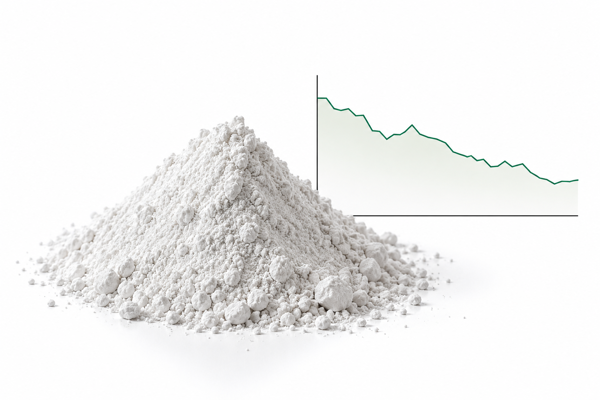
Domestic spot alumina prices edged down slightly last week amid flat trading activity. Recent alumina price movements were mainly attributed to earlier concentrated restocking by downstream buyers, which has led to accumulating inventories at rail stations and smelters. Coupled with supply-side maintenance-driven output cuts that are still building, readily available spot volumes have tightened relatively. Only sporadic tender deals were heard recently, leaving prices in a temporary steady phase. On the bauxite front, domestic ore prices saw limited movement last week. Supply-side bottlenecks are unlikely to ease in the near term, with mines prioritising captive supply, leaving little excess spot material available. For imported ore, freight rates rebounded slightly and consecutively last...
The global aluminium supply chain is facing a series of changes that extend from bauxite mines and alumina refineries to smelters, regional premiums and finished-metal trade. In 2026, the market’s direction is being shaped not only by production volumes but also by freight costs, export restrictions, shifting Chinese demand and tariffs. Developments across Guinea, Australia, China, Europe and North America point to a market where access to supply is increasingly as important as the availability of raw materials. Bauxite supply: Guinea’s cap meets a well-stocked China, but is it stable? Guinea remains central to the seaborne bauxite market, with its shipment connections to China demonstrating the importance of reliable logistics. A new sea-rail route has enabled a Guinea bauxite shipment...
Grow with
AL Circle

The world alumina production in October 2022 saw a month-on-month increase of 4 per cent to stand at 12.004 million tonnes, found the International Aluminium Institute (IAI). In September, the output was 11.540 million tonnes, down by 3.86 per cent from 12.003 million tonnes in August. That indicated the world alumina production rebounded in October after a fall in the previous month. On a year-on-year basis, world alumina output edged 5.49 per cent higher than 11.379 million tonnes, according to IAI. The daily average production across the world in October 2022 stood at 387,200 tonnes, up by 0.65 per cent from 384,700 tonnes a month ago and 5.48 per cent more than 367,100 tonnes a year earlier. From January to October 2022, world’s total alumina production came in at 116.067 million...

On Tuesday, November 29, the average alumina spot price in China increased by RMB 6 per tonne to halt at RMB 2,803 per tonne. The price in Shanxi has hiked by RMB 10 per tonne to settle at RMB 2,825 per tonne. As per the SMM data, the prices in Shandong and Henan have gone up by RMB 5 per tonne to peg at RMB 2,740 per tonne and RMB 2,885 per tonne. Guizhou and Guangxi have witnessed the same price gain of RMB 5 per tonne to record at RMB 2,750 per tonne and RMB 2,710 per tonne. Prices in Lianyungang and Bayuquan have remained restrained at RMB 2,875 per tonne and RMB 2,900 per tonne. As per the SMM data, the A00 aluminium ingot price has surged by RMB 370 per tonne to clock at RMB 19,170 per tonne, with the average prices ranging between RMB 19,150 per tonne and RMB 19,190 per tonne. The...

In the metallurgy industry, waste slag frequently contains valuable materials in low concentrations. Large areas of valuable land are used to house reservoirs containing hazardous waste. SINTEF, a research organization, now want to use hydrogen to convert this waste into a resource. SINTEF headquartered in Trondheim, Norway, is one of Europe's largest independent research organisations. It was founded in 1950 that conducts contract research and development projects. The world intensely needs metals, and realizing the so-called green transition depends on obtaining both the scarcer metals and those for which we have a plentiful supply. Nevertheless, when metals are recovered from minerals, it often ends with waste by-products. In addition, this waste may have significant environmental and...

The Australian hydrous kaolin producer and exploration company Suvo Strategic Minerals has finally completed the acquisition of a 26 per cent stake in Dingo, an Australian-owned business that plans to make high-purity alumina (HPA) using recycled feedstock. Through a private placement of 220,000 fully paid ordinary shares at an issue price of $1 per share, the firm purchased Dingo for a total of $220,000. “Australia’s Federal Government recently added HPA to the critical minerals list as part of the 2022 Critical Minerals Strategy, citing broad-ranging economic and strategic importance. The global demand for HPA in powder form is expected to grow to 187,000 tonnes per annum by 2028, this growth is likely to be stemmed by supply limitations leading to a potential spike in prices as supply...

Australia could emerge as a leader in net-zero alumina refining worldwide if it obeys a plan developed by three major producers, Alcoa, Rio Tinto, and South 32. Together, the three organisations have developed a detailed road map that ensures net zero emissions by 2050. The report was published by the Federal Australian Renewable Energy Agency (ARENA) on November 22. Australia exports the most considerable quantity of alumina in the world and also produces ample bauxite. Refining activities in Australia cause up to 3% of the country's total greenhouse gas emissions. With the rising need for cleaner and greener aluminium in the western market, Australia has to think of other alternatives to make its products acceptable in the electronics or automobile sector. This calls for newer advanced...

On November 19, 2022, RHI Magnesita, the leading global supplier of refractory products, publicized the acquisition of the Indian refractory business of Dalmia Bharat Refractories Limited (DBRL). DBRL is one of India’s foremost refractory players and a long-term trusted partner to customers in the region. Established in 1954, Dalmia Bharat Refractories Limited (previously Shri Nataraj Ceramics and Chemical Industries Ltd.) is a leading India-based producer of high alumina refractory bricks for the Indian cement industry. The acquisition will notably expand RHI Magnesita’s presence in the booming Indian refractory market, with forecast steel production growth in India of 12% in 2022 and a CAGR of 7-8% until 2030. As DBRL's production is consolidated into RHI Magnesita's existing...

In South America, alumina production during September 2022 stood at 981,000 tonnes, bringing the total output for the third quarter of the year to 2.951 million tonnes, found the International Aluminium Institute (IAI). The monthly production in September edged 15,000 tonnes or 1.51 per cent lower than 996,000 tonnes in August, following an increase in the previous month by 2.26 per cent from 974,000 tonnes. Overall, the alumina production in South America during the third quarter of 2022 stood at 5.85 per cent higher sequentially from 2.788 million tonnes. On a year-on-year basis, South America’s alumina output also recorded an escalation of 4.28 per cent from 2.830 million tonnes. From January to September 2022, South America produced 8.584 million tonnes of alumina in total, down by...

According to the Shanghai Metals Market, China produced 6.68 million tonnes of metallurgical-grade alumina in October 2022 (31 calendar days), with daily output of 215,400 tonnes. The monthly production stood 0.61 per cent down M-o-M but 10.3 per cent more over the year. At the end of October, the operating capacity was 78.61 million tonnes, with operating rates at 81.1 per cent, found SMM. The decline in monthly output during October touched upon some of the major Chinese cities, whilst a few saw an increase in production. In Shandong, alumina output during October was 2.16 million tonnes, reflecting a drop of 2.41 per cent M-o-M; in Shanxi and Henan, the production of the ore was 1.58 million tonnes and 721,000 tonnes, respectively, after losing 0.62 per cent and 7.43 per cent of output...

In Europe (incl.) Russia, alumina production for the third quarter of 2022 totalled 1.968 million tonnes, reflecting a decrease of 6.2 per cent sequentially from 2.098 million tonnes, found the International Aluminium Institute (IAI). The quarter-on-quarter decline in Europe’s alumina output continued in Q3 following the fall in Q2 by 13.66 per cent from 2.430 million tonnes. However, the figures indicate the rate of decline shrank in Q3 compared to the previous quarter. In September 2022, alumina output in Europe (incl.) Russia stood at 615,000 tonnes, which registered a slump of 6.82 per cent or 45,000 tonnes from a month ago. In August, alumina production was 660,000 tonnes, again down by 33,000 tonnes from 693,000 tonnes in July. On a year-on-year calculation, Europe’s alumina...

Environmental Trust Ireland, a voluntary, not-for-profit Irish Environmental Organisation, has initiated High Court proceedings against the proposed expansion of the Aughinish Alumina refinery in County Limerick. The An Bord Pleanála approved proposals to expand the area where bauxite residue - a waste product of alumina production, also called "red mud" - is stored in September 2022. Committed to safeguarding the environment and advancement and promoting environmental protection, conservation of the natural and built environment, biodiversity, wildlife, ecosystems and cultural and heritage preservation, Environmental Trust Ireland, headed by Limerick City solicitor Michelle Hayes, has initiated judicial review proceedings against An Bord Pleanála and Aughinish Alumina Ltd over the...

India's leading premier metallurgical grade alumina producer, Vedanta Alumina, Lanjigarh, is encouraging Waste-To-Wealth MSMEs in the Kalahandi district of Odisha. It has been supplying lime grit to local brick manufacturers, enabling the circular economy to turn industrial waste into value-added products. In the production of alumina, lime grit is produced by refining bauxite. The product can be used for several purposes, such as whitening paper, poultry feed, and even as a substitute for gypsum. The Vedanta Alumina refinery in Lanjigarh produces about 10,500 tonnes of lime grit every year, out of which nearly half is repurposed within the refinery. Another industrial by-product created by the company is fly ash, which is generated during thermal power generation. However, to ensure...

In September 2022, alumina production in Africa & Asia (ex-China) stood at 1.121 million tonnes, registering a downfall of 6.27 per cent month-on-month but an increase of 1.91 per cent year-on-year, found the International Aluminium Institute data. In August 2022, Africa & Asia’s (ex-China) alumina output was 1.196 million tonnes, also down by 0.42 per cent from 1.201 million tonnes. That showed alumina output in Africa & Asia (ex-China) recorded a consistent month-on-month downfall through July-September 2022, bringing the total volume of production in Q3 to 3.518 million tonnes. On a quarter-on-quarter calculation, Africa & Asia’s (ex-China) alumina production in the third quarter of 2022 edged 0.34 per cent lower than 3.530 million tonnes. However, on a year-on-year basis, the output...

Red mud, also known as bauxite residue, is one of the most underused industrial wastes created during the Bayer process used to process bauxite into alumina. However, with time, more than 700 red mud applications have been patented by scientists, out of which only a few have been adopted by the industry due to reasons like cost, poor public acceptability, environmental concerns, etc. One such application was recently made by the Bhopal, India-based research institute, CSIR Advanced Materials and Processes Research Institute (AMPRI). The researchers developed a method for turning red mud into X-ray shielding tiles using a ceramic process by including a certain weight proportion of high Z material and binder that is both environmentally friendly and economically feasible. Dr N. Kalaiselvi,...

In the third quarter of 2022 ended September 30, world alumina production edged an increase of 1.22 per cent Q-o-Q to stand at 35.677 million tonnes, found the International Aluminium Institute. In the second quarter, the output was at 35.246 million tonnes, reflecting a rise of 6.18 per cent from 33.196 million tonnes in Q1 ended March 31. These data showed a consistent hike over each quarter this year though the rate of growth decreased in the third quarter compared to the second. However, in September 2022, world alumina production recorded a decline of 3.39 per cent month-on-month to 11.596 million tonnes. The output in August also stood lower at 12.003 million tonnes versus 12.078 million tonnes in July. But on a year-on-year basis, world alumina output in September grew 3.61 per...

The Norwegian aluminium and renewable energy company, headquartered in Oslo, Norsk Hydro, was recently honoured with the “Mining & Raw Materials Industry Leadership Award” at the annual S&P Global Platts Global Metals Awards 2022. The Global Metals Awards honour the top performers in the metals sector in 15 categories, ranging from individual to corporate accomplishments. S&P Global Platts, the leading independent source of news and benchmark prices for the commodities and energy markets, is the organisation that hosts it. “This recognition is an acknowledgment of the great work being done throughout our organization and sends a strong message of Hydro’s commitment to become a net-zero company by 2050,” said John Thuestad, Executive Vice President Hydro Bauxite & Alumina. The...

In the current fiscal year, the Jamaican Government estimates the value of mining and processing earnings from bauxite and alumina to be $507 million (JMD$77 billion), seven per cent more than the fiscal year 2020-2021. Jamalco is expected to reopen its operations in August 2022. The US and European sanctions linked to the Russia-Ukraine geopolitical crisis are again eyeing UC Rusal. This Russian aluminium conglomerate owns a major share of local alumina production, Windalco. Jamaica's mining and quarrying industry contracted by 62.5 per cent last year due to the fire that closed the Jamaica Alumina Company (Jamalco) plant in August 2021. Russian aluminium imports were expected to rebound, but now the US is considering restrictions. Other companies, such as US producer Alcoa, lobby for...

The Pittsburgh-based industrial production and the world's eighth-largest aluminium producer, Alcoa, is lowering its outlook for alumina and bauxite shipments on the ground of demand contracts and reducing output. According to the Q3 earning report, the company anticipates alumina shipments to range from 13.1 million tonnes - 13.3million tonnes (t), a dip of 500,000 tonnes. This lower production level results from the company's San Ciprián refinery's 50% reduction in production, or 800,000 tonnes per year, to reduce its losses from higher natural gas prices. The Australian refineries of Alcoa are also expected to minimise shipment volumes. Due to lower demand from Australian refineries, the bauxite shipment estimates for the year have been reduced by 1 million tonnes to 43-44 million...

For the third quarter of 2022, Alcoa Corporation has reported a quarterly loss of 21.7 per cent in revenue from $3,644 million to $2.851 million, while on a year-on-year basis, it dropped by 8.36 per cent from $3,109 million. Adjusted EBITDA excluding special items nosedived by 77 per cent from $913 million in Q2 2022 to $210 million in Q3 2022 and from the previous year plunged by 71.15 per cent from $728 million. Alcoa experienced a quarterly net loss of $746 million and a loss per share of $4.17, which includes $652 million of restructuring charges related primarily to pension actions. Alcoa finished the quarter ended September 30, 2022, with a cash balance of $1.4 billion. Alcoa President and CEO Roy Harvey said: “Despite a challenging quarter that saw significantly lower prices, and...