Alumina output to rise 7.6% in China in 2027 as Guinea quota uncertainty persists
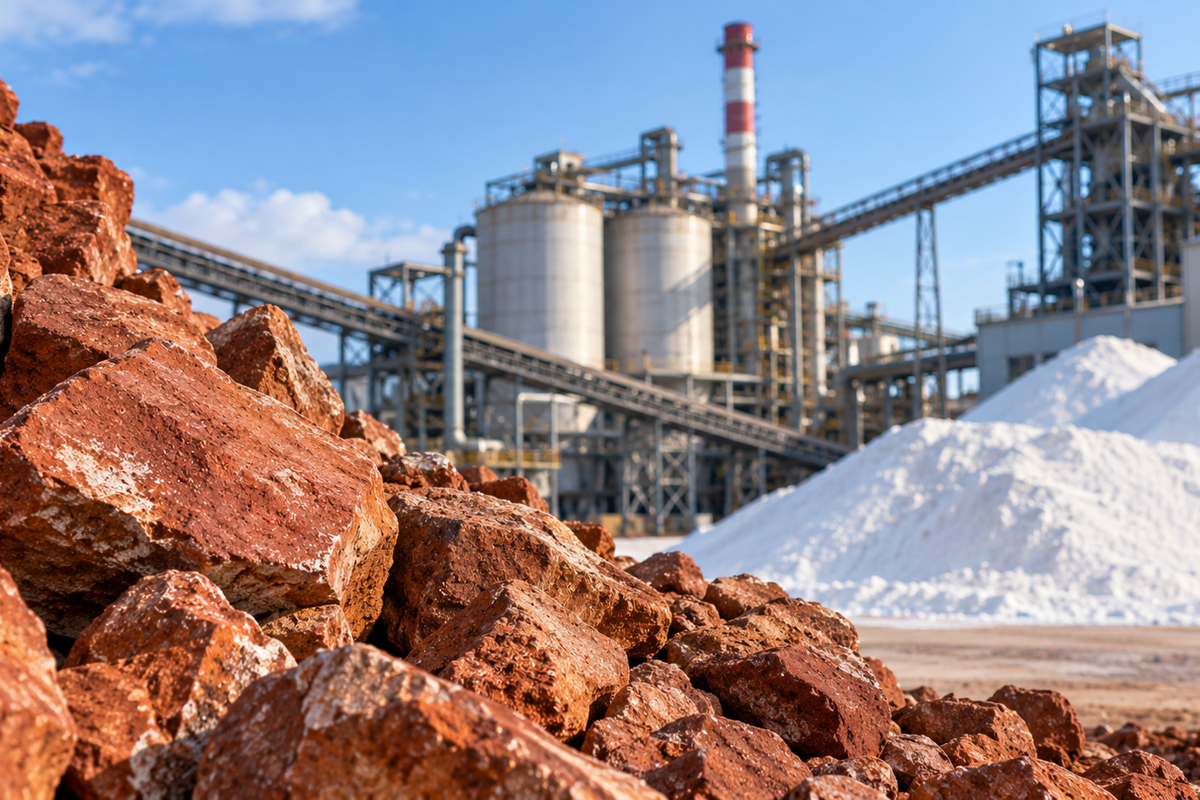
The image used in this article is generated with an AI tool and does not depict any real-time moment
China's alumina production is projected to increase by 7.6 per cent year on year to 102.63 million tonnes in 2027, although uncertainty over Guinea's proposed bauxite export quota could influence raw material availability, refinery costs and the wider market outlook, according to SunSirs.
Domestic production is expected to rise from 95.39 million tonnes in 2026, driven by the ramp up of several projects. These include Beihai Orient Hope, the recovery of supply following the relocation of Wenfeng's calcination facilities, capacity released through technical upgrades at Jiulong Wanbo and the commissioning of the Xinye Inner Mongolia calcination project.
Overseas alumina production is also expected to expand, reaching 64.55 million tonnes in 2027, up 3.2 per cent year on year. The increase is forecast to come from the ramp-up of India's Lanjigarh expansion project, the addition of a fifth production line at Damanjodi, higher output from Indonesian projects and the resumption of operations at the Al Taweelah alumina refinery in the UAE.
Electrolytic aluminium production growth remains uneven
The outlook for electrolytic aluminium production differs between domestic and overseas markets. China's output growth is expected to remain limited in 2027, with any increase largely dependent on production restarts in Indonesia and the Middle East.
Overseas electrolytic aluminium production is projected to reach 31.85 million tonnes, representing an 8.6 per cent year-on-year increase. The expected growth will be supported by the resumption of operations at the Al Taweelah smelter and Qatalum in Qatar, alongside the commissioning of new projects in Indonesia.
SunSirs' supply-demand projections point to a significant difference between China's domestic market and overseas markets in 2027. Even if stronger overseas prices periodically improve the profitability of Chinese exports, the expected increase in export volumes is unlikely to absorb the domestic supply surplus.
To know the futuristic market and value proposition of red mud, explore the report "A Comprehensive Analysis of Bauxite Residue (Red Mud): Sustainability, Resource Recovery and Strategic Recommendations"
Guinea's bauxite quota remains a key uncertainty
The proposed export quota from Guinea has remained a major source of uncertainty for the alumina market throughout 2026. The Guinean government repeatedly indicated that it intended to introduce restrictions on bauxite exports, but the policy had yet to materialise by mid November.
In mid-March, the government proposed reducing exports from early April. By late May, it had indicated that an export quota system would be introduced in June. Market participants widely expected the 2026 export cap to be set at 150 million tonnes, around 18 per cent below the 183 million tonnes exported in 2025.
However, implementation was repeatedly delayed. By mid-November, the government had indicated that regulatory documents concerning production would be issued by the end of the month, without explicitly confirming an export quota system.
While Guinea's intention to control export volumes and stabilise prices remains apparent, the timing, scale and implementation details of any restrictions are still unclear. These uncertainties have become an important factor influencing expectations for bauxite availability and alumina prices.
SunSirs has outlined several possible outcomes for 2027 based on assumptions about China's imported bauxite requirements. The analysis assumes domestic demand for imported bauxite of 195 million tonnes, including 42 million tonnes sourced from countries other than Guinea, with China accounting for 85 per cent of Guinean exports.
If a quota system is strictly enforced from the beginning of 2027, and a 20-million-tonne buffer is taken into account through available annual inventories and net arrivals carried over from the previous year, an export quota of approximately 180 million tonnes would be sufficient to balance annual supply and demand.
A lower quota of around 156.5 million tonnes could bring bauxite supply to the point where shortages would require production cuts at alumina refineries.
Discover how SEFAR® X-TREME tackles scaling challenges and enhances filtration performance in Kelly and Diastar pressure leaf filters. Join Sefar’s exclusive webinar!
Alumina prices face competing supply and cost pressures
The broader alumina market is expected to remain oversupplied as new production capacity continues to enter the market. SunSirs noted that the central price range has been moving lower, although the absence of fresh bearish developments has limited the appetite for new short positions and prevented a sustained downward trend.
Two factors are currently providing support to the market. First, stronger overseas alumina prices have improved the prospects for Chinese exports. Second, raw material costs remain elevated, with ocean freight rates staying high and Guinean bauxite prices hovering near USD 70 per tonne.
Profit margins at smaller mines are under pressure, while the Guinean government's stated intention to control exports and stabilise prices has strengthened expectations of possible quotas and subsequent production cuts.
However, higher overseas prices and stronger export opportunities are unlikely to offset the impact of expanding alumina production in China. The expected arrival of additional supply is likely to limit the sustainability of any price recovery.
The impact of Guinea's eventual policy will depend largely on the level of the export quota. If it exceeds 180 million tonnes, China's imported bauxite requirements are expected to be met, leaving the alumina market with a substantial surplus.
A quota between 150 million and 180 million tonnes would maintain some cost support for alumina, although the scope for further price increases would remain limited. If the quota falls below 150 million tonnes, higher bauxite prices could force refineries with elevated cash costs to reduce operating rates, potentially making alumina prices more responsive to changes in supply.
Ocean freight rates will also remain important to the outlook. A sustained decline in freight costs, potentially driven by lower crude oil prices, would ease pressure on mining margins and weaken expectations of production cuts or restrictive export quotas.
For the AO2701 contract, SunSirs expects a trading range of RMB 2,500 (USD 375.12) to RMB 2,750 (USD 412.63) per tonne. Its current strategy favours establishing short positions during price rallies, while recommending smaller positions because of the uncertainty surrounding Guinea's policy. It also advises against chasing prices lower.
Market participants will therefore be watching developments in Guinea's bauxite policy, ocean freight rates and overseas alumina prices as they assess the balance between expanding production and potential raw material constraints in 2027.
Explore alumina and other essential inputs in the right grades from global suppliers on AL Biz.
Grow with
AL Circle














_md.webp)