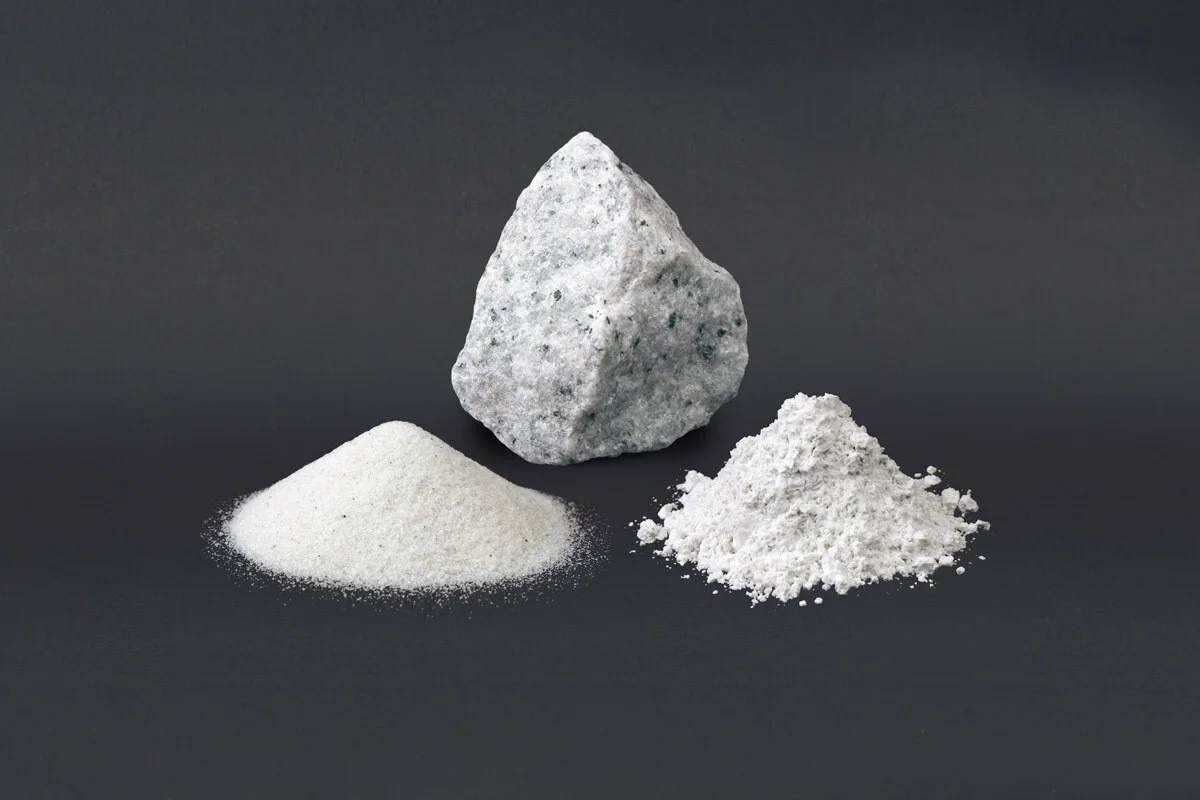
Alumina trihydrate (ATH), also known as aluminium hydroxide — chemical formula Al(OH)3, has a vast market potential ahead. The element, which is derived during the refinement of bauxite through the Bayer process, is majorly known for its flame retarding property.
Image Source: Anglo Pacific Minerals
The global market for alumina trihydrate is significant, with a size estimated at USD 4.21 billion in 2023. This figure is projected to grow to USD 5.8 billion in the next five years, demonstrating a compound annual growth rate (CAGR) of 5.6 per cent. These numbers underscore the substantial market potential of ATH.
Production method of ATH:
ATH, known by various standard names in the chemical industry such as alumina hydrate, hydrate alumina, aluminium hydrate, and aluminium hydroxide, is a versatile substance. This white, odourless, powdery solid, with its very low solubility in water, is considered amphoteric, meaning it can dissolve in both acids and strong alkalis. Its versatility is a key factor in its wide range of applications.
The production of alumina trihydrate involves the dissolution of bauxite (aluminium ore) in sodium hydroxide at elevated temperatures, a process known as the Bayer process. The resulting alumina trihydrate is then separated from the remaining solids, forming the basis of its production.
While over 90 per cent of alumina trihydrate of the total 100 million tonnes produced worldwide is consequently converted to aluminium oxide (alumina), which is further used in the manufacturing process of aluminium, the rest has many industrial implications.
As a flame retardant (FR), alumina trihydrate is chemically induced in concentrations of 20-50% by weight into a polymer molecule to suppress and reduce the spreading of a flame.
Alumina trihydrate has Found newer applications in the renewable energy industry, specifically in producing photovoltaic cells for solar panels. Its properties as a flame retardant and filler material make it a practical element in improving the protection and efficiency of renewable energy technologies.
ATHs are frequently used due to their low cost, sound properties and non-toxic smoke (Pereira and Martins, 2014). The water release and cooling down of the flame zone is the base of this type of FR, and they are usually resistant up to 200 °C.
It has a pivotal role in antacids production (stomach acid neutralizers to relieve patients from gastroesophageal reflux disease, heartburn, and acid malabsorption, among others) and is used as a filler (as it has non-toxic and chemically inert properties) in pharmaceutical formulations. The element can also be found as a solvent and filler to improve the resilience and performance of final pharma products.
ATH is also used as a filler and pigment in many products in concentrations of 5-30 per cent by weight, such as adhesives, insulation materials, paints, coatings, and ceramics. It furnishes enhanced toughness, gloss, and durability while helping to reduce material costs.
It is also used in water treatment facilities to eliminate impurities (acts as a coagulant to aggregate impurities in the water).
ATH is also used as a raw material in ceramics and glass production. Its existence improves durability and fire resistance, thus raising its applications in various ceramic derivatives.
The construction industry, driven by stringent global building codes and regulations, is experiencing a surge in demand for fire-resistant products. As urbanisation and infrastructure development continue, the market for ATH in construction is set to grow, providing a promising outlook for its future demand.
The automotive and aerospace industries, now more than ever, are adopting lightweight materials to increase fuel efficiency and reduce emissions. ATH, as an essential additive in composite substances and coatings, not only enhances performance but also ensures safety, reaffirming its continued relevance in these industries.
A focus on sustainability and green industrialisation, with strict compliance measures to environmental regulations, has boosted demand for ATH, which is expected to escalate further rapidly.
As apprehensions about water scarcity and pollution rise, the demand for effective water treatment solutions is rising. ATH's application in water purification systems will drive its market growth.
Consumers are increasingly aware of product safety standards, particularly textiles, furniture, and electronics. Thus, manufacturers are driven to use FR elements to meet these safety standards, additionally propelling the demand for alumina trihydrate.
The market for halogen-free flame retardants is rising as a result of environmental and health crises associated with halogenated compounds. As a halogen-free solution, Alumina trihydrate is gaining traction in various industries, including electronics, construction, and automotive.
Technological advancements have derived a path towards producing ultrafine alumina trihydrate, which improves flame retardant performance in various materials. These advancements in particle size optimisation are helping manufacturers produce more effective and efficient ATH-based products.
Growth constraint factors:
Some growth-curbing factors are present, i.e. fluctuating raw material prices, availability of substitutes like magnesium hydroxide and phosphorus-based retardants, and ATH's technical limitations in high-temperature applications have limited potential to hinder the product's global market.
Some key players in Al(OH)3 production:
- Sibelco (Belgium): Describe their products as defined PSD, top cut, colour, oil absorption and BET - typically used in applications critical to surface defects, colour, impregnation or FR performance, often replacing fine precipitated ATH-grades.
- Niknam Chemicals Private Limited (India): Produces raw materials in aluminium chemicals, glass and glazes, catalyst production, fertilisers, and fibre cement board products, among others.
- THE CHEMICAL COMPANY (U.S.): The Chemical Company (TCC) is an international chemical distributor founded in 1988.
- Hindalco Industries Ltd. (India): Produces coarse and fine variants. Alumina trihydrate is separated from bauxite ore, and the average particle size ranges from 80 to 100 microns in the manufacturing process.
- LKAB Minerals: Some of the essential properties they offer in their product are stated to be exceptional whiteness, good translucency, resistance to chemicals and weathering, and impact resistance. The softness of the mineral contributes to making materials machinable, with loading levels between 40 per cent and 70 per cent becoming possible and providing the best properties.
Some other producers known in the industry are Astrra Chemicals (India), Gujarat Credo Alumina Chemicals Ltd. (GCACL) (India), ACURO ORGANICS LIMITED (India), The R.J. Marshall Company (U.S.), ATAMAN Chemicals (Türkiye) and TOR Minerals (Netherlands) among others.












_md.webp)
_md.webp)
_md.webp)