Last week, according to Mysteel's assessment, the benchmark 5,500 kcal per kg NAR thermal coal dipped from RMB 768 per tonne (USD 107.9 per tonne) on Monday to RMB 766 per tonne on Tuesday. After staying at this level in the following two days, it rebounded to RMB 769 per tonne on Friday.
Explore- Most accurate data to drive business decisions with 50+ reports across the value chain
At northern ports, bullish sentiment largely persisted through the week despite thin liquidity, as the market converged on a broadly bullish outlook for demand during the seasonal peak period. Starting from November 1, most places in North China enter the heating season that will last until mid-March next year.
Meanwhile, as some utilities missed opportunities to restock in October, they are expected to make additional purchases this month, according to sources.
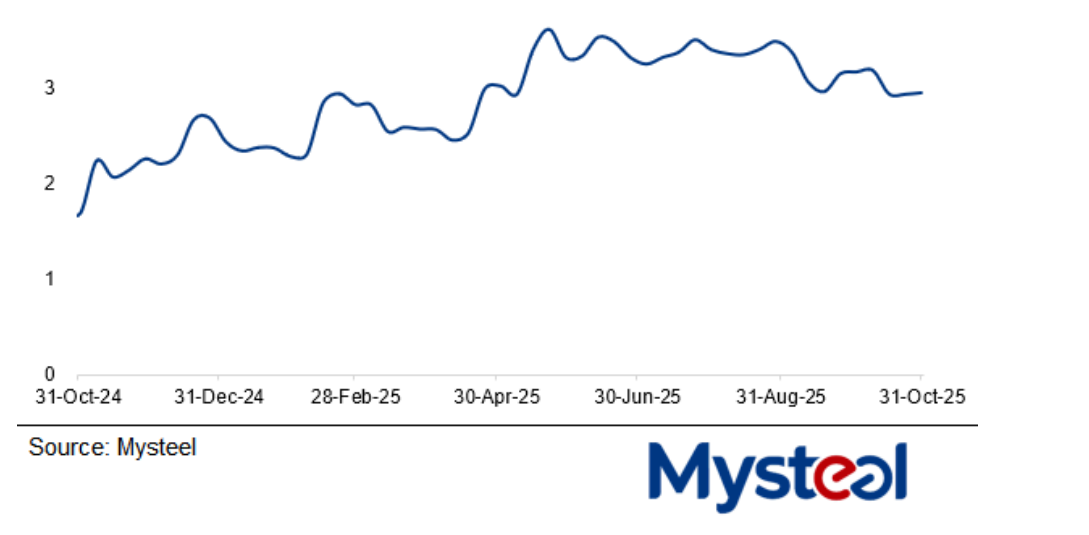
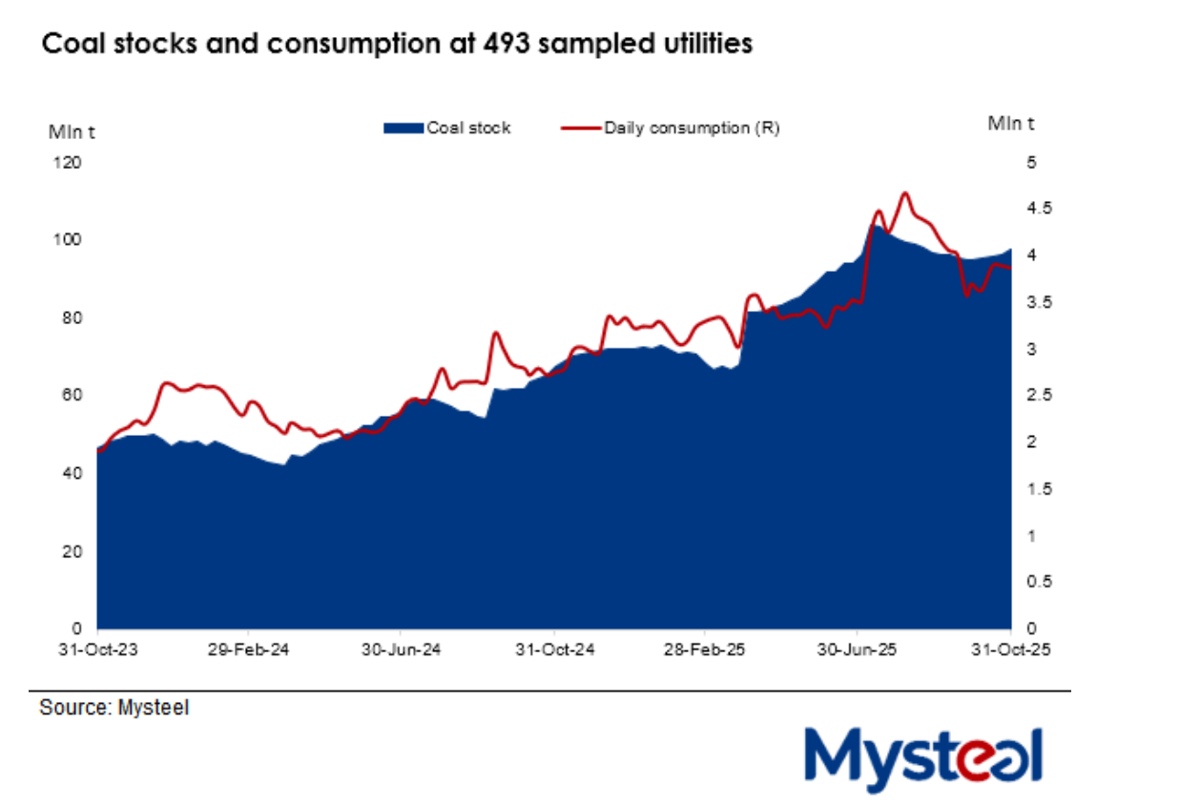
As of Friday, coal stockpiles at the 493 power plants that Mysteel surveys across the country totalled 97.49 million tonnes, enough to cover 25.2 days of use, just up by 0.5 day from a week earlier. Electricity consumption continued to diverge regionally last week, with northern utilities seeing modest increases in coal burn as heating loads picked up, while southern and eastern regions experienced weaker residential demand amid warmer weather.
In major producing regions, most coal mines maintained normal operations last week, keeping supply roughly balanced with demand. Starting from Tuesday, sentiment strengthened, with an increasing number of miners raising prices, while fewer opted for price cuts.
According to Mysteel's survey on 462 thermal coal mines across the country, their combined output averaged 5.45 million tonnes per day over October 24-30, largely unchanged from the 5.48 million t per d a week ago. As of October 30, in the import market, prices held steady, but sentiment remained subdued. Most Chinese coastal power plants kept their procurement at a slow pace, with their inventories at safe levels. Mysteel assessed Indonesian 3,800 kcal per kg NAR coal at USD 47.8 per tonne FOB Kalimantan, compared with USD 47.8 per tonne a week ago.
With winter approaching, market watchers expect demand from northern power and heat plants to gradually revive. Some anticipate that a potential colder-than-normal winter this year could trigger short-term restocking waves of the fossil fuel, particularly if regional temperatures plunge earlier than expected. Yet for now, the market hasn't gained strong upward momentum, with ample inventories, steady mine output, and a lack of speculative fervour keeping prices in a narrow range.
Note: This news is published under a content and exchange agreement with Mysteel













_md.webp)