您想继续阅读英文文章还
是切换到中文?
是切换到中文?

THINK ALUMINIUM THINK AL CIRCLE


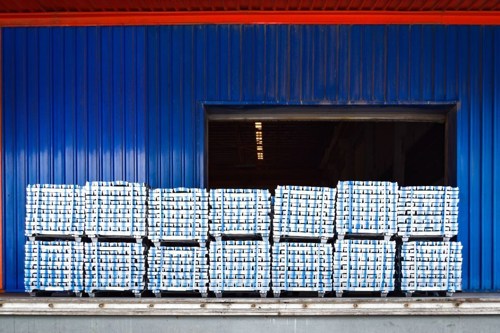
Stock image for referential purposes only
Futures: The most-traded SHFE aluminium contract opened at RMB 24,165 per tonne in the night session on Jun 12, with its highest price at RMB 24,280 per tonne, lowest price at RMB 24,145 per tonne, and closing price at RMB 24,275 per tonne, up 0.46 per cent from the previous settlement.
{alcircleadd}Prices bottomed out during this period, forming a bullish candlestick that touched the 5-period moving average of 24,172.78. The price climbed back above MA5 but remained below the MA10 (24,139.33), MA20 (24,200.00), MA40 (24,320.32), and MA60 (24,399.81) range.
Medium and long-term moving averages overall remained in a bearish alignment. The prior low of 23,825 formed short-term support, and a modest rebound momentum was released following the short-term dip. Trading volume for this period was 54,800 lots, and open interest stood at 229,780 lots, a decrease of 4,016 lots from the previous session, with the futures showing characteristics of bearish position reductions.
Technically, on the 4-hour MACD indicator, the DIFF (-93.62) moved above the DEA (-107.97), presenting a golden cross structure, while the red histogram bar value was 28.69, indicating a continued recovery in bullish momentum. On Jun 12, LME aluminium opened at USD 3,529.5 per tonne, reached a high of USD 3,550 per tonne, a low of USD 3,498.5 per tonne, and closed at USD 3,543 per tonne, up 0.52 per cent from the previous settlement.
Prices bottomed out and edged slightly higher during the day, with the closing price moving narrowly above the MA5 (USD 3,542.90). However, prices overall trended below the MA10 (USD 3,578.27), MA20 (USD 3,598.78), and MA40 (USD 3,570.89), only finding support from the MA60 (USD 3,520.23). Short and medium-term moving averages maintained a bearish alignment, and the overall trend remained weak.
The prior low of USD 3,461.0 formed key support below, and the degree of recovery was limited following the decline. Trading volume for the day was 23,893 lots, down 3,524 lots from the previous session; open interest was 649,000 lots, an increase of 938 lots, with the futures showing characteristics of bullish position-building.
Technically, on the daily MACD indicator, the DIFF (-4.34) moved below the DEA (19.42), with the death cross structure extending. The green histogram bar value was -47.54, indicating that bearish momentum still dominated.
Macro Front: Preliminary central bank statistics show that the cumulative increase in the aggregate social financing scale for the first five months of 2026 was RMB 17.48 trillion, down RMB 1.16 trillion from the same period last year.
According to the central bank's official website, to maintain ample banking system liquidity, the People's Bank of China will conduct RMB 600 billion in outright reverse repo operations on Jun 15, 2026, using a fixed-quantity, rate-tender, multiple-price bidding method.
The tenor will be 6 months (183 days), maturing on Dec 15, 2026. Multiple US media outlets reported on the 12th that a senior US government official stated that day that the US side holds "80 per cent to 85 per cent" confidence in signing a memorandum of understanding with Iran within the coming days. Meanwhile, the US side is "confident" that Israel will support this US-Iran memorandum of understanding.
ING analyst Chris Turner noted that for EUR/USD, the upcoming Fed policy meeting might be more significant than the ECB’s rate hike decision on Thursday. The ECB has signalled further rate hikes, and the market speculates that another hike may occur in July.
Fundamentals: From the trends in aluminium ingot premiums and discounts across three regions, it is evident that China's aluminium ingot spot-futures price spread has generally been in a weaker range over the past two years since 2026.
Discounts in all three regions widened to varying degrees from the start of the year through May, which was directly linked to the lingering pressure from high inventories on spot circulation earlier on. After June, as the destocking inflection point gradually took hold, premiums and discounts in the three regions saw a diverging recovery.
On the inventory front, as of Monday, China's aluminium ingot inventory in major consumption areas was 1.29 million tonnes, down 22,000 tonnes from last Thursday and down 70,000 tonnes from last Monday.
Primary aluminium market: In early trading, the SHFE aluminium 2606 contract fluctuated upward, with the overall price centre moving higher compared to the previous trading day. Last Friday, market selling sentiment picked up somewhat, but pressured by higher aluminium prices, downstream buying sentiment was restrained.
However, affected by the accelerated destocking, market expectations for premiums/discounts narrowed, which supported firm quotes and transaction prices. Mainstream spot transaction prices were at a discount of RMB 90-100 per tonne against the SHFE 2607 contract. Last Friday, the East China selling sentiment index was 2.96, up 0.07 from the previous trading day; the buying sentiment index was 2.83, down 0.04 from the previous trading day.
Last Friday, aluminium futures showed an upward rebound trend. Although it was the weekend stockpiling cycle, downstream processing enterprises in the central China market had already stockpiled sufficient volumes earlier, purchasing sentiment was not strong, and suppliers tended to sell aggressively while discounts had not yet widened, leading to a downward price collapse.
Overall market trading sentiment turned subdued compared to the previous two days. Eventually, the actual transaction price range in the central China market was at a discount of RMB 130-160 per tonne against the SHFE 2607 contract. Last Friday, the central China selling sentiment index was 2.91, up 0.01 from the previous trading day; the buying sentiment index was 2.21, down 0.01 from the previous trading day.
Aluminium scrap: Last Friday, the SMM A00 price rose RMB 170 per tonne from the previous trading day to RMB 23,970 per tonne, and the aluminium scrap market followed with a slight gain. In terms of the price difference between A00 aluminium and aluminium scrap, on June 12, the price difference between A00 aluminium and mixed aluminium extrusion scrap free of paint in Foshan came in at RMB 2,640 per tonne, and the price difference between A00 aluminium and shredded aluminium tense scrap was RMB 2,103 per tonne.
The continuous narrowing of these spreads reflects strong bottom support for aluminium scrap. Supply side, the "reverse billing" policy supervision continues to tighten. The cancellation of tax rebates in some provinces and stricter tax audits have led to higher costs for raw materials with invoices, and production cuts and shutdowns at enterprises in Anhui, Jiangxi, Hubei, and other regions have further spread.
Currently, compliance costs in the raw material recycling segment stay high, and available supplies of invoice-attached cargoes remain tight, with invoice scarcity serving as a key support for aluminium scrap prices. Moreover, the price spread between Chinese and overseas markets remains inverted, and low-priced, high-quality imported cargoes are scarce, further weakening their supplementation to China.
Demand side, the off-season effect continues to deepen, downstream scrap utilisation enterprises are operating at low operating rates, end-use order follow-up is sluggish, and enterprises maintain a strategy of purchasing as needed and low inventory, with a cautious procurement sentiment. Orders at downstream die-casting enterprises remain sluggish, with purchases mainly driven by rigid demand and small-batch procurement, insufficient willingness to rush to buy amid continuous price rises, and overall low market trading activity. End-use consumption is hard to see a substantive improvement, and the demand side continues to suppress the upside room for prices.
Aluminium scrap market prices are expected to maintain a pattern of high-level doldrums, but the downside room is limited. The tightness in compliant invoice-attached supplies will persist, with invoice scarcity providing bottom support for aluminium-scrap prices.
The lagged contraction effect of imported aluminium scrap has yet to be fully released, subsequent port arrivals will remain low, the renewed escalation of the US-Iran conflict is exacerbating the inverted price spread between Chinese and overseas markets, and import supplementation remains constrained.
Meanwhile, as the off-season deepens, the sustainability of orders at downstream scrap utilisation enterprises is worrisome, with enterprises maintaining a strategy of purchasing as needed and low inventory, and the procurement atmosphere is unlikely to improve noticeably, presenting an overall pattern of both weak supply and demand.
Secondary aluminium alloy: Spot market: Last Friday, the ADC12 market continued to hold up well, with mainstream quotations generally pushed up by RMB 100 per tonne and the price centre moving further upward.
Currently, aluminium scrap prices stay high, compliant raw material supply is tight, and tax costs continue to squeeze profit margins, leading to a strong willingness among alloy enterprises to follow the price rise. At the same time, the most-traded cast aluminium alloy futures contract has been trending firmly, providing positive feedback to spot sentiment.
However, the demand side has not yet shaken off the constraint of the off-season, and the order release pace downstream is slow, leaving post-rise transactions lacking effective support. Overall, ADC12 is currently in a gaming pattern of “strong cost support yet insufficient demand boost". In the short term, supported by tight supply and high costs, prices still have a foundation to hold up well, but the extent and sustainability of the subsequent rise still depend on whether demand side sees a substantial recovery.
Aluminium market summary: On the macro front, Trump previously threatened to launch “very heavy” strikes on Iranian infrastructure, and Iran responded hard; however, the US cancelled the strike plan on June 12, with the US and Iran entering a negotiation phase for a memorandum of understanding.
Market panic over Middle East geopolitical conflicts continues to subside, and risk premiums have weakened significantly. US May CPI YoY rose to 4.2 per cent, hitting a three-year high, while core CPI also strengthened. The market is betting on the US Fed restarting rate hikes within the year, and liquidity tightening expectations continue to weigh on metal valuations. On the fundamentals side, the Middle East conflict has caused passive production cuts in overseas aluminium capacity, with expectations of a widening global supply deficit.
Coupled with rising energy cost expectations, this provides strong bottom support for LME aluminium. On the domestic inventory side, the destocking trend has been firmly established, and the destocking logic continues to materialise. The rebound in the proportion of liquid aluminium, export demand support, and supply standardisation that compresses the formation volume of aluminium ingots—these three fundamental factors jointly drive the continuation of destocking.
SMM maintains its judgement that inventory will fall to around 1.28 million tonnes by late June and is expected to further approach 1.2 million tonnes by end-June/early July. The futures market sees short-term stabilisation signals, but the pressure from high domestic inventory remains relatively significant, which is expected to limit the upside room for domestic aluminium prices. In the short term, domestic aluminium prices are expected to mainly fluctuate and adjust.
Note: This article has been issued by SMM and has been published by AL Circle with its original information without any modifications or edits to the core subject/data.

Responses







_0_0.jpg/500/0)