您想继续阅读英文文章还
是切换到中文?
是切换到中文?

THINK ALUMINIUM THINK AL CIRCLE

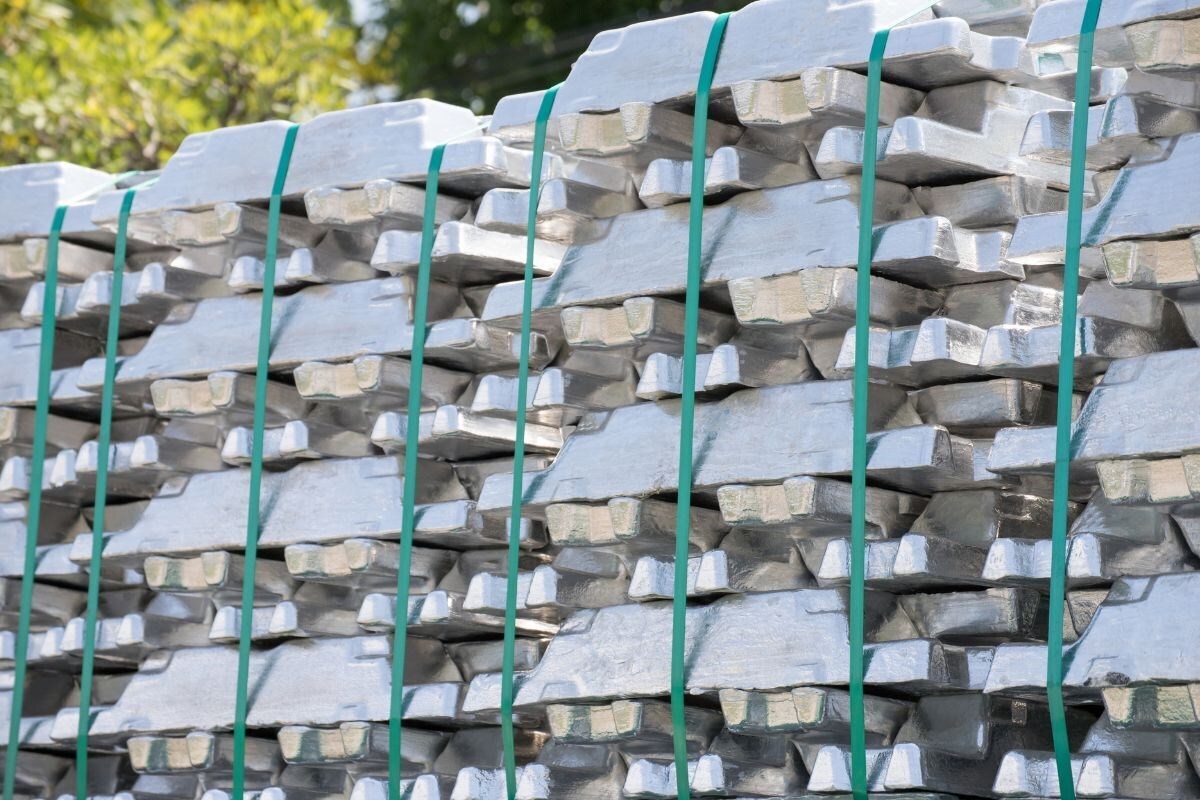
Stock image for referential purposes only
Futures: SHFE aluminium's most-traded contract opened at RMB 24,350 per tonne during the night session on May 28, with the highest price at RMB 24,390 per tonne, the lowest price at RMB 24,305 per tonne, and closed at RMB 24,385 per tonne, up 0.41 per cent from the previous close. Prices at night session stopped falling and rebounded, standing back above the MA5 (24,370.70) moving average, but still running below the MA10 (24,411.11), MA20 (24,465.59), MA40 (24,553.29), and MA60 (24,597.24). Medium and long-term moving averages maintained a bearish alignment, with the overall trend still skewing weak, though short-term downward momentum has eased somewhat.
{alcircleadd}Trading volume at night session was 71,100 lots, down 61,771 lots from the previous session; open interest was 293,000 lots, up 929 lots, with futures showing a "bulls adding positions" pattern, indicating some capital at low levels was still attempting to position for a rebound.
Technical side, the 4-hour MACD indicator showed DIFF (-71.88) running below DEA (-67.2), with the death cross structure continuing. On May 28, LME aluminium opened at RMB 3,625 per tonne, reaching a high of USD 3,685 per tonne and a low of USD 3,607.5 per tonne, and finally closed at USD 3,681 per tonne, up 1.47 per cent, extending the overall strong rebound trend. Prices firmly stood back above the MA5 (3,656.80), MA10 (3,635.38), MA20 (3,603.26), MA40 (3,541.67), and MA60 (3,477.54) moving averages, with short-, medium-, and long-term moving averages maintaining a bullish alignment and the trend structure remaining solid.
Trading volume was 19,521 lots, down 640 lots; open interest was 675,000 lots, up 3,983 lots, with futures showing a "bulls adding positions" pattern, indicating continued capital inflow driving prices to rise. On the technical side, the MACD indicator DIFF (42.21) continued running above DEA (38.59), with the golden cross structure continuing and maintaining red bar status (STICK: 7.25).
Macro front: According to Wallstreetcn, April PCE inflation came in below expectations M-o-M, Q1 GDP annualised growth was revised down to 1.6 per cent, new home sales declined sharply, and initial jobless claims also slightly exceeded expectations. Weak US data combined with ceasefire hopes jointly drove interest rate cut expectations higher.
According to data released Thursday by the US Bureau of Economic Analysis (BEA), the US April PCE price index was 3.8 per cent Y-o-Y, in line with expectations, the highest level since May 2023, with the Iran war driving energy prices higher as the main driver.
The US Fed's preferred inflation gauge — the core PCE price index (excluding food and energy) — rose 3.3 per cent Y-o-Y in April, hitting a new high since November 2023. Meanwhile, another BEA report showed that US Q1 annualised economic growth was revised down to 1.6 per cent, below the initial estimate of 2.0 per cent. Weak consumption coexisting with high inflation has complicated market judgments on the US Fed's monetary policy direction.
Fundamentals: Currently, core aluminium semis export enterprises in China reported that orders in June-July maintained growth momentum, with some top-tier players seeing M-o-M growth of 15 per cent-20 per cent, though overall industry production schedules have not yet recovered to the best levels of 2024.
Outside China, processed material enterprises generally have low raw material inventory, and the near-term backwardation structure of LME aluminium prices has suppressed stockpiling willingness, but rigid demand remains in construction, power, and electronics sectors. This week, the operating rate of leading aluminium downstream processing enterprises in China was 64.1 per cent, down 0.3 percentage points W-o-W, with the industry overall showing a weak recovery trend but significant internal structural divergence.
The aluminium processing industry currently relies on export resilience, high growth in energy storage, and infrastructure orders to offset weak domestic demand. Going forward, attention should be paid to the sustainability of overseas demand, the impact of aluminium price trends on purchase willingness, and the recovery strength of traditional sectors.
Primary aluminium market: In the morning session, the SHFE aluminium 2606 contract fluctuated downward, with the overall price centre significantly lower than the previous trading day. Affected by declining aluminium prices, some sellers' shipment sentiment weakened, while downstream enterprises' buying sentiment rose M-o-M, pushing buyer price acceptance somewhat higher. Mainstream spot quotations in the market ranged from the SMM A00 average price to RMB +10 per tonne.
Yesterday, the shipment sentiment index in the east China market was 2.97, down 0.06 M-o-M; the procurement sentiment index was 3.36, up 0.1 M-o-M. Yesterday, aluminium futures declined, and procurement sentiment among downstream processing enterprises in the central China market rebounded slightly, but purchases remained mainly small-volume as-needed buying.
Suppliers tended to ship large volumes when the spot-futures price spread was relatively small, and market shipment sentiment improved significantly, with the overall transaction atmosphere becoming more active compared with the previous two days. Ultimately, actual transaction prices in the central China market ranged from a premium of 10 yuan to a discount of 10 yuan against the central China price. Yesterday, the shipment sentiment index in the central China market was 2.86, up 0.03 M-o-M; the procurement sentiment index was 2.26, up 0.01 M-o-M.
Aluminium scrap: Yesterday, the SMM A00 price fell another RMB 250 per tonne from the previous trading day, and the aluminium scrap market overall followed the decline, with some regional varieties holding steady on a wait-and-see basis. On the supply side, the regulatory tightening of the "reverse invoicing" policy continued, compliance costs in the aluminium scrap recycling segment remained high, and available invoiced supply was tight.
The core support for aluminium scrap prices was invoice scarcity rather than substantial demand boost. Meanwhile, affected by the persistent inversion of aluminium scrap price spreads in and outside China amid US-Iran conflict disruptions, low-priced quality supply outside China was scarce, and imports' supplementation to domestic supply continued to weaken.
On the demand side, with the off-season approaching, operating rates of downstream scrap utilisation enterprises ran at low levels, terminal order follow-through was weak, and scrap utilisation enterprises overall maintained a strategy of purchasing as needed with low inventory, with the overall procurement atmosphere remaining cautious. The aluminium scrap market is expected to continue holding up well at high levels next week, with the mainstream range for shredded aluminium tense scrap (priced based on aluminium content) maintained at RMB 20,300-20,900 per tonne (tax-exclusive).
Constraints from the "reverse invoicing" policy persist, and the tight supply of compliant invoiced materials is unlikely to reverse in the short term; the lagged contraction effect of imported aluminium scrap has not been fully released, and subsequent port arrivals will continue to run at low levels. However, with the off-season approaching, the sustainability of subsequent orders for scrap utilisation enterprises are concerning and incremental end-use demand remains limited. Continued attention should be paid to policy compliance progress, the outcome of US-Iran war negotiations, and the arrival of imported materials at ports.
Secondary aluminium alloy: Spot cargo: Aluminium prices turned lower yesterday, with some enterprises following with slight cuts of RMB 100 per tonne, but the market generally remained cautious about further significant price reductions. On one hand, downstream demand remained sluggish, with limited transaction support; on the other hand, against the backdrop of tightening reverse invoicing and compliance requirements, aluminium scrap raw materials and invoiced supplies remained persistently tight, enterprise inventory continued to be depleted, procurement pressure increased notably, and some manufacturers have reported production constraints, strengthening expectations of industry production cuts and supply contraction. Supported by high costs and tight supply, ADC12 prices overall still demonstrated strong downside resistance, and are expected to move sideways in the short term.
Aluminium market summary: On the macro front, a US-Iran ceasefire agreement, if implemented, would significantly ease Middle East supply concerns, but recurring military frictions leave peace prospects uncertain, with geopolitical premiums tending to converge in the short term but not fully dissipating. Fundamentals side, the tight spot market conditions outside China continued, with LME aluminium inventory remaining at low levels and cancelled warrants continuing to grow, reflecting tight available supplies; meanwhile, Japan's Q3 spot aluminium premiums were further raised, also indicating resilient Asian spot demand, with multiple factors jointly supporting LME aluminium performance.
Domestically, driven by improved export margins, aluminium semis exports recovered, and are expected to remain at a relatively high level in the short term. However, the pace of domestic inventory drawdown remained slow, spot transactions were lacklustre, and downstream procurement remained cautious, limiting upside room for SHFE aluminium. Overall, aluminium prices are expected to continue moving sideways with LME outperforming SHFE in the short term.
Note: This article has been issued by SMM and has been published by AL Circle with its original information without any modifications or edits to the core subject/data.

Responses