您想继续阅读英文文章还
是切换到中文?
是切换到中文?

THINK ALUMINIUM THINK AL CIRCLE


Stock image for referential purposes only
A new study by economic research firm John Dunham & Associates found that the US aluminium industry directly employs more than 165,000 workers, essentially unchanged from a decade ago despite significant shifts across manufacturing segments and global market conditions. The 2026 Economic Impact of the U.S. aluminium industry study also found the industry generated more than USD 115 billion in direct economic output, the highest level recorded since the association began tracking in 2013.
{alcircleadd}“The story of the American aluminium industry over the past decade is one of resilience and reinvention,” said Charles Johnson, president & CEO of the Aluminum Association. “The aluminium industry is making generational investments in U.S. manufacturing even as some market segments struggle. Aluminium recycling and sheet & plate jobs hit record levels in 2026 as did the industry’s overall economic impact.”
The report shows that while primary aluminium employment has declined significantly over the past decade, growth in recycling and mid-and-downstream manufacturing has helped offset those losses. Between 2024 and 2026 alone, secondary aluminium production (recycling) jobs and aluminium coatings have both increased more than 20 per cent, while sheet and plate jobs increased 6 per cent.
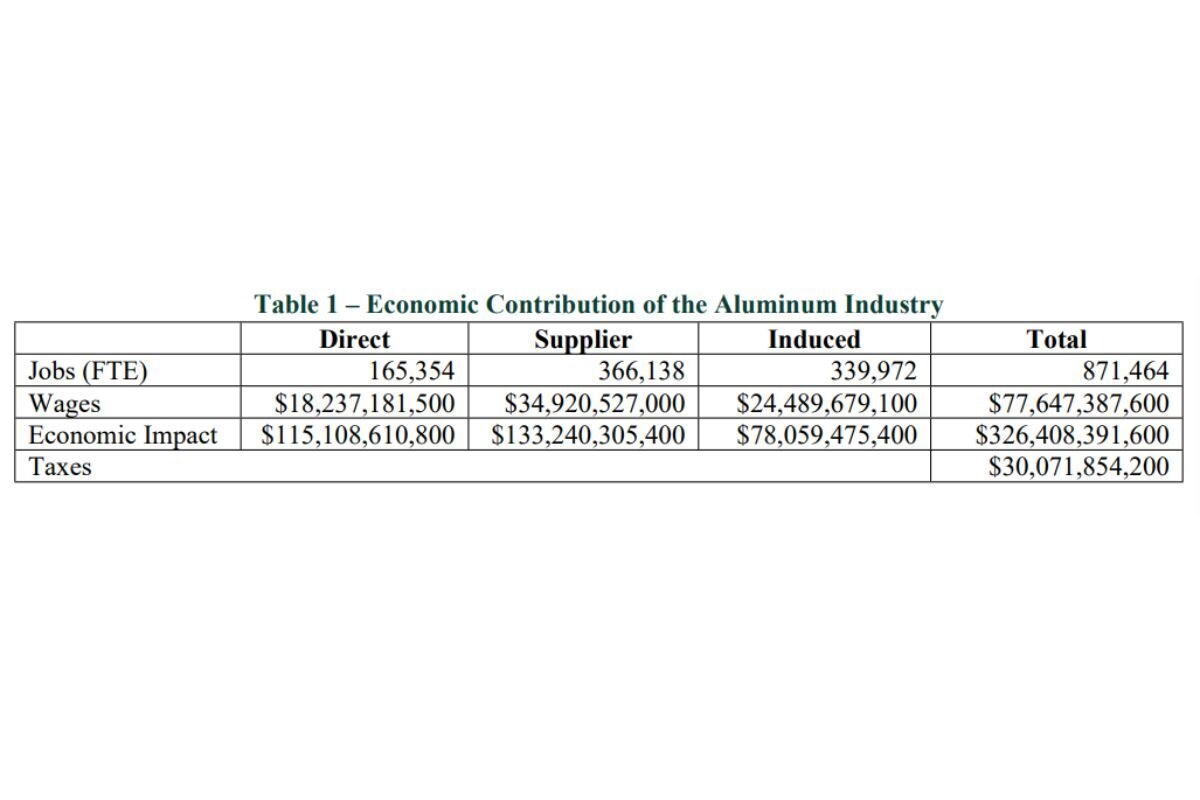
Over the past decade, the industry has invested more than USD 11 billion in US operations, including recycling operations and the first greenfield rolling mills since 1980, to meet demand for the aluminium and aluminium products Americans depend on every day.
For forward-thinking aluminium market insights amidst supply chain and price challenges, read "ALuminium LeaderSpeak 2026."
“These numbers reflect an industry that continues to evolve to meet changing customer demand, supply chain needs and economic realities,” Johnson continued. “The US aluminium sector remains a critical manufacturing base supporting industries essential to America’s economy and national security.”
The study was completed using standard econometric models first developed by the U.S. Forest Service and now maintained by IMPLAN, Inc. The report is based on data provided by Infogroup, the federal government and the Aluminum Association.
For the purposes of the report, the aluminium industry is defined to include alumina refining; primary aluminium smelting; secondary aluminium production; manufacturing of aluminium sheet, plate, foil, extrusions, forgings, coatings, and powder; aluminium foundries; metals service centres, and wholesalers. The study measures the number of jobs in this industry, the wages paid to employees, total economic output and federal and state business taxes generated.
Note: This article has been shared by Aluminum Association and has been published by AL Circle with its original information without any modifications or edits to the core subject/data.
Responses


A proud
ASI member
AL Circle Private Limited | CIN: U72200WB2017PTC221175
Registered Office: Ecospace Business Park, Block 3A, Unit 401A, New Town, Rajarhat, Kolkata, WB 700160
Corporate Office: Ecospace Business Park, Block 3A, Unit 401A, New Town, Rajarhat, Kolkata, WB 700160
© 2026 AL Circle. All rights reserved. AL Circle is not responsible for content from external sources.