您想继续阅读英文文章还
是切换到中文?
是切换到中文?

THINK ALUMINIUM THINK AL CIRCLE

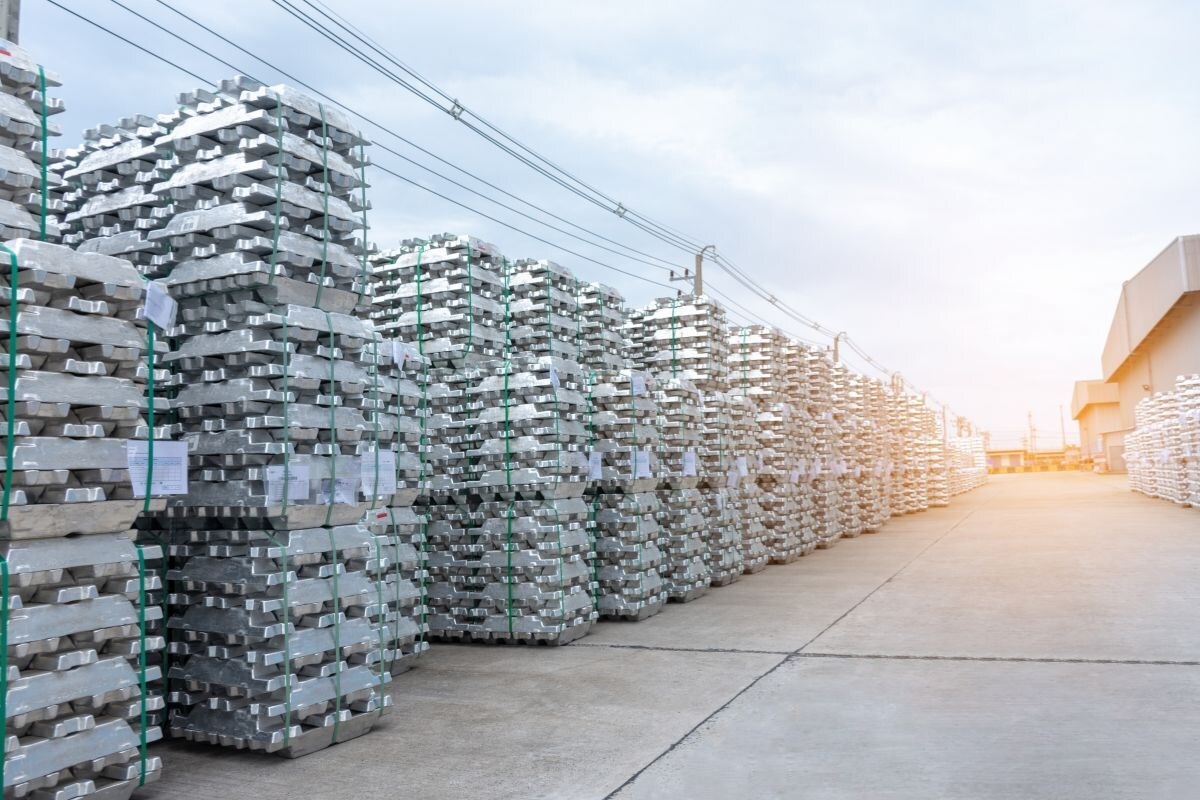
Stock image for referential purposes only
The most-traded SHFE aluminium 2606 contract closed at RMB 24,410 per tonne, up 0.12 per cent. The price was below MA5 (24,513.00) and MA10 (24,692.50), but still above MA30 (24,699.00) and MA60 (24,496.92), with short-term moving averages forming resistance while medium-term support remained intact. The MACD indicator DIF (-36.4646) was below DEA (50.0644), with the histogram in negative territory (-173.0581), indicating continued release of bearish momentum. The suggested core trading range for SHFE aluminium is 24,100-24,800. LME aluminium 3M closed at USD 2,482.5 per tonne, down 0.21 per cent, moving sideways. The price fell below MA30 (3,504.72), MA10 (3,526.35), and MA5 (3,517.60), but remained above MA60 (3,371.01), with short-term moving averages forming resistance while long-term support held. The MACD indicator DIF (22.7191) crossed below DEA (41.1114), with the histogram turning negative (-36.7845), forming a death cross, indicating continued weakening of upward momentum. The suggested core trading range for LME aluminium is 3,400-3,560.
{alcircleadd}Macro front: Multiple sources said the US and Iran may be close to reaching an interim agreement. Several core demands previously raised by the US, such as Iran suspending nuclear activities, limiting its missile program, and ceasing support for so-called "regional proxies," were not included in the draft agreement. The agreement would comprise three phases: first, formally ending hostilities; second, resolving the Strait of Hormuz crisis; and third, initiating a 30-day negotiation window to pursue a broader agreement. Iranian President Pezeshkian and Iran's Supreme Leader Mojtaba met recently, exchanging views for nearly two and a half hours. An Iranian Foreign Ministry spokesperson said Iran had not yet reached a conclusion on the US proposal nor responded to the US. The Iranian Revolutionary Guard Corps Navy has designated two shipping lanes for vessel passage, but vessels are still not permitted to transit the Strait of Hormuz without authorisation.
Fundamentals: Supply side, boosted by high prices, aluminium smelters in China increased their load, with operating rates rising slightly. Demand side, the proportion of liquid aluminium edged up 0.2 percentage points this week; on the downstream front, the market gradually entered the off-season, with downstream demand showing slight weakness and weekly downstream operating rates declining marginally. This week, operating rates across China's aluminium processing sub-sectors continued their overall weak trend. The post-Labour Day holiday effect combined with wild swings in aluminium prices led to varying degrees of W-o-W pullbacks in operating rates across most segments, with the overall rate recorded at 64.2 per cent. Overall, aluminium processing operating rates are expected to face downward pressure in the near term, with the demand off-season and cost pressure forming a dual drag. Operating rates across segments are expected to be under pressure in May, but strengthening export orders and structural recovery in some industrial demand segments will provide certain floor support for the industry. Inventory, aluminium ingot inventory in major consumption areas in China was 1.441 million tonnes as of this Friday, destocking 15,000 tonnes W-o-W from this Wednesday.
Primary aluminium market: Yesterday morning, SHFE aluminium 2605 contract fluctuated downward, with the overall price centre moving lower compared to the previous trading day. Yesterday, invoicing constraints led to a contraction in market trading shipments. Yesterday, downstream buyers showed a strong wait-and-see sentiment, and purchase willingness cooled. Dragged by weak spot buying, mainstream transactions were concentrated around SMM A00 aluminium minus RMB 10 per tonne to the average price. Yesterday, the east China market shipment sentiment index was 2.65, down 0.01 W-o-W; the purchase sentiment index was 2.6, down 0.2 W-o-W. Yesterday, the trading atmosphere in the central China market weakened again compared to the previous day, with overall invoicing quotas continuing to decline and insufficient market trading confidence. Most purchasers were concentrated between 8:00 and 8:30. Initially, suppliers showed a strong willingness to hold prices firm, but subsequent transactions were sluggish, with quotes showing a continued downward trend. Transaction prices for invoiced shipments on the day were slightly higher than normal shipments. Ultimately, the actual transaction price range in the central China market was concentrated between a 20-yuan premium and a 10-yuan discount to the central China price, with mainstream transactions at a 10-yuan premium to the central China price. Yesterday, the central China market shipment sentiment index was 2.82, down 0.01 W-o-W; the purchase sentiment index was 2.27, down 0.01 W-o-W.
Aluminum scrap: Yesterday, A00 aluminium price was down RMB 480 per tonne from the previous trading day, and aluminium scrap market prices overall followed with a decline of RMB 200-300 per tonne. Shredded aluminium tense scrap (priced based on aluminium content) mainstream range operated around RMB 20,500-21,100 per tonne (tax exclusive). Imported zorba (Ningbo Port) operated in the range of RMB 21,570-21,870 per tonne (tax inclusive). Price spread, on May 7, the price difference between A00 aluminium and mixed aluminium extrusion scrap free of paint in Foshan was recorded at RMB 2,478 per tonne, and the price difference between A00 aluminium and shredded aluminium tense scrap was RMB 1,833 per tonne. Supply side, affected by the Labour Day holiday, most aluminium scrap yards arranged 1-2 days off, and the aluminium scrap collection and shipment pace remained generally stable compared to April. After the holiday, raw material prices swung wildly, and aluminium scrap yards generally held back from selling and held prices firm; high LME prices led import traders to adopt a cautious strategy, and subsequent imports are expected to pull back. Demand side, the traditional off-season set in, the operating rate of secondary aluminium producers pulled back slightly, aluminium tense scrap was purchased as needed with low inventory operations, and wrought aluminium alloy scrap was supported by secondary aluminium plate/sheet and strip operating rates but with limited strength. Downstream demand was mainly rigid, with strong wait-and-see sentiment. Next week, the aluminium scrap market is expected to remain in the doldrums at high levels, with shredded aluminium tense scrap (priced based on aluminium content) mainstream range maintained at RMB 20,500-21,300 per tonne (tax exclusive). Supply-side policy constraints are unlikely to ease in the short term, and tight compliant supply coupled with expected pullback in imports will provide certain price support. Demand side, the off-season effect continued. Downstream secondary aluminium enterprises remained cautious and on the sidelines, with procurement mainly focused on rigid-demand small-order restocking. The divergence between aluminium tense scrap and wrought aluminium alloy scrap remained unchanged, order increments were limited, and vigilance was still needed against market risks brought by aluminium price fluctuations and tight supply.
Secondary aluminium alloy: Spot market, the ADC12 spot market also fluctuated downward yesterday, with mainstream enterprises generally lowering quotes by RMB 200-300 per tonne, and the market sentiment to follow the decline was strong. On one hand, futures pulled back sharply, exerting strong pressure on the spot market, and enterprises actively lowered their quotes; on the other hand, downstream consumption remained weak, further undermining market confidence. Yesterday, the cost side provided some support to prices, but under the influence of insufficient demand and pessimistic market expectations, ADC12 prices still faced certain downward pressure in the short term, and the market continued to be in the doldrums.
Aluminum market summary: Internationally, affected by the ongoing geopolitical conflicts in the Middle East, navigation through the Strait of Hormuz was restricted, regional aluminium capacity saw production cuts, and the global aluminium supply deficit intensified. However, expectations of easing US-Iran tensions remained neutral, providing limited support to aluminium prices. Domestically, downstream processing enterprises showed weak recovery in operating rates, persistently high aluminium prices continued to suppress end-user purchase willingness, and China's social inventory stayed high. The macro situation remained uncertain, and under high inventory pressure, domestic aluminium prices underperformed LME. Attention was still needed on whether the inflection point of China's inventory could arrive smoothly.
Note: This article has been issued by SMM and has been published by AL Circle with its original information without any modifications or edits to the core subject/data.

Responses