您想继续阅读英文文章还
是切换到中文?
是切换到中文?

THINK ALUMINIUM THINK AL CIRCLE

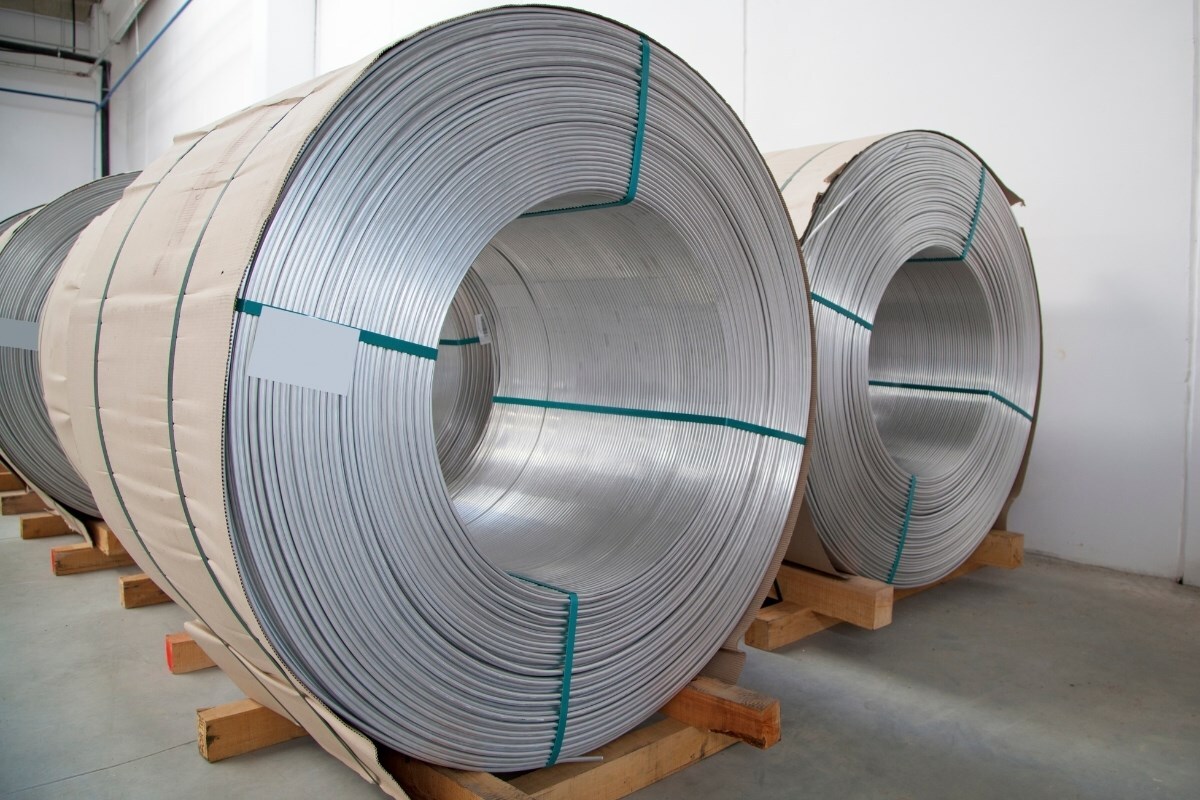
The image used in this article is generated with an AI tool and does not depict any real-time moment
According to data released by the General Administration of Customs of the People's Republic of China (GACC), China's aluminium wire and cable exports reached 102,800 tonnes in July 2026, representing a year-on-year surge of 481.8 per cent but a month-on-month decline of 8.5 per cent . From January to July 2026, cumulative exports of aluminium wire and cable totalled 386,300 tonnes, up 152.78 per cent year-on-year.
{alcircleadd}Among these, exports of other non-insulated aluminium stranded wire, cables, braids, and similar products (HS code 76149000) totalled 84,600 tonnes, while exports of non-insulated steel-core aluminium stranded wire, cables, braids, and similar products (HS code 76141000) reached 18,200 tonnes.
In July, the price spread between domestic and overseas markets narrowed, significantly compressing export profit margins for aluminium wire and cable. July exports were primarily focused on fulfilling previously signed contracts, while new orders have clearly shrunk, leading to a slight month-on-month drop in overall export volume. If the export arbitrage window remains closed going forward, overall export volumes are expected to decline further as existing backlogs of orders have been digested.
In terms of export destinations, July exports to South Korea and Malaysia, primarily transhipment orders destined for Southeast Asia, remained the main focus. Montenegro saw a significant increase in its monthly share compared to previous periods, mainly driven by a one-off large order for a European project.
To know the global production, demand and consumption forecasts of aluminium extrusions, explore our report "The World of Aluminium Extrusions to 2035"
Specifically, exports to South Korea amounted to 19,800 tonnes, accounting for 19.25 per cent of total monthly exports. Malaysia ranked second with 10,700 tonnes, or 10.43 per cent of the total. Montenegro ranked third with 9,500 tonnes, representing 9.24 per cent of the total.
From a provincial perspective, exports in July remained concentrated in Fujian, Jiangsu, Shanghai, and Henan. Fujian led with approximately 32,400 tonnes, accounting for 31.56 per cent of total exports. Jiangsu followed with 17,500 tonnes (17.03 per cent), and Shanghai ranked third with 12,500 tonnes (12.13 per cent).
The substantial year-on-year increase in aluminium wire and cable exports this round is primarily attributed to the concentrated release of overseas orders locked in during the previous period of widening domestic-foreign price spreads, coupled with a low export base in the same period last year, resulting in a phased pulse-like surge. However, the month-on-month decline and shrinking new orders clearly indicate that the current export momentum is weakening, and this growth does not constitute a long-term trend driven by sustained expansion of overseas power grid demand.
In terms of product structure, 76149000 (other non-insulated aluminium stranded wire, cables, braids, and similar products) dominates exports, with 84,600 tonnes shipped in July, accounting for 82.3 per cent of total export volume. This product category serves both power grid material needs and overseas primary aluminium substitution purposes, making it highly sensitive to internal and external price spreads. 76141000 (non-insulated steel-core aluminium stranded wire, cables, braids, and similar products) saw exports of 18,200 tonnes, representing 17.7 per cent of the total. It corresponds more closely to rigid demand from overseas power engineering projects, involves longer order cycles, and is relatively less affected by short-term price spread fluctuations.
In July, the narrowing price spread between domestic and overseas markets significantly compressed the profit margin for aluminium wire and cable exports, cooling market export sentiment. Currently, export production schedules are largely supported by previously signed orders, while new order signings continue to contract.
The export flow continues to be dominated by transhipments via Southeast Asia, with South Korea and Malaysia collectively accounting for nearly 30 per cent of monthly exports, serving as core destinations for overseas procurement and regional transhipment. The notable rise in Montenegro's monthly export share was driven by a one-off large order and is not sustainable.
Connect with verified aluminium extrusion buyers and suppliers through the AL Biz marketplace.
Looking ahead, if the domestic-foreign arbitrage window remains closed, export profits will be difficult to restore. As previously backlogged orders are gradually delivered, aluminium wire and cable exports still face further downside. In the short term, exports will gradually retreat from the "high price spread dividend period" back to normalised levels, and the high year-on-year growth rate in the fourth quarter will slow markedly. In the medium to long term, overseas power infrastructure will continue to present construction demand, but the space for arbitrage-driven exports will remain constrained.
Note: This news is published under a content and exchange agreement with Mysteel
Responses


A proud
ASI member
AL Circle Private Limited | CIN: U72200WB2017PTC221175
Registered Office: Ecospace Business Park, Block 3A, Unit 401A, New Town, Rajarhat, Kolkata, WB 700160
Corporate Office: Ecospace Business Park, Block 3A, Unit 401A, New Town, Rajarhat, Kolkata, WB 700160
© 2026 AL Circle. All rights reserved. AL Circle is not responsible for content from external sources.