您想继续阅读英文文章还
是切换到中文?
是切换到中文?

THINK ALUMINIUM THINK AL CIRCLE

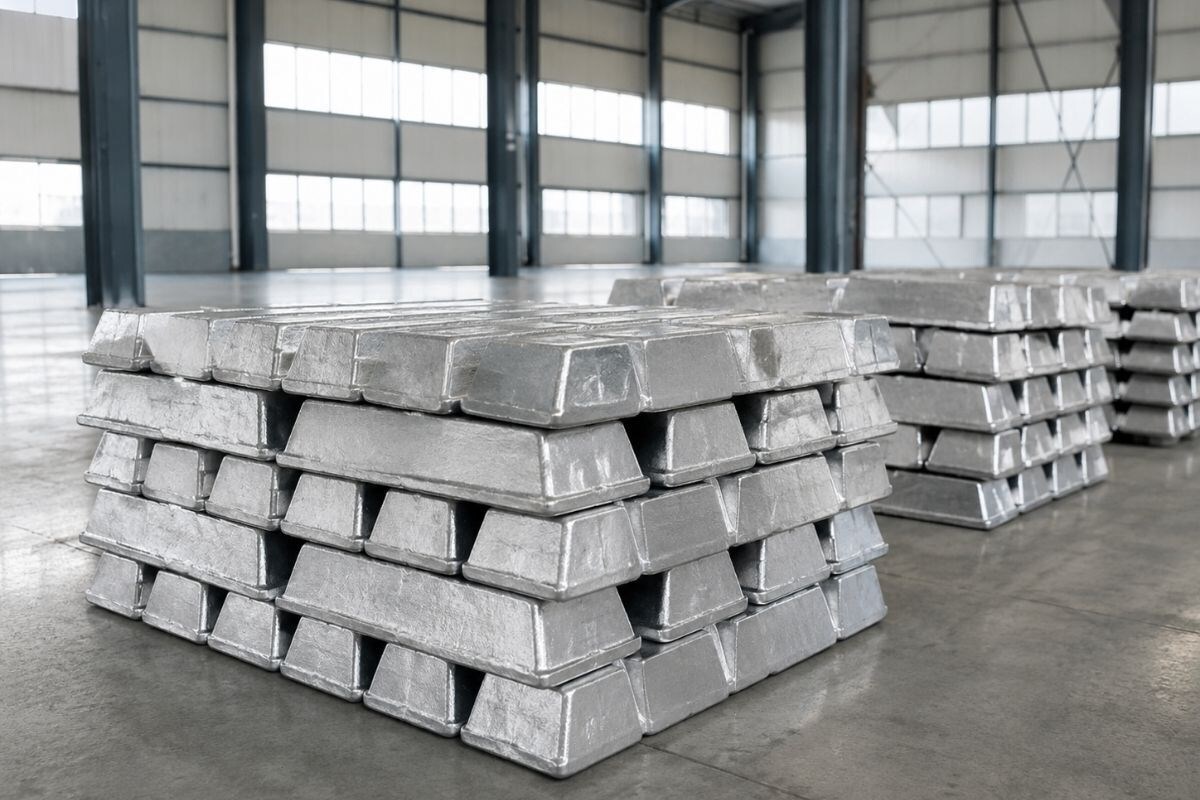
The image used in this article is generated with an AI tool and does not depict any real-time moment
June marked a tale of two markets for aluminium, where a macro-driven selloff clashing with resilient fundamentals. While SHFE aluminium prices tumbled to yearly lows, pressured by expectations of US rate hikes and the evaporation of Middle Eastern risk premiums, the underlying supply-demand balance told a different story.
{alcircleadd}The traders' inventories drew down at an accelerated pace, spot discounts narrowed, and downstream restocking intensified. This divergence set the stage for a potential reversal: with prices near the bottom and a notable supply deficit emerging, the market appears poised for stabilisation as it moves into July.
Price performance
As of June 30, Mysteel's assessment shows the monthly average price for A00 aluminium ingot in East China was RMB 23,711 per tonne (down 2.16 per cent M-o-M); in South China, RMB 23,722.9 per tonne (down 1.86 per cent M-o-M); and in Central China, RMB 23,713.3 per tonne (down 2.16 per cent M-o-M).
SHFE aluminium prices declined sharply in June. On the macro front, rising expectations of a Federal Reserve rate hike strengthened the US Dollar Index, suppressing aluminium's financial attributes and triggering a synchronised correction across the non-ferrous metals sector. Geopolitically, the easing of US-Iran tensions rapidly erased previously accumulated risk premiums tied to Middle Eastern supply disruptions, further accelerating the downward pressure on aluminium prices.
Unlock key insights from leading companies and experts across the aluminium ecosystem with our e-Magazine - Mine to Market: ALuminium Producers & Manufacturers 2026
Market positioning revealed a clear divergence. The market exhibited a pattern of falling prices on rising open interest. While capital markets remained bearish on aluminium's outlook, the industrial sector took a contrarian view, seizing the price dip as a strategic entry point. This divergence highlights the contrast between weak sentiment and strong fundamentals.
Terminal demand improved steadily in June, while lower prices stimulated restocking downstream. Traders' inventories of aluminium ingots drew down at a faster pace, and spot discounts narrowed consistently. Overall, June's price decline was primarily driven by macro pessimism and the unwinding of geopolitical risk premiums rather than fundamental deterioration.
Supply dynamics
Mysteel's full-sample survey of Chinese primary aluminium producers indicates preliminary output for June 2026 reached 3.75 million tonnes, up 2.63 per cent Y-o-Y but down 3.12 per cent M-o-M. The average daily output stood at 125,000 tonnes, a slight M-o-M increase of 200 tonnes. Operating capacity for June edged higher, mainly due to new capacity ramp-ups and restarts in Northwest and North China, while other regions remained stable.
In the aluminium scrap market, Mysteel data shows the average refined-scrap spread narrowed sharply to RMB 482 per tonne in June, a M-o-M contraction of RMB 483 per tonne. The rapid price drop left recyclers facing significant depreciation losses on existing aluminium scrap inventories, fuelling widespread reluctance to sell. Spot availability of scrap tightened drastically.
Even with purchase bids falling less sharply than primary aluminium prices, recyclers remained unwilling to sell. The compressed spread eroded scrap's cost advantage over primary aluminium, prompting some recycled aluminium producers to passively substitute A00 ingot for aluminium scrap.
Additionally, since early 2026, intensified tax audits under the "data-driven taxation" framework have imposed stricter limits on "reverse invoicing." Some regions have suspended new registrations or temporarily suspended reverse invoicing windows, restricting recyclers' ability to obtain compliant input VAT invoices from individual sellers. These constraints further tightened the supply of compliant aluminium scrap, limiting procurement volumes and lending cost-side support to scrap prices.
Demand overview
Primary aluminium product output continued to expand in June. Despite volatile and softer prices, fabrication plants maintained stable production enthusiasm. Mysteel estimates weekly average output of aluminium billets rose 1.2 per cent M-o-M to 606,000 tonnes through June, with gains across all product categories. Two factors drove this growth. First, relatively sufficient downstream orders supported higher operating rates; and second, softening aluminium prices allowed fabricators to raise processing fees, improving margins and incentivising output expansion.
Inventories of finished goods at fabrication plants fell by 35,000 tonnes M-o-M by end-June, extending the destocking trend. However, with stocks already at low levels, further downside is limited. Meanwhile, lower aluminium prices bolstered downstream restocking appetite, driving stronger demand for aluminium ingots.
Terminal demand exhibited a diverging yet mildly recovery trend in June. In construction, sluggish real estate new-starts kept extrusion operating rates below prior-year levels, leading to a consumption drop on building-related aluminium. In the automotive sector, orders concentrated in new energy vehicles (NEVs), with export volumes maintaining positive M-o-M growth, providing some offset.
The photovoltaic segment saw a mild rebound in module output and installations as earlier tendered projects commenced. Energy storage and power grid investments continued to lead demand growth, supporting robust consumption of battery foil and aluminium rod. Exports proved resilient, with overseas orders effectively lifting fabrication activity. Overall, terminal demand showed marginal improvement. Softer aluminium prices also eased procurement cost pressures, offering additional support for demand release.
Inventory trends
Domestic aluminium destocking accelerated markedly in June. As of June 30, Mysteel reported total traders' inventories of aluminium stood at 1.16 million tonnes, down 241,000 tonnes M-o-M. Structurally, the proportion of molten aluminium directly supplied to downstream users rose to 75.55 per cent, up 1.37 percentage points M-o-M, while producer-held inventories fell 23,200 tonnes M-o-M to 99,400 tonnes.
On the demand side, falling aluminium prices have spurred steady growth in primary fabricated product output. Coupled with a concentrated release of restocking demand from downstream users, this has significantly boosted ex-warehouse volumes. The traders' inventories of aluminium bar also dropped 54,000 tonnes M-o-M to 136,000 tonnes, with ex-warehouse volumes climbing further, reflecting tangible demand recovery in downstream processing.
The synchronised drawdown across traders' and producers' inventories confirms an improving fundamental backdrop. By end-June 2026, SHFE aluminium ingot warrants had fallen 47,000 tonnes M-o-M to 439,000 tonnes. The sustained warrant decline reflects demand recovery and reduced deliverable supply, lending underlying support to prices.
Based on an analysis of June's primary aluminium output, demand dynamics, and shifts in both trader and producer inventories of aluminium ingots and bars, Mysteel estimates a theoretical supply deficit of approximately 322,000 tonnes for the domestic market in June. This indicates that fundamentals remain tight.
Market outlook
Entering July, aluminium prices are expected to be shaped by the interplay between strengthening fundamental support and lingering macro headwinds. Macro uncertainties, particularly Fed tightening expectations and US Dollar strength are likely to persist, capping immediate upside momentum.
However, fundamentals are turning increasingly supportive. Following June's sharp correction, prices have touched their year-to-date lows, prompting short covering and diminishing further downside potential. Persistent overseas supply constraints linked to the US-Iran conflict, coupled with restocking demand unleashed by lower prices, are amplifying physical market tightness and reinforcing a price floor.
Overall, with fundamentals remaining snug and low-price restocking demand intact, aluminium prices are poised to stabilise and recover through July. Should macro sentiment improve and risk premiums re-enter pricing, upside elasticity could open further.
To know the long-term bauxite market forecast, book our report: “Global Bauxite & Alumina Market Forecast to 2036: Supply–Demand, Trade Flows & Price Outlook”
Note: This news is published under a content and exchange agreement with Mysteel
Responses