World Bank’s 21.6% aluminium price forecast faces upward pressure amid tight market
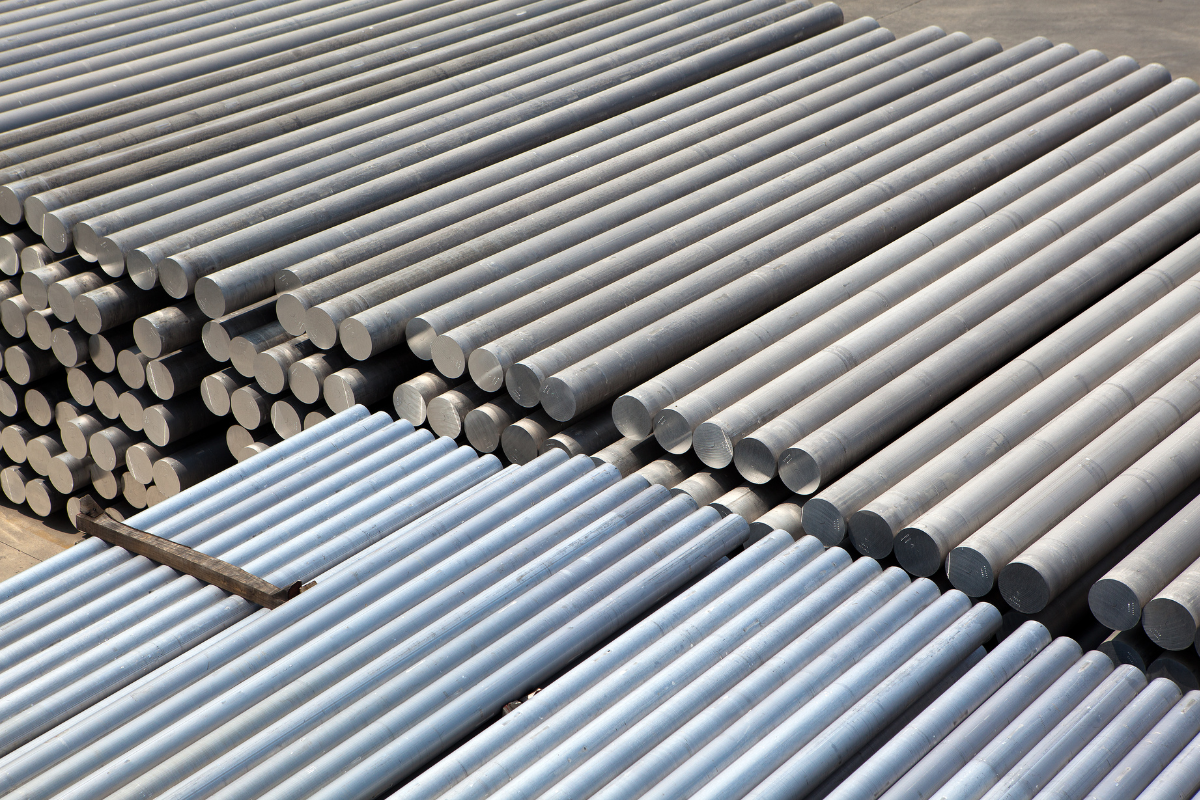
The image used in this article is generated with an AI tool and does not depict any real-time moment
An increase of 21.6 per cent in the aluminium price this year has been observed by the World Bank, in comparison to the previous year. The observation comes after the industry is currently grappling with tight supply, low inventory and a strong demand coming from the emerging industries. The projected price has been exceeding the market level for nearly two months now.
The World Bank's forecast of the aluminium price and the market benchmark
The World Bank said in its Commodity Markets Outlook report released on April 28, that the aluminium prices are forecasted to be an average of USD 3,200 per tonne this year. This shows a year-on-year rise from USD 2,632 per tonne. Nonetheless, by 2027, the aluminium price is expected to go below and drop to USD 3 thousand per tonne.
AlphaMena, a research firm focused on the Middle East and North Africa, its metals and mining analyst, Fadwa Aouini, has suggested that the forecasted USD 3,200 per tonne, which is a bit on the conservative side given the current situation.
He further stated Platts that the Spot LME prices have surpassed the USD 3,200 level. The average price for the year is expected to be on the higher side due to the mix of tight visible inventories, ongoing market segmentation and lingering geopolitical risks.
Additionally, he said that if macro conditions continue to worsen while there are some fluctuations and a possible dip, the overall risk balance currently leans towards a higher average range and may fall between USD 3,300 per tonne and USD 3,600 per tonne.
The aluminium prices, as per the World Bank's 2026 forecasts, have been above it for almost two months now. Moreover, the LME 3-month price has reached USD 3,000 per tonne back on March 2 and has been maintaining that level, reaching close to USD 3,538 per tonne on April 28.
It has been pointed out by the World Bank that uncertain export conditions, rising because of the geopolitical conditions, are responsible for 7 per cent of the global aluminium trade. This might continue to hold the risk and push the outlook event further higher.
Unexpectedly severe or prolonged supply disruptions, along with a quicker-than-expected adoption of AI, could lead to increased demand and prices for base metals, including aluminium, surpassing initial projections.
Lowered aluminium inventory level
Currently, the primary aluminium inventory is deemed to be on the lower side, where in the LME inventory, a drop of 270 thousand tonnes has been seen by the end of March. Nonetheless, by April 27, the numbers were said to be bouncing back to 335 thousand tonnes, which, however, is 1.5 days' worth of global primary aluminium production and is currently at 203,290 tonnes per day.
To this, the analysts stated that the Q1 drawdown pattern is seasonal and will be followed by replenishment by April and May. However, keeping in mind the export disruption rising from the Gulf Cooperation Council, it may break the usual export rhythm.
Don’t miss out- Buyers are looking for your products on our B2B platform
Due to this, currently, a sharp fall of 420 thousand tonnes in February has been marked, because of the high physical premiums and arbitrage flows into stronger regional markets and not just the tensions in the Middle East.
Historically, LME aluminium inventories have hovered between 0.8 million and 1.2 million tonnes, but given the current dynamics of the market, a more realistic balance seems to be in the 300 thousand to 600 thousand tonne range. Late March to April availability is considered tight, but not critically low.
Another issue faced in the aluminium inventory is the unvaried composition. By the end of March, Russian metal held nearly 92 per cent of the total primary aluminium available in the LME-registered warehouses. But, the stocks of the Indian aluminium, which is considered to be the second-largest origin category previously, are said to be depleted entirely.
The Indian metal has been quickly absorbed, more so because of the country's strong acceptance within the global market, while Russian supply, primarily done via Rusal, is said to be dominating the LME inventories. This shift reflects a trend of self-sanctioning among Western buyers, leading to a concentration of “sticky” stock in Asian warehouses, often moving at discounted prices.
This results in a more divided tight market for the non-Russian aluminium suppliers, but has created a relatively relaxed market for the Russian supply. This indicates there would be a fragile equilibrium, where the headline inventories might exaggerate actual availability, as LME stocks no longer fully capture the global supply landscape due to the increasing share of off-warrant and privately held inventories, as said by the analyst.
Must read: Key industry individuals share their thoughts on the trending topics
A large Russian aluminium inventory came from the prior years, which is deemed to be 60 per cent categorised as Type-1 warrant. This means that it has been produced way before the pre-sanctions cutoff, as noted by the analyst.
Whether Russian aluminium can be stored in LME warehouses hinges on when it was made; anything produced after April 13, 2024, will not be allowed on warrant, while earlier materials are still in the clear.
The ongoing uncertainty about the reopening of the Strait of Hormuz might lead US and European producers to rethink their self-sanctioning practices regarding Russian aluminium. He further adds that whether off-exchange inventory becomes slightly significant or not, there is no public data available on them, and the exchange inventories are indeed not comfortable.
What does the market balance suggest?
A tight balance is seen in the current primary aluminium market, mainly due to logistical challenges rather than a true shortage, as noted by both the World Bank and various analysts.
Additionally, the World Bank predicts that global aluminium supply growth will slow down in 2026–27, especially as China's production, which, due to the cap, cannot exceed the production of over 45 million and recorded 44 million last year, is nearly its benchmark.
Check out the forecast of the global bauxite and alumina market till 2036, book the report “Global Bauxite & Alumina Market Forecast to 2036: Supply–Demand, Trade Flows & Price Outlook”
This slowdown might be balanced out somewhat by a larger input from recycled aluminium, along with new primary smelter capacity popping up in parts of Asia outside of China, mainly because of the lowered energy costs. Meanwhile, production in Europe is still lagging behind the levels seen in 2021.
Due to Russia's invasion of Ukraine, the European aluminium production took an initial hit, which was mainly because of the surge in energy prices, leading to the smelter shutdown. However, in today's time, the same cost pressure is seen, which has been further intensified by the rising energy costs due to the ongoing conflict in the Middle East, as noted by the World Bank.
On the other hand, the demand for aluminium has slowly but steadily grown, mainly because of the rise of electrification technologies like solar panels, wind turbines, power transmission systems and energy storage solutions, along with ongoing needs from the transport and packaging industries.
However, demand from the construction sector is still lagging, hampered by the ongoing slump in China's property market and weak residential activity in several advanced economies, all while interest rates remain stubbornly high.
Trading aluminium across borders? Find out the exact cost you need to bear for the embedded carbon in the product by using this CBAM calculator.
_0_0.png)
LME aluminium cools as cash slips from 3,600/t; contracts and stocks continue to decline
Next articleDomestic and international aluminium prices weakened in tandem, and weak macro dragged down the pre-holiday market
Grow with
AL Circle