WEEKLY: Guinea shipments surge but freight costs keep China bauxite spot split, prices pinned in tight band

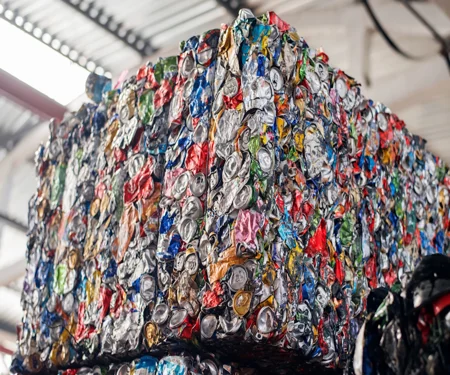
Stock image for referential purposes only
China's domestic ore prices held steady last week. In Shanxi, a limited volume of relatively lower-grade domestic ore was concluded under long-term contracts at approximately RMB 530 per tonne. In Henan, the expected increase in domestic ore output has yet to materialise, leaving the supply-demand balance broadly tight. Mysteel expects limited price volatility in the near term.
On the import side, Guinean 45/3 standard-grade ore prices showed a slight upward bias last week. However, driven by elevated bunker fuel costs inflating ocean freight and a widening spread between alumina prices in northern and southern China, spot transaction levels diverged notably across regions.
According to Mysteel, southern alumina smelters sourced Guinean standard-grade cargoes at below USD 71 per tonne (dry) last week, while a northern smelter secured the same specification at USD 72 per tonne (dry). After incorporating these concluded samples into the assessment, Mysteel revised its Guinean 45/3 quotation to USD 71.8 per tonne (dry), up USD 0.3 per tonne (dry).
Explore buying & selling leads of bauxite and trade opportunities on AL Biz
From a supply perspective, Guinea's shipments in August posted marked gains on both a Y-o-Y and M-o-M basis. According to Mysteel satellite data, global bauxite loadings destined for China reached 17.17 million tonnes in August, up 26.44 per cent Y-o-Y and 11.27 per cent M-o-M.
Of this, Guinean volumes bound for China stood at 13.8 million tonnes, surging 48.25 per cent Y-o-Y and 18.86 per cent M-o-M. The pickup in shipments was primarily driven by COA-covered miners fulfilling long-term contractual obligations, with a smaller portion attributable to certain buyers who locked in vessels during the late-June freight dip and concentrated their dispatches in August.
The rising supply stands in contrast to the gradual spot price firming. The imported ore market continues to reflect a supply-demand mismatch -- some alumina producers still hold elevated inventories, while a handful of smaller smelters face genuine restocking needs. With Guinean spot shipments tightening, these just-in-time buyers have been partially forced to absorb modest price increases, resulting in a marginal nudge higher in the spot price index.
At present, both the floor and the ceiling on imported ore prices are clearly defined. High-cost miners' curtailments and shipment suspensions implemented over the past few months, while low-cost miners' COA freight terms still confer a pricing edge on the upside.
The key swing factor for forward price direction will be the duration of sustained or range-bound-high ocean freight. Near-term impacts on existing shipment volumes remain limited, but if freight holds elevated on a multi-month basis, it could reshape COA negotiations for mid-to-large miners heading into next year.
For the week of August 28–September 3, 2026, 25 bauxite vessels arrived at major Chinese ports, mainly originating from Guinea and Australia, delivering a combined 3.2 million tonnes of bauxite, with a M-o-M increase of 2.65 per cent. As of September 4, 2026, total bauxite inventories across major Chinese ports stood at 31.81 million tonnes, up 2.7 per cent M-o-M.
Last week, inventory trends across China's mainstream bauxite discharge ports diverged sharply, with gains and drawdowns varying by region and an overall picture of structural rebalancing. By port: Yantai, Tianjin and Lianyungang all posted inventory builds, with Yantai's accumulation the most pronounced -- sustained by a steady cadence of overseas in-transit cargoes arriving at a relatively brisk pace.
Conversely, Jingtang, Caofeidian, Huanghua, Qingdao and Fangchenggang all saw drawdowns of varying degrees, with Caofeidian and Weihai logging the steepest declines, while Rizhao held flat versus the prior week. The offsetting moves across individual ports left total national port stocks only marginally higher on a MoM basis.
To know the production, demand and consumption forecasts of bauxite and alumina, explore the report "Global Bauxite & Alumina Market Forecast to 2036: Supply–Demand, Trade Flows & Price Outlook"
On the demand side, domestic downstream alumina refineries maintained steady operating rates, with ample raw-material inventory buffers in place. Procurement remained confined to routine just-in-time offtake, absent any concentrated restocking or large-scale pre-buying. End-use demand momentum stayed soft, capping the market's capacity to draw down spot port inventories.
On the supply side, overseas bauxite continues to be underpinned by a heavy pipeline of in-transit seaborne cargoes, keeping forward arrival expectations firm at Chinese ports and sustaining latent restocking pressure.
In summary, the domestic bauxite market remains characterised by high on-shore inventories, a bloated seaborne order book and feeble offtake -- a loose fundamental regime. Structural swings across individual ports persist, but the core picture of abundant bauxite supply is unchanged. Near-term port inventories are most likely to hold at elevated levels.
Note: This news is published under a content and exchange agreement with Mysteel
Rio Tinto adds Aurukun's 8 tpa bauxite opportunity to growing Cape York pipeline
Next articleAshapura targets INR 100 billion bauxite revenue opportunity as Guinea volumes rise
Grow with
AL Circle