UNCLOS questions Trump’s offshore critical mineral mining orders in the international seabed
In April 2025, the US government issued an executive order focused on offshore critical minerals. The order encourages the development of mineral deposits on the seabed. It refers to minerals located both inside US waters and in ocean areas outside national control.
Resources found within the nation’s maritime zones belong to it. However, minerals located in international seabed regions are not owned by any single country. Even so, the Trump administration suggested that companies could receive permission to mine in those international areas.
For the global aluminium value-chain 2026 outlook, book our exclusive report “Global ALuminium Industry Outlook 2026"
The policy is connected to the rising demand for the critical minerals used in modern technologies. Metals such as nickel, manganese, cobalt and copper are important for modern technologies and energy systems. These minerals are found on land, but they also exist on the deep ocean floor.
One resource of interest is polymetallic nodules. These are small mineral lumps on the seabed that contain several metals. A major concentration of these nodules exists in the Clarion-Clipperton Zone, central Pacific Ocean. The US stated that it will allow companies to collect these resources from deep-sea areas outside its national waters, particularly in that zone.
In 1994, International rules for the use of ocean resources were created under the United Nations Convention on the Law of the Sea (UNCLOS). The agreement allows coastal states to control natural resources within 200 nautical miles (about 370 kilometres) from their shores. These waters are called exclusive economic zones.
However, large parts of the seabed lie beyond national control. These regions are called “the Area.” Their resources are considered the shared property of humanity. Activities in these areas are managed by the International Seabed Authority, which has issued 31 exploration contracts so far.
Don't miss out- Buyers are looking for your products on our B2B platform
The recent policy of Trump relies on a 1980 US law that allows the National Oceanic and Atmospheric Administration to issue licenses for seabed mineral exploration outside national waters. After the 2025 order, the agency was asked to speed up this licensing process.
Soon after, The Metals Company applied to mine nodules in the Clarion-Clipperton Zone under US approval. The International Seabed Authority criticised the move and said that resources in international seabed areas belong to all people and should not be used by one country alone.
Must read: Key industry individuals share their thoughts on the trending topics
Legal experts disagree about whether such mining would break international law. The United States has not accepted the ocean treaty and is not directly bound by it. However, if companies or citizens from countries that accepted the treaty take part in such mining, their governments could face legal challenges. Some critics argue that these actions could weaken the current system that governs the world’s oceans.

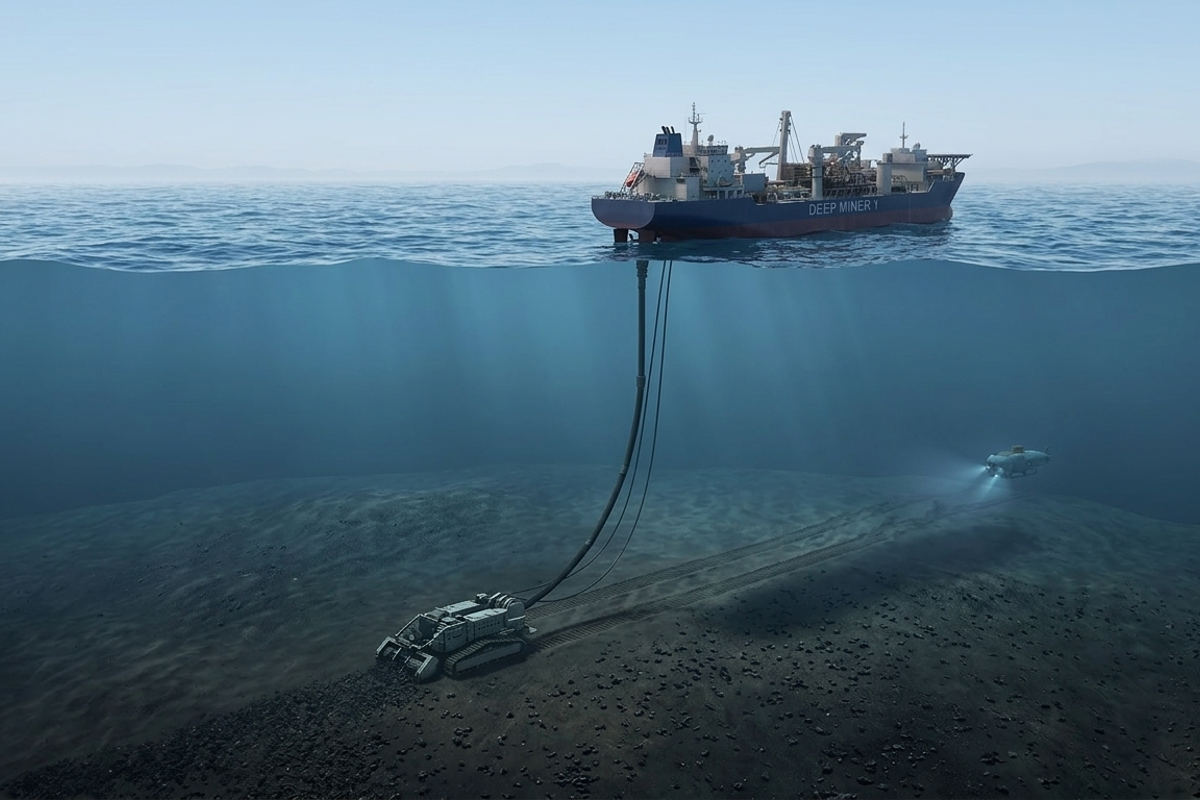
Note: The image used in this article is generated with an AI tool and does not depict any real-time moment
India: Rare earth exploration intensifies in Andhra, Odisha, Tamil Nadu
Next articleCamimex pushes for critical minerals in USMCA review amid supply chain and investment concerns
Grow with
AL Circle