Critical minerals, essential for both economic development and national security, are increasingly at the forefront of policy discussions. These vital resources, whose availability is often concentrated in a few geographical regions, pose significant supply chain risks. The disruption of supplies can have profound implications, from hindering technological advancement to compromising national security.
Unlike other commodities, critical minerals lack a universal definition. Each country designates its list of critical minerals based on specific national needs and strategic priorities. This individualised approach underscores the diverse economic and security concerns that drive the global demand for these indispensable resources.
Africa possesses 30 per cent of the world's critical minerals, essential for the clean energy transition and Fourth Industrial Revolution (4IR) technologies. Consequently, African nations are bolstering their exploration, production, and infrastructure capabilities to increase their critical mineral reserves and output, capitalising on the rising demand for transition minerals and metals.
UN Trade and Development Secretary-General Rebeca Grynspan said, "Africa's vast deposits of minerals critical to the global energy transition, such as cobalt, copper, and lithium, can power a sustainable energy future."
Cobalt - Democratic Republic of Congo
The Democratic Republic of the Congo (DRC) is the global leader in cobalt reserves, with a substantial 6 million tonnes out of the world's 11 million tonnes. In 2023, the DRC's cobalt production reached 170,000 tonnes, a figure that is projected to increase to 225,000 tonnes by the end of 2024. The sector is primarily controlled by major mining companies, with Wanbao Mining, Shalina Resources, Gecamines, Glencore, and Jinchuan Group at the forefront. However, it's crucial to recognise the significant role of artisanal and small-scale mining, which contribute 12 per cent of the country's cobalt output, in the DRC's cobalt production landscape. The Democratic Republic of Congo is the largest global producer of cobalt, accounting for 70 per cent of world production. China stands as the number one importer of cobalt in the world.
Zimbabwe, endowed with abundant lithium deposits, is banking on mining and processing this vital mineral—essential for electric vehicle batteries—to spearhead its economic recovery. As the holder of Africa's largest lithium reserves and the sixth-largest producer globally, Zimbabwe produced approximately 3,400 tonnes of lithium in 2023. If the country's reserves are fully utilised, it could supply up to 20 per cent of the world's lithium. Notable projects contributing to this potential include the Arcadia, Bikita, Zulu, and Kamativi lithium mines, which have attracted substantial investments from Chinese firms.
Zambia, home to the mineral-rich Copperbelt region, shares this wealth with the Democratic Republic of Congo (DRC). Ranking as Africa's second-largest copper producer, Zambia contributes about 4 per cent to global copper output. The Zambia Chamber of Mines reported that copper production fell from 763,000 tonnes in 2022 to 698,000 tonnes in 2023.
Despite this setback, Zambia is poised for growth in its copper sector. Projections suggest that copper output could reach approximately 1 million tonnes by 2026, with ambitious plans to further escalate production to 3 million tonnes by 2030. Achieving this target hinges on the success of key projects, notably the Kansanshi Mine, with a capacity of 845 million tons and the Sentinel Copper Mine, which boasts 811 million tons in reserves. These ventures are critical for Zambia's aspirations to meet its ambitious production goals.
Gabon boasts the world's second-largest manganese deposits and ranks as the third-largest producer globally. Manganese stands as the country's second-most significant export, primarily facilitated by La Compagnie Miniere de l'Ogooue, a subsidiary of the French company ERAMET. In 2022, Gabon extracted 4.6 million tonnes of manganese, yielding a revenue of $1.83 billion. The nation strategically utilises its manganese industry to broaden its economic base, seizing upon rising demands for the mineral in the manufacture of lithium-ion batteries for electric vehicles, as well as in steel production for solar and wind energy projects.
Graphite - Mozambique and Tanzania
Mozambique and Tanzania collectively possess a significant portion of the world's graphite, a vital component in battery production. Mozambique stands out as a major player, boasting over 25 million tonnes of reserves and ranking globally as the fifth-largest graphite producer. Notable projects such as Nicanda Hill, Caula Graphite, Ancuabe, and Balama Central mines propel the sector's growth.
Tanzania, a significant player in the graphite industry, boasts considerable reserves totalling around 17 million tonnes. It is home to the world's sixth-largest graphite reserves. The country hosts key projects like Bagamoyo, Bunyu, Chilalo, Epanko, Nachu, and Lindi Jumbo mines. Companies such as Black Rock Mining, EcoGraf, Evolution Energy Minerals, Magnis Resources, Volt Resources, and Walkabout Resources actively explore and produce the region.
South Africa - Platinum Group Metals (PGMs)
South Africa holds the lion's share of the world's platinum group metals (PGMs) reserves, boasting over 80 active projects and several exploration endeavours. Its contribution to the global PGM supply is significant, accounting for 91 per cent of platinum, 46 per cent of yttrium, 22 per cent of manganese, 35 per cent of chromium, and 16 per cent of vanadium. PGMs play a pivotal role in South Africa's mining sales. They are essential for fuel cell production in electric vehicles and hydrogen technologies, positioning the country as a crucial facilitator of the worldwide energy transition.
In the upcoming years, African nickel production is set to increase, with South Africa and Tanzania expected to experience the greatest gains. Currently, most nickel mining in Africa occurs in Botswana, Zimbabwe, and South Africa. In the latter two nations, nickel is primarily extracted as a byproduct of platinum-group elements (PGM) mining.
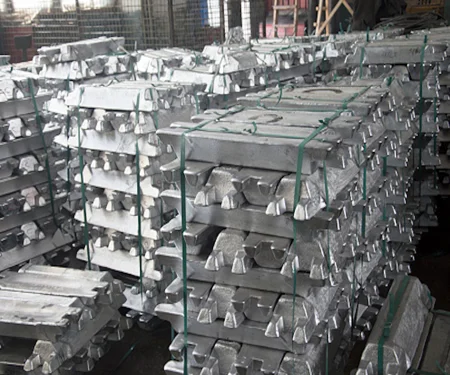
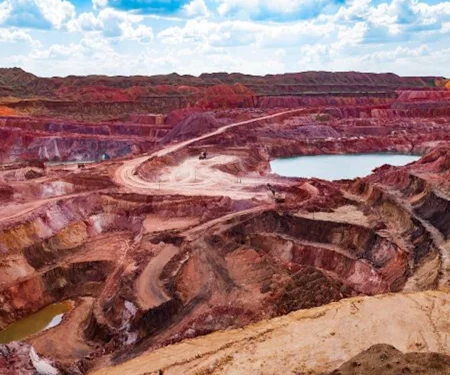
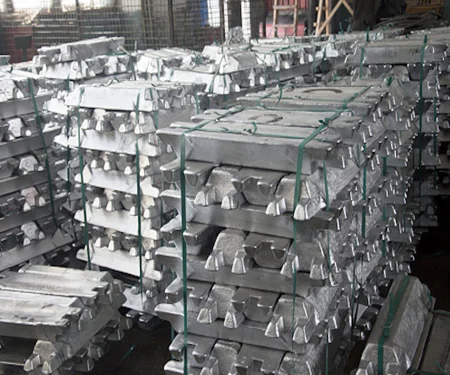
Guinea stands as a key player in the global bauxite market, holding 23-25 per cent of the world's reserves and ranking second in production. It is sometimes referred to as Guinea-Conakry after its capital, Conakry, to distinguish it from other territories in the eponymous region, such as Guinea-Bissau and Equatorial Guinea. In 2023, Guinea witnessed a significant surge in bauxite production, reaching around 123 million tonnes, a 19 per cent increase compared to 2020. Bauxite, crucial for aluminium production, plays a pivotal role in manufacturing solar panels, thus positioning Guinea's bauxite industry as a significant influencer in the global energy transition. The primary producer, Société minière de Boké (SMB), plans to inject $1 billion over the next five years to bolster production, enhance infrastructure, and establish local bauxite refining capabilities, further solidifying Guinea's impact on the global aluminium supply chain. The European Commission has reportedly included bauxite in the list of Critical Raw Materials for 2020 and shared an action plan and a foresight study on it for strategic technologies and sectors from the 2030 and 2050 perspectives.
Morocco holds a substantial share of the world's phosphate reserves, amounting to over 50 billion tonnes, which equates to roughly 70-75 per cet of global phosphate resources. These reserves play a pivotal role in battery and fertilizer production. Annually, Morocco extracts more than 37 million tonnes of phosphate, establishing itself as a prominent global exporter of fertilizers. In fact, it caters to 54 per cent of Africa's fertilizer demand. Notably, the mining sector constitutes 10 per cent of Morocco's GDP, with the phosphate industry alone contributing a staggering 90 per cent to the country's mining revenue.
Phosphate is the primary natural reservoir of phosphorus, which supplies a quarter of the nutrients crucial for plant growth and development. Phosphorus is used in numerous products and is a foundational component in all fertilizer formulations.
The declaration of critical minerals varies among nations, reflecting a dynamic process influenced by technological advancements, market shifts, and geopolitical factors. Each country, such as the US with 50 minerals, China with 26, Japan with 31, the UK with 18, the EU with 34, India with 30 and Canada with 31, identifies its crucial resources vital for national security and economic prosperity. This diverse range of prioritized minerals underscores each nation's unique circumstances and priorities, highlighting the intricate interplay between resource availability and strategic considerations on a global scale.
Note: The data and information shared above have been evaluated from various sites, such as Reuters, USGS, GlobalData, the Ministry of Mines, Energy Capital & Power, etc.













_md.webp)
_md.webp)