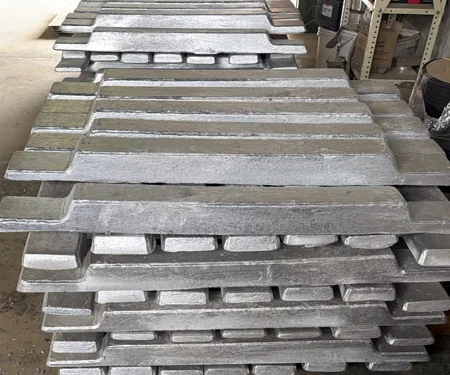
Resilient operational and financial performance defines Rio Tinto’s year-end report card for 2025. The London- and Melbourne-headquartered mining major closed the year with solid gains across its aluminium value chain, proving that deliberate strategy and disciplined execution are all it takes to offset market volatility and operational challenges. Rio Tinto’s broad-based improvement in production despite intermittent quarterly softness was primarily built on three core pillars: operational excellence, disciplined project delivery, and capital control.
Rio Tinto Chief Executive Simon Trott said: “Our operations delivered exceptional production performance, both on a quarter-on-quarter and full year basis, as we leverage our strong foundation of operating excellence and project delivery across our portfolio.”
Aluminium value chain: Full-year gains outweigh Q4 softness
From bauxite production, the core raw material of aluminium, to the primary metal, Rio Tinto has achieved an uptick over the year. Despite a few quarterly intermittent drops, the company has emerged as a winner at the end of the year. As per the report published, Rio Tinto’s full-year bauxite production has increased by 6 per cent annually to reach a record high of 62.4 million tonnes versus 58.7 million tonnes in 2024.
In tandem with increased production, the company’s bauxite shipments also grew over the year, standing at 43.09 million tonnes.
Alumina production grew by 4 per cent over the year, reaching 7.6 million tonnes, within the range predicted for 2025 guidance between 7.4 and 7.8 million tonnes. Notably, Rio’s both bauxite and alumina production recorded growth for the full year despite a muted Q4. While bauxite output saw a decline over the quarter from 16.4 million tonnes to 15.4 million tonnes, alumina production remained restrained at 2 million tonnes compared to 1.9 million tonnes in Q3.
As far as Rio’s aluminium production is concerned, it has increased by nearly 3 per cent Y-o-Y from 3.3 million tonnes to 3.38 million tonnes, attaining the upper end of 2025 guidance (3.25-3.45 million tonnes). The output in Q4 followed the same suit as bauxite and alumina and remained muted at 0.85 million tonnes versus 0.86 million tonnes in Q3. Recycled aluminium production also rose Y-o-Y, amounting to 269,000 tonnes, despite a quarterly plunge of 9 per cent to 62,000 tonnes.
However, overall, the firm’s full-year metal and mineral production fell within the guidance. For bauxite, 2025 guidance was 58-61 million tonnes, while that for alumina and aluminium was 3.25-3.45 and 7.6-8 million tonnes, respectively.
For 2026 aluminium market outlook, download our report TOC: Global Aluminium Industry Outlook 2026
What worked: Operational discipline across assets
Amidst growing reports regarding worldwide restricted aluminium production and supply crunch, Rio Tinto has quietly stolen the spotlight with its operational figures. Wonder how? Rio Tinto’s bauxite production could maintain its robustness due to high plant utilisation rates at Amrun bauxite mine, operating frequently above its nameplate capacity of 22.8 million tonnes per annum (MTPA), driven by the implementation of the safe Production System (SPS), which optimises operational efficiency and maintenance by reducing bottlenecks and improving equipment uptime.
In case of alumina, Rio Tinto’s production improved with better plant performance at Yarwun and Alumar, thanks to uninterrupted bauxite supply, unlike the challenges faced by many other refineries in the world. Rio Tinto secures a significant amount of bauxite from Guinea through its 22.95 per cent stake in La Compagnie des Bauxites de Guinée (CBG). Overall, Guinea’s bauxite exports surged 20 per cent Y-o-Y until Q3 2025, defying heavy rains and regulatory headwinds. Guinea’s annual bauxite shipments are estimated at 180 million tonnes. In addition, the resumption of Vaudreuil alumina refinery in Canada to normal operations following a planned maintenance shutdown supported Rio’s 2025 alumina production.
Aluminium output was supported by full production rates at the New Zealand aluminium smelter after operations ramped up in Q3 post the call from Meridian Energy to reduce electricity usage by 50MW, which ended on June 15, 2025. Kitimat also attained stable production despite operating with fewer pots than targeted due to the implications of lower water levels. Also, a one-year extension of hydro power supply contract secured in October 2025 at the Bell Bay smelter in Tasmania enabled Rio Tinto to continue executing seamless operations.
Must read: Key industry individuals share their thoughts on the trending topics
Strategic moves shaping the present and future
Exceptional performance rarely comes by chance. It is mostly the outcome of deliberate strategy and timely execution. For Rio Tinto, 2025 unfolded along these lines, shaped by a series of strategic decisions designed not just to deliver near-term results but a sustainable future.
- Rio Tinto is exploring an asset-for-equity swap with Chinalco. Such a move could lower Chinalco’s stake by up to two percentage points, from about 11 per cent to 9 per cent and give Rio greater flexibility to revive buybacks and pursue strategic deals.
- Rio Tinto opened full-scope expressions of interest (EOIs) for three key work packages for its Kangwinan Project, part of a major expansion of bauxite operations on Cape York Peninsula. The EOIs, available from October 13, cover the concrete batch plant, site survey services, and the supply of quarry materials, marking a key milestone in advancing the project to its next phase. The Kangwinan Project will then establish a new bauxite mine and expand the Amrun port, potentially doubling output from Rio Tinto’s Weipa Southern Operations.
- Rio Tinto has approved a USD 180 million investment for the development of the Norman Creek project at its Amrun bauxite mine on Queensland’s Cape York Peninsula. This initiative aims to access approximately 466 million tonnes of high-grade bauxite, representing nearly half of Amrun’s 978 million tonnes as declared, with an average alumina content of 54.4 per cent.
- The company re-strategised its aluminium sales in the light of US tariffs. Due to 50 per cent tariffs on Canadian aluminium imports, Ri Tinto strategised to scale back aluminium shipments from Canada. a. Instead of heavily relying on stockpiles, the company shifted its focus to the existing inventories. As a result, they could easily continue to honour supply agreements with major industrial customers without immediately passing on the additional tariff burden.
Don't miss out- Buyers are looking for your products on our B2B platform
Financial tailwinds reinforce strength
In terms of fiscal, the biggest support for aluminium companies, Rio Tinto per se, was the price rally. This year, aluminium price on the London Metal Exchange benchmark crossed USD 3,000 per tonne, standing at its highest since Q2 2022. Even into 2026, the price hovers around USD 3,090 per tonne in line with the increasing expectations of a tighter global aluminium balance in H1 2026. Through 2025, the average aluminium price was USD 2,632 per tonne versus USD 2,419 per tonne in 2024.
The average realised prices for value-added aluminium products also gained 17 per cent annually from USD 2,834 per tonne to USD 3,318 per tonne, while average product premiums for VAP sales were USD 336 per tonne, up by 14 per cent from USD 295 per tonne.
The lithium carbonate price also increased by 55 per cent in Q4 that again supported Rio Tinto financially. The lithium price was fuelled by growing optimism for battery energy storage systems demand and strong shipment activity out of China.
Rio Tinto’s pre-tax and pre-divestment expenditure on exploration and evaluation charged to the profit and loss account in 2025 was USD 795 million, compared with USD 935 million in 2024. And notably, of this annual expenditure, aluminium and lithium accounted for only 1 per cent.














_md.webp)