Global alumina output nears 143.5 Mt in 2025, leaving 0.8 Mt surplus - what’s driving the shift and how are top producers adjusting?
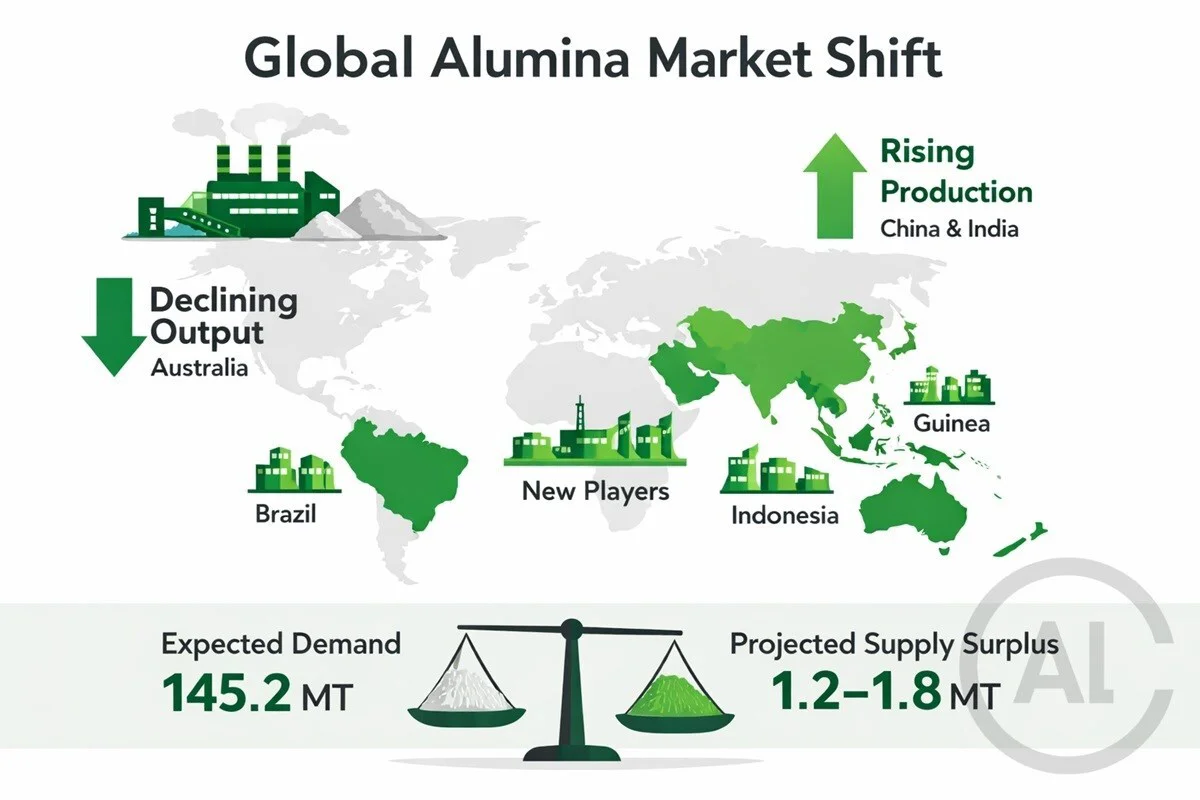
Global alumina production is increasing, although the drivers behind the rise are more layered than a straightforward growth story might suggest. Smelter-grade alumina output rose from 134.2 million tonnes in 2023 to 136.9 million tonnes in 2024, after which the curve steepened. For 2025, production is expected to reach between 143.3 and 143.6 million tonnes. That represents an increase of nearly seven million tonnes in a single year, translating into a compound growth rate of around 5 per cent. What’s driving it isn’t sudden optimism or a rush of new approvals. It’s backlog. Capacity that had been planned, financed, delayed, and reworked over several years is finally switching on. In many cases, the hard part - construction, permitting, logistics - is already behind operators. What’s left is ramp-up. This supply push is unfolding alongside steady growth in aluminium production, which has kept alumina demand moving in the same direction. AL Circle estimation suggests global SGA demand could reach about 145.2 million tonnes in 2026, with the broader market value approaching 147 million tonnes.
Whether the market absorbs this material smoothly, or faces a surplus - and how any excess would be utilised - is outlined in the Global Aluminium Industry Outlook 2026.
China: the backbone of global supply
Unlock full access – sign up for FREE.
Key benefits
Alumina’s journey through 2025: A year known for ambition, friction and recalibration
Next articleAlcoa heads into Q4 2025 with earnings forecast 8.7% lower and revenues down 7% - can it deliver another beat?
Grow with
AL Circle